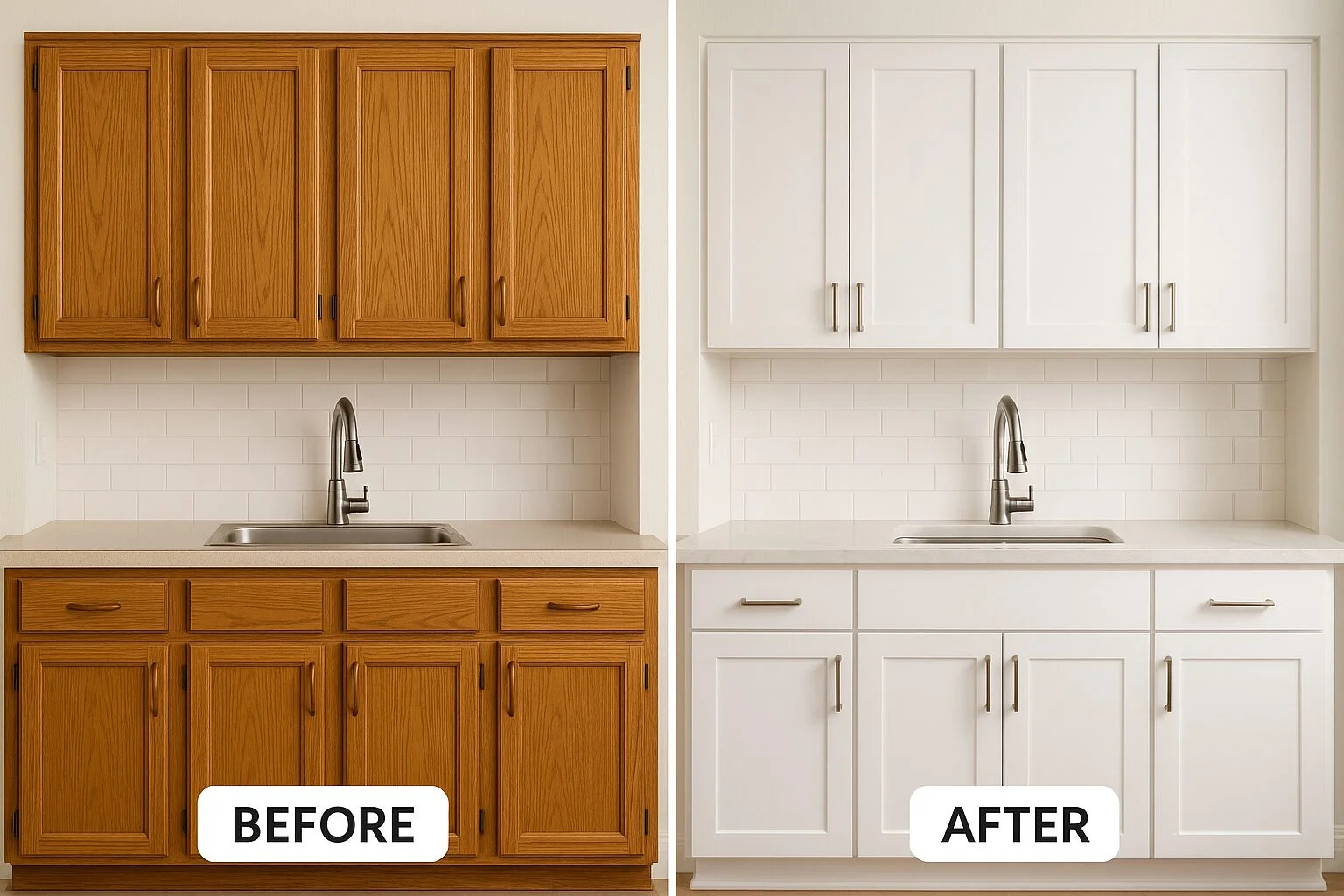

When updating an older kitchen, one of the biggest decisions is kitchen cabinet replacement vs refinishing. Cabinets have a major effect on the appearance and functionality of the room, but replacing them is not always necessary. If the existing cabinets are structurally sound, refinishing may provide a practical way to achieve a fresh look while reducing the amount of work involved.
On the other hand, badly damaged, poorly designed or unsuitable cabinets may be better replaced. Understanding the differences between the two options can help you choose an approach that fits your kitchen, budget and long-term plans.
What is cabinet refinishing?
Cabinet refinishing involves improving the appearance of existing cabinets rather than removing and replacing the complete units.
Depending on the condition and material, refinishing may involve cleaning, sanding, repairing and applying a new finish to cabinet doors, drawer fronts and other suitable surfaces.
The process can include:
- Painting cabinet doors
- Staining suitable timber
- Applying a new protective finish
- Repairing minor surface damage
- Replacing handles
- Replacing hinges
- Improving the appearance of selected cabinet components
Refinishing is primarily a cosmetic renovation. It does not normally change the basic layout, internal dimensions or storage capacity of the cabinets.
This makes it particularly useful when the kitchen works well but looks dated.
What is kitchen cabinet replacement?
Cabinet replacement involves removing existing cabinets and installing new ones.
This can range from replacing only the doors and drawer fronts to removing the complete cabinet units and installing a completely new kitchen.
Full replacement provides more opportunities to change the layout, storage arrangements, cabinet sizes and materials.
It may be appropriate when the existing cabinets are damaged or when the kitchen no longer meets the household's needs.
However, replacement can involve considerably more work because old units may need to be removed and disposed of before new cabinets are installed.
Kitchen cabinet replacement vs refinishing: the main differences
The choice between kitchen cabinet replacement vs refinishing usually comes down to condition, design, budget and how much change you want.
| Factor | Refinishing | Replacement |
|---|---|---|
| Existing cabinets | Must generally be suitable for reuse | Can be removed regardless of appearance |
| Appearance | Changes the external finish | Provides completely new components |
| Layout | Usually remains unchanged | Can be redesigned |
| Storage | Usually remains similar | Can be significantly changed |
| Project disruption | Generally less | Usually more |
| Material choices | Limited by existing structure | Much wider |
| Potential cost | Often lower | Usually higher |
| Structural repairs | Limited | New units can solve major problems |
Actual costs vary by location, labour rates, cabinet material, kitchen size, product quality and the amount of work required. A small kitchen with simple finishes can have very different costs from a large kitchen requiring custom cabinetry.
Examine the condition of your cabinets
Before deciding between the two options, inspect the cabinets carefully.
Look beyond the doors and ask whether the cabinet boxes, shelves and fixing points remain in good condition.
Check for:
- Water damage
- Swollen or weakened boards
- Cracked panels
- Loose shelves
- Damaged hinges
- Sagging doors
- Broken drawer components
- Poor previous repairs
- Signs of damp or mould
- Weak cabinet bases
Minor cosmetic damage does not automatically mean the cabinets need to be replaced.
However, extensive structural damage can make refinishing a poor long-term solution.
When refinishing makes sense
Refinishing can be a sensible choice when the existing cabinets are structurally sound but visually outdated.
For example, imagine a kitchen with solid cabinet boxes, functioning drawers and adequate storage, but doors finished in a colour the homeowner no longer likes.
Replacing the entire kitchen could involve removing perfectly usable components.
Instead, the homeowner could repaint or refinish the doors, replace the handles and improve the worktop and lighting.
This approach can create a substantial visual change while retaining the existing layout.
When replacement makes more sense
Replacement becomes more attractive when the underlying cabinets are no longer suitable.
For example, cabinets that have suffered significant water damage may not be worth refinishing.
Replacement may also be appropriate when the layout creates ongoing problems.
A kitchen may have too little storage, poorly positioned cabinets, awkward corners or insufficient space for modern appliances.
In such cases, changing the external finish alone will not solve the functional problem.
Consider the kitchen layout
The layout is an important part of the decision.
If you are happy with the position of the sink, cooker, fridge, dishwasher and main storage areas, refinishing may be sufficient.
If you want to move several of these features, replacement may provide greater flexibility.
Changing the layout can also involve plumbing, electrical work, flooring and other alterations. These additional requirements can increase the overall renovation cost.
Before making major changes, consider whether the problem is genuinely caused by the cabinet appearance or by the way the kitchen is organised.
Think about storage requirements
A kitchen can look attractive while still being frustrating to use.
If your existing cabinets do not provide enough storage, refinishing will generally not solve the problem.
Replacement gives you the opportunity to add features such as:
- Larger drawers
- Tall storage units
- Pull-out cupboards
- Better corner solutions
- Dedicated appliance storage
- Improved pantry space
- More suitable cabinet heights
However, additional storage does not always require a complete replacement.
Sometimes drawer organisers, shelf risers, pull-out accessories or better internal arrangements can improve existing cabinets.
Look at the cabinet doors separately
There is an important middle ground between refinishing and completely replacing a kitchen.
If the cabinet boxes are sound but the doors are damaged or outdated, you could replace the doors and drawer fronts while keeping the existing cabinet structure.
This is different from simply refinishing the existing doors because it gives you access to different styles, colours and materials.
It can be useful when the current cabinet arrangement works but the external appearance needs a major update.
The final cost will depend on the number of doors, measurements, materials, hardware and installation requirements.
Compare the total project cost
When comparing your options, do not look only at the price of the cabinets.
A replacement project can include:
- Removing existing cabinets
- Disposal
- New cabinets
- Handles and hinges
- Worktop
- Delivery
- Installation
- Plumbing changes
- Electrical alterations
- Flooring repairs
- Decorating
- Additional storage accessories
Refinishing may also have several costs, including preparation, repairs, paint or finishing products, new hardware and labour.
Obtain detailed quotations so you can compare what is actually included.
Consider labour costs
Labour can have a significant effect on the final price of either option.
Refinishing requires careful preparation. Poor preparation can lead to an uneven finish or premature wear, particularly in a kitchen where surfaces are frequently touched and exposed to cooking conditions.
Replacement involves installation, levelling, fitting doors and drawers and potentially modifying services.
Labour rates vary by location and contractor, so local quotations are important when planning the project.
Think about disruption
A cabinet replacement can create considerably more disruption than refinishing.
Removing the old kitchen may leave you without normal storage or work surfaces for a period of time.
There may also be additional work involving flooring, plumbing, electrical systems and decorating.
Refinishing can often be less disruptive, although the kitchen may still be difficult to use while doors are being removed, prepared and finished.
If you have limited alternative cooking or storage arrangements, consider the practical effect of the renovation before choosing your approach.
Choose refinishing for a cosmetic change
If the main problem is colour, finish or style, refinishing may be enough.
For example, dark or dated cabinets could potentially be given a lighter finish, while new handles and improved lighting could further change the room's appearance.
This can be particularly useful when the kitchen has a layout that already works well.
There is little value in replacing functional cabinets simply because their colour is no longer fashionable if a suitable finish can achieve the look you want.
Choose replacement for a functional change
If your objective is to make the kitchen easier to use, replacement may offer more possibilities.
You might want deeper drawers, additional storage, different cabinet heights or better integration of appliances.
In these situations, the renovation is not simply about appearance.
Changing the cabinet arrangement can address problems that paint and new handles cannot.
Think about the age of the kitchen
Age alone does not determine whether cabinets should be replaced.
An older kitchen can still have strong cabinet boxes and useful storage arrangements.
Likewise, a relatively modern kitchen may have suffered damage or have a layout that does not work for the household.
Instead of focusing solely on the age of the cabinets, examine their condition and whether they meet your current needs.
Consider the worktop and other finishes
Sometimes cabinets receive too much attention when the worktop, flooring or lighting is actually making the kitchen look dated.
If the cabinet structure is sound, you could combine refinishing with one or two carefully selected upgrades.
For example:
- Refinish cabinet doors
- Replace the worktop
- Install new handles
- Improve lighting
- Repaint the walls
This can create a coordinated renovation without replacing every element.
The same principle applies to replacement. Installing expensive new cabinets while leaving severely damaged surrounding finishes may not produce the result you expect.
Consider DIY refinishing carefully
Some homeowners may be comfortable preparing and painting cabinet doors themselves.
This can reduce labour costs, but it requires patience and careful preparation.
You may need to remove doors, label them, clean them thoroughly, repair surfaces, prepare the material and apply suitable coatings.
Kitchen cabinets experience frequent use, so choosing an appropriate product and allowing sufficient drying and curing time is important.
If you are uncertain about the material or finish, professional advice may help prevent an expensive mistake.
Do not ignore hidden problems
A fresh finish can make cabinets look better while leaving underlying problems untouched.
Before refinishing, inspect areas around sinks, dishwashers and plumbing connections for signs of water damage.
Also check whether cabinet bases are level and whether doors and drawers operate correctly.
If there is an underlying moisture problem, deal with the source before spending money on cosmetic improvements.
Otherwise, the new finish may only hide the problem temporarily.
Example: choosing between the two options
Imagine a family has a kitchen that is around 10 years old.
The cabinet doors are scratched and the colour feels outdated, but the cabinet boxes are dry, stable and well organised. The family also has enough storage and is happy with the location of the appliances.
In this situation, refinishing could be considered.
Now imagine another kitchen where several cabinet bases have water damage, the drawers are too small and there is insufficient storage. The sink is poorly positioned and the household wants a different appliance arrangement.
In that situation, replacement may be more appropriate because the problems are functional and structural rather than purely cosmetic.
These examples do not establish a fixed rule. The right choice depends on the actual condition of the kitchen and the project's requirements.
A practical decision checklist
Before making a decision, ask yourself the following questions:
- Are the cabinet boxes structurally sound?
- Is there any water or damp damage?
- Does the current layout work?
- Do I have enough storage?
- Do the drawers and doors work properly?
- Am I mainly unhappy with the appearance?
- Do I need different cabinet sizes?
- Do I want to move appliances?
- How much disruption can I manage?
- What is my realistic budget?
- How long do I expect to stay in the property?
If most of your answers relate to appearance, refinishing may be worth investigating.
If several answers relate to structure, storage or layout, replacement may provide a more complete solution.
How to get accurate renovation quotes
Once you have narrowed down your options, ask contractors or kitchen specialists for detailed quotations.
Explain exactly what you want included.
For refinishing, ask about:
- Preparation
- Repairs
- Number of coats
- Finishing products
- Door removal and refitting
- Hardware
- Labour
For replacement, ask about:
- Removal
- Disposal
- Cabinet supply
- Installation
- Worktops
- Hardware
- Plumbing
- Electrical work
- Delivery
- Decorating
- Any additional charges
Comparing detailed quotations is more useful than comparing headline prices alone.
Frequently asked questions
Is refinishing kitchen cabinets cheaper than replacing them?
Refinishing can often cost less when the existing cabinets are structurally sound because fewer components need to be removed and replaced. However, the final cost depends on cabinet condition, kitchen size, labour, materials and the finish selected.
How do I know if my kitchen cabinets can be refinished?
Suitable cabinets generally need to be structurally sound and free from serious water or material damage. Minor scratches, outdated colours and worn finishes are usually different issues from structural deterioration.
Can I replace cabinet doors without replacing the whole kitchen?
Yes. If the existing cabinet boxes are suitable, new doors and drawer fronts can sometimes be fitted while retaining the underlying units. Measurements and compatibility need to be checked carefully.
Does refinishing change the kitchen layout?
Usually not. Refinishing focuses mainly on the appearance of existing components. If you need to move cabinets, change storage arrangements or alter appliance positions, a more extensive renovation may be required.
How long do refinished kitchen cabinets last?
The durability of a refinished surface depends on the cabinet material, preparation, finishing products, installation and everyday use. Proper preparation and suitable products are important for achieving a durable result.
Should I replace or refinish cabinets before selling a home?
There is no universal answer. Consider the condition of the existing kitchen, the local property market, your budget and whether a cosmetic update would address the most noticeable problems. Avoid spending heavily on changes that do not suit the property or your circumstances.
Conclusion
The choice between kitchen cabinet replacement vs refinishing depends largely on what is wrong with the existing kitchen.
If the cabinets are structurally sound, the layout works and the main issue is an outdated appearance, refinishing can be a practical way to refresh the room. Painting, new hardware or replacement doors may provide a significant change without removing the entire kitchen.
Replacement becomes more relevant when cabinets are damaged, storage is inadequate or the existing layout no longer suits the household. It provides greater flexibility but can involve more labour, disruption and expense.
Before deciding, inspect the condition of the cabinets, identify your priorities and obtain detailed quotations. Remember that costs vary by location, materials, labour, property size and project requirements.
The best approach is not necessarily the one that involves the most work or the lowest initial price. It is the option that addresses the actual problems in your kitchen while making sensible use of your available budget.