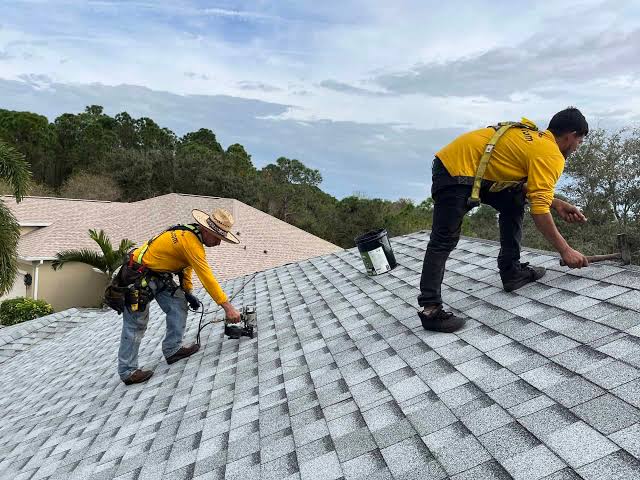

Choosing between roof repair vs roof replacement can be difficult when your roof starts showing signs of damage. A few broken tiles or a small leak may only require a straightforward repair, while widespread deterioration, structural problems or repeated leaks could make a complete replacement more practical.
The cheapest option is not always the best long-term choice. Equally, replacing an entire roof when a small section can be repaired can result in unnecessary expense.
The right decision depends on the age and condition of the roof, the type of damage, the roofing material, previous repairs and the expected cost of keeping the existing roof.
What is the difference between roof repair and replacement?
Roof repair involves fixing a specific problem while keeping most of the existing roof in place.
Typical repairs include replacing broken tiles, repairing flashing, fixing a localised leak or correcting a damaged section of guttering.
Roof replacement is much more extensive. It normally involves removing some or all of the existing roof covering and installing new roofing materials and, where necessary, new underlay, battens, flashing and other components.
The choice depends on whether the problem is isolated or whether the roof is experiencing wider deterioration.
Roof repair vs roof replacement: the main differences
| Factor | Roof repair | Roof replacement |
|---|---|---|
| Scope | Localised work | Major or complete project |
| Cost | Usually lower | Usually higher |
| Disruption | Generally less | Usually greater |
| Time | Often shorter | Usually longer |
| Best for | Isolated damage | Widespread deterioration |
| Existing materials | Mostly retained | Usually removed |
| Structural work | May be limited | Can be more extensive |
| Long-term solution | Depends on roof condition | Provides a new roofing system |
These are general differences. The actual work and cost will depend on the property and the condition of the roof.
When is roof repair the better option?
Repair is often sensible when the damage is limited and the rest of the roof remains in good condition.
For example, if a storm displaces several tiles but the surrounding roof is sound, replacing those tiles may solve the problem without requiring a complete replacement.
Repair may also be suitable when a leak has a clear and localised cause.
Common situations where repair may be appropriate include:
- A small number of broken tiles
- Localised flashing damage
- A blocked or damaged gutter
- A small area of damaged pointing
- A single roof junction that is allowing water in
- Limited storm damage
- Minor damage to a roof window or surrounding flashing
The important point is to establish why the problem occurred.
Simply replacing a visible tile may not solve the issue if water is entering through damaged flashing or another part of the roof.
When is roof replacement more appropriate?
Replacement becomes more likely when the roof has widespread problems rather than one isolated defect.
A complete replacement may be worth considering when:
- Large areas of the roof covering are deteriorated
- Leaks keep returning after repairs
- The roof has significant structural damage
- Underlay and battens have deteriorated
- The roof is ageing and requires frequent maintenance
- Several sections need repair at the same time
- Storm damage affects a substantial area
- Repair costs are becoming difficult to justify
A replacement can address several connected problems at once rather than dealing with each defect separately.
However, age alone should not be treated as proof that replacement is necessary.
Consider the age of the roof
The age of a roof is an important factor, but it needs to be considered alongside its current condition.
Different roofing materials have different expected service lives. Installation quality, maintenance, ventilation, weather exposure and the design of the roof can also influence performance.
An older roof that remains dry, structurally sound and well maintained may not need immediate replacement.
Conversely, a relatively younger roof can develop serious problems because of poor installation, storm damage, moisture or structural movement.
When deciding between repair and replacement, ask not only how old the roof is, but how well it is currently performing.
Look at the extent of the damage
The size and spread of the damage can help determine the most sensible approach.
Imagine that one tile has cracked and water is entering through that exact location. If the rest of the roof is in good condition, repair is likely to be the logical starting point.
Now imagine a roof with dozens of damaged tiles, several leaks, deteriorated flashing and visible structural problems.
In that situation, repairing one defect at a time may not provide a practical long-term solution.
A professional inspection can help establish whether the damage is isolated or widespread.
Repeated leaks are a warning sign
A recurring leak deserves more attention than a single isolated incident.
If a repair has been completed but water continues to enter the property, the original cause may not have been fully addressed.
There could also be several separate defects across an ageing roof.
Repeated leaks can damage ceilings, insulation, timber and other parts of the property. The longer the underlying moisture problem continues, the greater the potential for additional repair work.
If leaks are becoming more frequent, ask for an assessment of the entire roof rather than repeatedly repairing the visible symptom.
Check the roof structure
The condition of the supporting structure is an important part of the decision.
Roof coverings sit on a system of timbers and other components that need to remain sound.
Signs of possible structural problems include:
- Sagging roof sections
- Damaged or decayed timber
- Persistent dampness
- Unusual movement
- Significant distortion
- Visible deterioration around supporting components
A small area of damaged timber may be repairable.
Extensive structural deterioration can make a more comprehensive roof replacement necessary.
Structural concerns should be assessed by a suitably qualified professional rather than treated as a simple DIY repair.
Think about the underlay and battens
A roof is more than the visible tiles or slates.
Underlay and battens can also deteriorate over time. If they are damaged or no longer suitable, replacing the visible roof covering alone may not resolve the underlying problem.
During a major replacement, the contractor can inspect these concealed components once the existing covering has been removed.
This can be one reason why a replacement quotation is considerably higher than the price of simply buying new tiles.
Consider the roofing material
The material used on your roof affects both repair and replacement decisions.
Concrete tiles, clay tiles, natural slate, metal roofing and other materials have different properties, costs and installation requirements.
If your existing material is still readily available, matching a small repair may be relatively straightforward.
Older or discontinued materials can make repairs more difficult. Finding a close visual match may also be challenging, particularly on older properties where existing materials have weathered over time.
In some situations, a wider replacement may provide a more consistent finish.
How much does roof repair cost?
Small roof repairs can range from relatively inexpensive jobs to more substantial projects, depending on what needs to be fixed.
Replacing a few tiles is generally much cheaper than repairing structural timber or dealing with widespread water damage.
Other factors that affect repair costs include:
- Roof height
- Accessibility
- Amount of scaffolding required
- Roofing material
- Labour rates
- Location
- Extent of damage
- Additional materials
- Waste disposal
A quotation should explain exactly what the contractor intends to repair.
Very low repair prices should be treated carefully if they do not clearly explain the work involved.
How much does roof replacement cost?
A complete roof replacement can cost several thousand pounds for a typical UK property, while larger, more complex or premium-material projects can cost considerably more.
The final price depends on:
- Roof size
- Roof design
- Roof pitch
- Roofing material
- Labour
- Scaffolding
- Removal of the existing roof
- Waste disposal
- Structural repairs
- Insulation
- Ventilation
- Flashing and detailing
- Property location
Costs can vary significantly by location, materials, labour, property size and project requirements.
When comparing replacement prices, make sure each quotation covers a similar specification.
Repair costs versus long-term replacement costs
It can be tempting to keep repairing a roof because each individual repair costs less than replacement.
However, several repairs over a short period can add up.
For example, you might repair a leak in one area, replace several tiles a few months later and then pay for flashing repairs.
If new problems continue to appear, it may be worth comparing the total repair costs with the price of a planned replacement.
This does not mean replacement is automatically better. A roof in reasonable condition may still provide many years of useful service with normal maintenance.
The important consideration is whether the repairs are dealing with isolated problems or repeatedly treating symptoms of wider deterioration.
What about partial roof replacement?
A complete replacement is not the only alternative to a small repair.
In some cases, replacing one section of a roof can be appropriate.
This may be useful where an extension, dormer or particular roof slope has suffered extensive damage while the rest of the roof remains in good condition.
Partial replacement can sometimes provide a balance between cost and long-term reliability.
However, the new material should be compatible with the existing roof, and the junction between old and new sections needs to be properly detailed.
Consider the property's age and design
Older properties may have different roofing systems and materials from modern houses.
Traditional properties can contain natural slate, clay tiles or other materials that require appropriate repair methods.
Replacing an older roof with a completely different material may affect the property's appearance and, depending on the circumstances, may require additional considerations.
The roof's pitch, structure and existing construction should therefore be assessed before choosing replacement materials.
What about insulation and ventilation?
A major roofing project can be an opportunity to review insulation and ventilation.
Poor ventilation can contribute to condensation within the roof space, while inadequate insulation can affect energy efficiency.
However, not every roof problem requires insulation or ventilation upgrades.
If you are considering replacement, discuss these elements with the contractor before work begins. Including necessary improvements in the project plan can be easier than trying to add them later.
Roof repair or replacement after storm damage
Storm damage can make the decision more complicated.
If strong winds have displaced a handful of tiles, a repair may be enough.
If a large area has been damaged or the roof structure has been affected, more extensive work may be necessary.
Do not assume that storm damage means the entire roof needs replacing.
The appropriate solution depends on the extent of the damage and the condition of the rest of the roof.
How to choose between repair and replacement
A simple decision process can help.
First, identify the problem.
Next, determine whether the damage is isolated or widespread.
Then consider the roof's age, material and previous repair history.
Finally, compare the expected cost of repairing the existing roof with the cost of replacing it.
You should also consider how long you intend to remain in the property and whether a major roofing project is already likely to be required in the near future.
Questions to ask a roofing contractor
Before agreeing to work, ask the contractor to explain their findings.
Useful questions include:
- What exactly is causing the problem?
- Is the damage localised?
- How much of the roof is affected?
- Can the existing roof be repaired safely?
- How long might the repair reasonably last?
- What condition are the underlay and battens in?
- Are there any structural concerns?
- Would replacement solve several problems at once?
- What is included in the quotation?
- Are scaffolding and waste disposal included?
A clear explanation can make it easier to understand why a particular solution has been recommended.
Get more than one quotation
For substantial roofing work, comparing quotations can help you understand the likely scope and cost.
Try to obtain quotations based on the same specification.
For example, if one quote includes new underlay and scaffolding but another does not, the cheaper quote may not actually represent better value.
Check whether each quotation covers:
- Materials
- Labour
- Scaffolding
- Removal
- Waste disposal
- Underlay
- Battens
- Flashing
- Insulation
- Ventilation
- Structural repairs
- Finishing work
Do not choose solely on price. The proposed materials, scope of work and contractor's suitability also matter.
Common mistakes to avoid
One common mistake is repairing a roof repeatedly without investigating why new problems keep appearing.
Another is assuming that an old roof automatically needs replacing.
Other mistakes include:
- Choosing the cheapest quotation without checking what it includes
- Ignoring structural problems
- Failing to investigate recurring leaks
- Using unsuitable replacement materials
- Forgetting scaffolding and waste costs
- Not allowing a contingency for unexpected repairs
- Attempting dangerous roof work without suitable training
- Replacing the covering without addressing underlying moisture problems
A proper assessment can help prevent unnecessary spending.
A practical example
Consider a semi-detached house where a few tiles have been damaged by strong winds.
The roof is relatively modern, has no history of leaks and appears to be in good condition. An inspection confirms that the underlay and supporting structure are sound.
A targeted repair would probably make more sense than replacing the entire roof.
Now consider another property with an older roof. It has repeated leaks in several areas, numerous damaged tiles, deteriorated flashing and evidence of damaged timber.
In this case, continuing to repair individual defects may provide only a temporary solution. A complete replacement could be more practical.
The difference is the overall condition of the roofing system, not simply the presence of a leak.
Frequently asked questions
Is roof repair cheaper than roof replacement?
A repair is normally less expensive because it involves a smaller amount of work and fewer materials. However, repeated repairs can become costly if the roof has widespread deterioration.
How do I know if my roof needs repair or replacement?
Localised damage on an otherwise sound roof may only require repair. Widespread damage, repeated leaks, structural deterioration and frequent repairs can indicate that replacement should be considered.
Does an old roof always need to be replaced?
No. Roof age is only one factor. The material, installation quality, maintenance history, weather exposure and current condition all affect whether replacement is necessary.
Can I replace only part of my roof?
Yes, partial replacement can sometimes be suitable when one section is badly damaged while the rest remains in good condition. The new section should be properly integrated with the existing roof.
How much does roof replacement cost?
Costs vary according to roof size, material, labour, location, access and project requirements. A complete replacement can cost several thousand pounds, with larger or more complicated roofs costing considerably more.
Should I repair a roof before selling my house?
It depends on the roof's condition and your circumstances. Minor repairs may be sensible if they address obvious problems, while a full replacement is a much larger investment that should be considered against the property's overall condition and selling plans.
Conclusion
The choice between roof repair vs roof replacement depends mainly on the extent of the damage and the overall condition of the roof.
Small, isolated problems can often be repaired without disturbing the rest of the roofing system. However, widespread deterioration, repeated leaks, structural problems and frequent repair requirements may indicate that replacement is a more practical long-term option.
Before making a decision, have the roof properly assessed and ask for detailed quotations. Make sure the prices include all relevant work, including labour, materials, scaffolding, waste disposal and any structural repairs.
A sensible decision is not always the cheapest option today. The aim should be to choose a solution that is appropriate for the roof's condition, the property and your long-term plans.