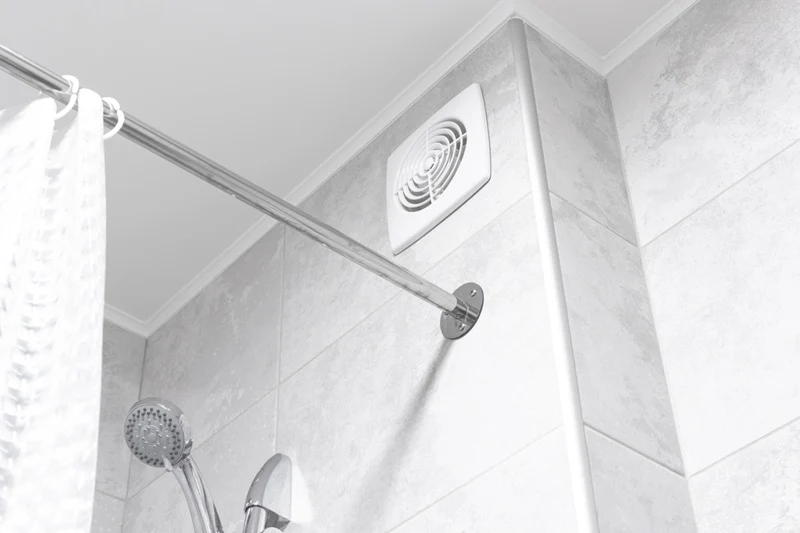

Learning how to improve bathroom ventilation can make a bathroom more comfortable, reduce excess moisture and help protect walls, ceilings, fixtures and finishes. Good ventilation removes humid air produced by showers and baths and replaces it with drier air from elsewhere in the home or outdoors.
Poor ventilation can leave condensation on mirrors, windows and walls. Over time, persistent moisture may contribute to mould, peeling paint, musty smells and damage to some materials.
Fortunately, improving airflow does not always require a major renovation. The right approach depends on the size of the bathroom, existing ventilation, window arrangements, humidity levels, property layout and the type of extraction system already installed.
Why bathroom ventilation matters
Bathrooms naturally produce a large amount of moisture. A hot shower can quickly raise humidity, particularly in a small room with limited airflow.
If that damp air remains trapped, it can condense when it reaches cooler surfaces. Repeated condensation can create conditions where mould and mildew are more likely to develop.
Effective ventilation helps by moving humid air away from the bathroom rather than allowing it to settle on surfaces.
Good ventilation can also help with:
- Reducing condensation on windows and mirrors
- Controlling musty smells
- Protecting paint and wall finishes
- Reducing moisture around ceilings and corners
- Helping bathroom surfaces dry more quickly
- Improving general comfort after showers
- Supporting a healthier indoor environment
Ventilation is particularly important in bathrooms without large windows or where several people use the room each day.
Signs your bathroom ventilation is inadequate
The first step is to identify whether there is actually an airflow problem.
Some signs are obvious, while others may develop gradually.
Common warning signs include:
- Condensation that remains long after a shower
- A bathroom mirror that takes a long time to clear
- Damp patches around the ceiling
- Mould appearing repeatedly
- Peeling or bubbling paint
- A persistent musty smell
- Moisture collecting around windows
- Towels taking unusually long to dry
- An extractor fan that sounds weak or does not seem to move air
- Humid air spreading into nearby rooms
One sign alone does not necessarily mean the ventilation system needs replacing. For example, condensation can also be affected by poor insulation or cold surfaces.
However, several signs appearing together are worth investigating.
Check your existing extractor fan
If your bathroom already has an extractor fan, check whether it is working effectively before replacing it.
Turn it on while the bathroom is humid and listen carefully. A fan that runs but moves very little air may have a blocked grille, dirty components, restricted ducting or another problem.
You can also check whether the fan appears to be drawing air from the room. A simple indication is whether lightweight tissue held near the fan grille is gently pulled towards it. Do not insert anything into the fan.
The fan should also discharge air correctly rather than simply moving moisture around inside the ceiling or wall cavity.
If the fan is noisy, unusually slow or frequently stops, it may need maintenance or replacement.
Clean the extractor fan regularly
A dirty extractor fan cannot work as effectively as a clean one.
Dust and other debris can collect around the grille and internal components. This can restrict airflow and make the fan work harder.
Switch off the power before cleaning any accessible parts. Follow the manufacturer's instructions and only remove components that are designed to be removed by the homeowner.
For a typical accessible grille, a soft brush or vacuum attachment can remove accumulated dust.
If the internal parts are difficult to access, or electrical components need to be exposed, it is safer to have the work carried out by a qualified professional.
Regular cleaning should be part of normal bathroom maintenance rather than something done only when ventilation problems appear.
Use the extractor fan for long enough
One common mistake is switching the extractor fan off as soon as the shower finishes.
The bathroom can remain humid even after the shower has stopped. Running the fan for a while afterwards gives it more time to remove moisture from the room.
If your fan has a timer or humidity sensor, make sure the controls are working correctly.
A humidity-sensitive fan can be particularly useful because it can respond to increased moisture automatically. This may reduce the chance of the fan being forgotten.
The exact running time required varies according to the bathroom, fan and ventilation arrangement. Follow the manufacturer's guidance rather than assuming one setting will suit every property.
Improve airflow through the bathroom door
An extractor fan needs replacement air to work properly.
If the bathroom is tightly sealed when the door is closed, the fan may struggle to draw enough air from the room.
A small gap underneath the door can help provide a route for replacement air. Some bathrooms use a purpose-designed ventilation grille in the door instead.
Do not block existing air paths with draught excluders, thick mats or other items if they are intended to provide ventilation.
However, ventilation should not be created by simply leaving the bathroom door permanently open. The aim is to provide controlled airflow while maintaining privacy and keeping moisture from spreading unnecessarily around the home.
Make better use of bathroom windows
A window can provide useful natural ventilation, particularly after bathing or showering.
Opening the window for a period after a shower can allow humid air to escape. This can work especially well when combined with mechanical extraction.
However, relying entirely on a window may not be practical throughout the year. Weather, security, noise, outdoor air quality and the bathroom's position can all affect whether it is suitable.
If the bathroom has a window that is difficult to open, replacing it is a much larger project and may not be necessary if an effective mechanical ventilation system can be installed.
Keep the bathroom door closed during and after showers
Keeping the bathroom door closed while showering can help prevent humid air from spreading throughout the house.
If the door is closed while the extractor fan is running, moisture is more likely to be directed towards the ventilation system rather than escaping into bedrooms, hallways or other living spaces.
Once the main moisture has been removed, the door can be opened to help the room dry further if appropriate.
The key is to combine controlled airflow with adequate replacement air rather than simply sealing the room completely.
Improve the extractor ducting
Sometimes the problem is not the fan itself but the route through which air is being removed.
Long, poorly designed or excessively bent ducting can restrict airflow. Crushed flexible ducting can also reduce the effectiveness of an extraction system.
Where possible, ventilation ducting should provide a clear route with as few unnecessary bends and restrictions as practical.
If you are installing a new fan or changing the duct route, the work should be designed around the particular property.
A ventilation professional can assess whether the existing ducting is suitable, particularly when the fan appears powerful but the bathroom remains damp.
Choose an extractor fan suited to the bathroom
Not every extractor fan is suitable for every bathroom.
When replacing a fan, consider factors such as:
- Bathroom size
- How frequently the room is used
- Existing duct length
- Noise level
- Available installation position
- Humidity levels
- Electrical requirements
- Whether automatic controls are useful
A larger or more powerful fan is not automatically the best choice. If the ducting is restrictive or the system is poorly installed, simply increasing fan power may not solve the underlying problem.
The fan should be appropriate for the room and ventilation arrangement.
Consider a humidity-sensing extractor fan
A humidity-sensing fan can automatically respond when moisture levels rise.
This can be useful for households where people frequently forget to switch the fan on or off. It can also allow ventilation to continue while the bathroom is drying.
Some models combine humidity sensing with timer controls.
These features can increase the purchase price compared with a basic fan, but the additional cost may be worthwhile where automatic operation makes the system easier to use.
Prices vary considerably depending on the fan specification, brand, installation requirements and labour costs.
Improve bathroom ventilation without major renovation
You do not always need to remodel the bathroom to improve airflow.
Some relatively simple changes include:
- Cleaning an existing extractor fan
- Repairing a faulty timer
- Improving airflow under the bathroom door
- Using the existing window more effectively
- Replacing an inefficient fan
- Cleaning accessible ventilation grilles
- Checking for blocked external vents
- Reducing unnecessary moisture inside the room
For example, if a small bathroom already has suitable ducting but an old, weak extractor fan, replacing the fan may provide a more practical improvement than changing the entire bathroom layout.
Check the external vent
The point where extracted air leaves the building should also be checked.
An external grille can become dirty or obstructed. Birds, insects, leaves and accumulated debris can sometimes interfere with airflow.
If the external outlet is accessible and safe to inspect, check whether it appears blocked.
Do not climb onto roofs or work at height simply to inspect a ventilation outlet. Difficult-to-access vents should be assessed by a suitable professional.
Reduce the amount of moisture produced
Ventilation is important, but reducing unnecessary moisture can make the system more effective.
Simple habits can help.
Try to avoid leaving the shower running unnecessarily, and use a shower screen or curtain properly so water does not spread across the room.
After showering, wiping excess water from very wet surfaces can also help the bathroom dry faster.
Towels should be hung where air can circulate around them rather than being left bunched up on the floor.
These small measures will not replace proper ventilation, but they can reduce the amount of moisture the system needs to remove.
Improve airflow around the bathroom
Furniture and storage can sometimes interfere with airflow.
Avoid placing tall storage units directly over or in front of ventilation grilles.
Keep the area around the extractor unobstructed so air can reach it easily.
If the bathroom has a large shower enclosure, consider whether its design allows humid air to move towards the extractor. A poorly positioned extraction point may struggle to remove moisture from a separate enclosed area.
During a renovation, ventilation should therefore be considered before the final position of showers, baths, cabinets and other fixtures is decided.
Consider ventilation when planning a bathroom renovation
A bathroom renovation is an ideal opportunity to review ventilation.
If walls or ceilings are already being opened, it may be easier to improve ducting or install a new extraction system at the same time.
Think about ventilation before finalising the layout.
For example, placing the shower directly beside an appropriate extraction point may make moisture removal easier than positioning it at the opposite end of the room.
This does not mean the extractor must always be immediately above the shower. The correct arrangement depends on the room and the ventilation design.
Improve insulation as part of the solution
Ventilation and insulation are different issues, but they can affect one another.
Condensation occurs when warm, moist air meets a sufficiently cold surface. If a bathroom ceiling, external wall or window is particularly cold, condensation may occur even when ventilation is reasonably good.
Improving insulation or reducing cold bridging may therefore help in some properties.
However, adding insulation without considering moisture movement can create other problems. Any work involving external walls, roofs or significant building alterations should be properly assessed.
What about mould?
Improving ventilation can help reduce the moisture that contributes to mould growth, but ventilation alone may not solve an existing mould problem.
First identify why the room is staying damp.
Possible causes include poor extraction, leaks, condensation, inadequate heating, cold surfaces or water entering from another part of the building.
Small areas of surface mould can often be cleaned using an appropriate household product according to its label instructions. Larger or recurring problems should be investigated rather than repeatedly cleaned without addressing the underlying cause.
Never simply paint over persistent mould and assume the problem has been fixed.
How much does it cost to improve bathroom ventilation?
The cost of improving bathroom ventilation depends heavily on the work required.
A simple cleaning or minor repair may cost relatively little, while installing a new extractor fan, replacing ducting or altering electrical connections can cost considerably more.
As a broad planning guide, costs can vary because of:
- Fan type and specification
- Bathroom size
- Duct length and complexity
- Wall or ceiling access
- Electrical work
- Labour rates
- Property location
- Whether existing equipment can be reused
- The amount of building work required
For example, replacing an accessible extractor fan with suitable existing wiring and ducting is generally a simpler project than installing a completely new ventilation route through a finished bathroom.
Always obtain a clear quotation before work begins. Prices can vary significantly by location, materials, labour, property construction and project requirements.
Common mistakes to avoid
Poor ventilation is sometimes made worse by well-intentioned changes.
Avoid these common mistakes:
- Blocking ventilation grilles
- Choosing a fan based only on appearance
- Installing a powerful fan without checking the ducting
- Ignoring a noisy or failing fan
- Switching the extractor off immediately after showering
- Allowing moisture to spread into the rest of the house
- Painting over recurring mould
- Ignoring leaks
- Installing unsuitable electrical equipment in a bathroom
- Making major electrical or structural changes without appropriate professional help
Bathroom electrical work requires particular care because water and electricity present serious risks. Use a suitably qualified professional for electrical installations and work that falls outside your ability or legal requirements.
A practical bathroom ventilation routine
A simple routine can make a noticeable difference.
Before showering, make sure the extractor fan is available and unobstructed.
During the shower, keep the bathroom door closed where practical and use the extractor.
Afterwards, continue ventilation for the appropriate period and allow the room to dry.
If there is a suitable window, opening it can provide additional airflow.
Clean the extractor grille periodically and check that the system continues to perform normally.
If condensation, mould or musty smells keep returning despite these measures, investigate the ventilation system rather than simply cleaning the symptoms.
Example: improving ventilation in a small bathroom
Imagine a small upstairs bathroom with one shower, a window and an older extractor fan.
The mirror stays covered in condensation for a long time after every shower, and mould repeatedly appears around one ceiling corner.
A sensible approach would be to inspect and clean the existing fan, check the external outlet and confirm that replacement air can enter beneath the door.
If the fan remains ineffective, replacing it with a suitable modern model could be considered. The ducting should also be checked rather than assuming the fan is the only problem.
If condensation continues after the ventilation system has been improved, the homeowner could then investigate cold surfaces, insulation or possible water ingress.
This approach addresses the cause step by step instead of immediately undertaking a major renovation.
How to improve bathroom ventilation effectively
The most effective approach is usually a combination of good extraction, controlled airflow and sensible moisture management.
Start with the simplest checks. Make sure the existing fan is clean, working properly and able to discharge air effectively.
Then consider whether the bathroom receives enough replacement air. Check the door airflow, window and position of the ventilation system.
If the existing system is old or ineffective, a suitably specified extractor fan may provide a better solution. Humidity sensing and timer controls can make the system easier to manage.
For larger changes, consider ducting, electrical requirements, insulation and the overall bathroom layout.
Frequently asked questions
Is it better to use a bathroom fan or open a window?
Both can be useful. An extractor fan provides controlled mechanical ventilation, while a window can provide natural airflow. Using a suitable combination can be effective, depending on the bathroom and property.
How long should a bathroom extractor fan run after a shower?
There is no single time that suits every bathroom. It depends on the fan, room size, humidity and ventilation arrangement. If the fan has a timer or humidity sensor, use the manufacturer's recommended settings.
Why is my bathroom still damp with the extractor fan on?
Possible causes include a weak or dirty fan, restricted ducting, a blocked external outlet, inadequate replacement air, excessive moisture production or cold surfaces. The whole ventilation system should be considered rather than just the fan.
Can a bathroom fan prevent mould?
Good ventilation can help reduce excess moisture, which can reduce conditions that encourage mould. However, it cannot guarantee that mould will never occur. Leaks, cold surfaces and other moisture sources may also need attention.
Should I leave the bathroom door open after showering?
It can help the room dry, but the best approach depends on the ventilation arrangement. Keeping the door closed while showering can help prevent humid air spreading through the home, while controlled ventilation removes moisture from the bathroom.
Is a more powerful extractor fan always better?
Not necessarily. Fan performance also depends on ducting, installation, room size and replacement airflow. A properly designed system is more important than choosing the highest-powered fan available.
Conclusion
Learning how to improve bathroom ventilation starts with understanding where moisture comes from and how effectively it is being removed.
Cleaning and checking an existing extractor fan, maintaining clear airflow, using windows appropriately and allowing the fan to run after showering can all help.
If these measures are not enough, the next step may be upgrading the extractor, improving ducting or reviewing the overall ventilation design.
During a bathroom renovation, ventilation should be treated as an important part of the room rather than an afterthought. A well-planned system can help control condensation, protect finishes and make the bathroom more comfortable to use.