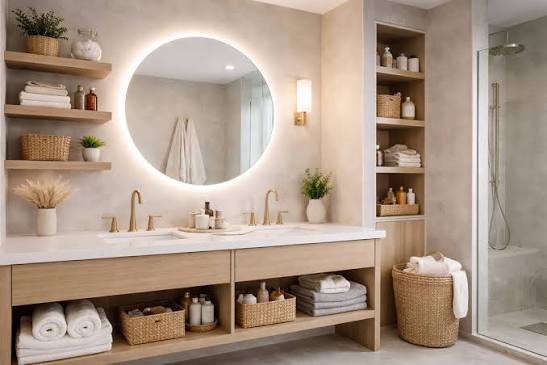

Good bathroom storage can make a room feel more organised, easier to clean and more comfortable to use. Whether you have a compact cloakroom or a large family bathroom, the right storage helps keep toiletries, towels, cleaning products and everyday essentials within easy reach without making the room feel crowded.
The best bathroom storage ideas use available space efficiently. This can mean making better use of wall space, choosing furniture with built-in storage, adding shelves or using the unused areas around the basin, toilet and shower.
The right solution depends on the size and layout of the bathroom, the number of people using it and the amount of storage you actually need.
Assess your bathroom before adding storage
Before buying shelves, cabinets or baskets, look carefully at the space available.
Measure the areas around the basin, toilet, bath and shower. Check how doors, windows and drawers open, and consider where plumbing is located.
It is also useful to decide what needs to be stored in the bathroom.
Typical items include:
- Daily toiletries
- Spare toiletries
- Towels
- Toilet rolls
- Cleaning products
- Hair styling equipment
- Medicines and first-aid items
- Cosmetics
- Children's bath products
- Personal care items
Not everything needs to stay in the bathroom. Bulky backup supplies can often be stored elsewhere, leaving the bathroom for items used regularly.
Use the space under the bathroom basin
The area underneath a basin is one of the most useful places for bathroom storage.
A vanity unit can provide enclosed space for toiletries, cleaning supplies and other items while keeping them out of sight.
Drawers can be particularly convenient because they make it easier to see what is stored at the back.
If plumbing takes up much of the available space, choose a unit designed around the pipework rather than trying to force a standard cabinet into the area.
For a small bathroom, a wall-mounted vanity can also leave some visible floor space underneath, which can make the room feel less crowded.
Install a mirrored cabinet
A mirrored cabinet can combine two functions in one piece of furniture.
Instead of having a separate mirror and storage cabinet, the mirror can conceal shelves for toothbrushes, skincare products, cosmetics and other small items.
This is particularly useful above a basin where wall space is already being used for a mirror.
When choosing one, check the depth carefully. A cabinet that projects too far into a narrow bathroom can make movement around the basin uncomfortable.
Also consider whether the doors can open fully without hitting a wall, light fitting or other bathroom fixture.
Make better use of wall space
Walls provide valuable storage space without taking up much floor area.
Open shelves can hold towels, baskets, decorative items and frequently used toiletries.
For a more streamlined appearance, wall-mounted cabinets can provide enclosed storage.
Useful areas include:
- Above the toilet
- Beside the basin
- Above a vanity unit
- Beside a bath
- Near the shower
- On an otherwise unused section of wall
Avoid overcrowding every available wall. Leaving some areas clear can make the room feel calmer and easier to maintain.
Add shelves above the toilet
The space above a toilet is often underused.
A narrow shelving unit or wall-mounted cabinet can provide useful storage without taking up valuable floor space.
This area can be used for toilet rolls, spare towels, toiletries and small baskets.
However, avoid placing products where they could easily fall into the toilet or interfere with access to the cistern.
If you install shelving, make sure it is securely fixed and suitable for the weight you intend to place on it.
Choose tall bathroom furniture
When floor space is limited, think vertically.
A tall cabinet can provide several shelves while using relatively little floor area.
This can be useful in narrow bathrooms where there is not enough room for a wide vanity or large storage unit.
Tall furniture can store less frequently used items on higher shelves while keeping everyday products at an easier height.
Make sure tall cabinets are securely installed, particularly in households with children.
Use recessed storage where practical
Recessed storage can make good use of space inside a wall, especially around a shower or bath.
A recessed shower niche, for example, can provide a dedicated place for shampoo, conditioner and shower gel without requiring a freestanding shelf.
Recessed cabinets can also be useful around a basin.
However, creating recessed storage is not suitable for every wall. Plumbing, electrical cables, structural elements and waterproofing all need to be considered.
For this reason, recessed storage is often easier to plan during a bathroom renovation rather than adding it later without checking the wall construction.
Install a shower niche
A shower niche is one of the most practical storage solutions for a modern bathroom.
It creates a dedicated area for shower products and avoids the need for bottles to sit on the floor.
A properly constructed niche should be waterproofed and finished appropriately for the shower environment.
Its height and position should also be considered carefully. Ideally, the products should be accessible without forcing users to stretch or bend unnecessarily.
For a family bathroom, a wider niche with separate sections can help keep different products organised.
Use baskets to organise open shelves
Open shelving can quickly become untidy if small products are placed directly on each shelf.
Baskets and storage boxes can solve this problem.
You can use separate containers for categories such as:
- Haircare
- Skincare
- Cleaning supplies
- Spare toiletries
- Children's products
- Guest towels
Baskets also make cleaning easier because several small items can be removed at once.
Choose materials that are suitable for the bathroom environment, particularly if the shelves are close to a shower or bath.
Use drawer organisers
Bathroom drawers can become cluttered surprisingly quickly.
Small organisers can divide the space into sections for toothbrushes, cosmetics, hair accessories, grooming products and other small items.
Clear or labelled containers can make it easier to find things without emptying the entire drawer.
Avoid filling every section simply because there is available space. The aim is to make frequently used items easier to access.
Make use of the back of cabinet doors
The inside of a cabinet door can provide additional storage without requiring another piece of furniture.
Small racks, hooks or organisers can hold items such as:
- Hairbrushes
- Cleaning cloths
- Small bottles
- Hair accessories
- Brushes
- Spare toiletries
Check the manufacturer's instructions before attaching anything to a cabinet door. Heavy storage can put unnecessary strain on hinges.
Add hooks for towels and robes
Hooks are one of the simplest bathroom storage ideas and can be particularly useful where there is little room for a towel rail.
Hooks can be installed behind the door or on a suitable section of wall.
They can hold towels, dressing gowns and other items without requiring much space.
For a family bathroom, several hooks can be arranged at suitable positions for different users.
Allow enough space between hooks so damp towels can spread out rather than remaining tightly bunched together.
Use a ladder-style towel rack
A ladder-style rack can provide several levels of towel storage without requiring a wide wall area.
It can be useful in bathrooms where traditional towel rails would take up too much horizontal space.
Some freestanding versions can also be moved if the layout changes.
However, make sure the rack is stable and positioned where it will not obstruct movement around the bathroom.
Consider over-door storage
The back of a bathroom door can sometimes provide valuable storage space.
An over-door organiser can hold lightweight items such as toiletries, spare toilet rolls or cleaning cloths.
Before using one, check that it does not prevent the door from closing properly or interfere with handles and hinges.
It is also important not to overload the door.
Store toilet rolls efficiently
Toilet rolls do not need to occupy valuable cabinet space if another storage solution is available.
A narrow basket, vertical holder or slim cabinet can keep spare rolls organised.
The best option depends on the bathroom layout.
In a small room, a tall and narrow storage solution can be more practical than a wide basket placed on the floor.
Use the area beside the toilet
A narrow gap beside the toilet can sometimes accommodate a slim storage unit.
This could hold spare toilet rolls, cleaning supplies or toiletries.
Measure the gap carefully before buying anything.
Also consider access to the toilet, cistern and floor when choosing the unit. Storage should not make routine cleaning or maintenance difficult.
Keep everyday items within easy reach
Good storage is not simply about creating more shelves.
The position of the storage matters.
Items used every day should generally be placed where they are easy to reach.
Less frequently used products can go on higher shelves or towards the back of cabinets.
For example, a family might keep everyday toiletries in the vanity and shower niche while storing spare shampoo and toilet rolls in a taller cabinet.
This reduces visual clutter and makes the bathroom easier to use.
Use matching containers for a cleaner appearance
If open storage is necessary, matching containers can make the bathroom look more organised.
Rather than having numerous bottles and packages on display, products can be grouped into simple baskets or boxes.
This is particularly useful on open shelving.
It does not require expensive containers. Affordable baskets or storage boxes can achieve a similar organisational effect as long as they are suitable for the bathroom environment.
Create dedicated storage for children
Children's toiletries can quickly take over a family bathroom.
A dedicated basket, drawer or low storage area can keep their items together.
Products should be stored according to their safety requirements. Items that should not be accessible to young children need to be kept securely out of reach.
A dedicated area also teaches children where their belongings should be returned after use.
Keep cleaning products separate
Cleaning products should be organised separately from everyday toiletries.
A dedicated cupboard or secure storage area can prevent bottles and cleaning equipment from taking over the vanity or shelves.
Follow the product labels for safe storage, and never transfer chemicals into unlabelled containers.
If children use the bathroom, cleaning products should be stored securely and according to the manufacturer's safety instructions.
Make use of corners
Corners can be awkward, but they can also provide useful storage opportunities.
A corner shelf can hold toiletries, folded flannels or decorative items.
Corner shower shelving can also keep products away from the main floor area.
Avoid filling corners simply because they are available. Choose storage that does not make the room difficult to move around.
Choose wall-mounted furniture for small bathrooms
Wall-mounted cabinets and vanity units can be particularly effective in compact bathrooms.
Because they leave some floor visible underneath, they can help maintain an open appearance while still providing useful storage.
This can also make cleaning the floor easier.
The wall must be suitable for supporting the furniture, and the fixing method should be appropriate for the wall construction and weight involved.
Combine open and closed storage
There is no need to choose between completely open shelving and fully enclosed cabinets.
A combination can work well.
Open shelves can hold attractive towels or frequently used items, while closed cabinets can hide cleaning products, spare toiletries and less visually appealing items.
This approach can provide accessibility without making the entire bathroom look busy.
Bathroom storage ideas for small spaces
Small bathrooms require careful planning because every piece of furniture takes up valuable room.
Some useful bathroom storage ideas for compact spaces include:
- Use a mirrored storage cabinet instead of a separate mirror and cupboard.
- Choose a slim vanity with drawers.
- Install shelves above the toilet.
- Use vertical storage rather than wide furniture.
- Add hooks behind the door.
- Use a shower niche where construction allows.
- Store spare supplies outside the bathroom when practical.
- Use drawer organisers to maximise existing storage.
- Choose wall-mounted furniture where suitable.
- Keep worktops as clear as possible.
The most important principle is to use storage for the items you actually need rather than trying to fit every household product into the bathroom.
Storage ideas for a large bathroom
A larger bathroom provides more options, but it can still become cluttered.
A wide vanity with multiple drawers can provide substantial storage for a family.
Tall cabinets can store towels and spare toiletries, while a separate linen cupboard can keep bulkier items organised.
A larger room can also accommodate a freestanding storage unit or bench with built-in compartments.
Even in a large bathroom, avoid placing furniture where it restricts movement or creates unnecessary cleaning areas.
Choose moisture-resistant materials
Bathrooms are humid environments, so storage materials need to be suitable.
When choosing cabinets, shelves and baskets, consider their resistance to moisture and how easy they are to clean.
Materials and finishes that are not designed for damp environments may deteriorate over time, particularly if they are repeatedly exposed to splashes.
Pay particular attention to storage positioned close to baths, showers and basins.
How much does bathroom storage cost?
Bathroom storage costs vary considerably depending on the type of solution.
Simple hooks, baskets and organisers can be relatively inexpensive, while fitted cabinetry, custom furniture and recessed storage can cost much more.
The final price may depend on:
- Materials
- Furniture size
- Brand and design
- Installation requirements
- Plumbing alterations
- Wall construction
- Labour rates
- Property location
- Whether the work is part of a wider renovation
For example, adding a few shelves may require little installation work, while creating a built-in vanity or recessed cabinet could involve carpentry, electrical work, plumbing or wall alterations.
Prices therefore vary by location, materials, labour, property size and project requirements. Obtain several suitable quotations when professional installation is required.
Avoid common bathroom storage mistakes
Adding more storage does not automatically make a bathroom more organised.
One common mistake is choosing furniture that is too large for the room.
Another is placing storage where it blocks doors, drawers or access to plumbing.
Other mistakes include:
- Overloading shelves
- Ignoring moisture exposure
- Using unsuitable materials
- Storing too many rarely used products
- Creating difficult-to-clean gaps
- Installing unsecured tall furniture
- Blocking ventilation grilles
- Choosing storage before measuring the room
- Putting heavy items on unsuitable wall fixings
Think about how the bathroom will be used every day before buying anything.
Example of a practical storage plan
Consider a small family bathroom with a toilet, shower, basin and limited floor space.
Instead of adding a large freestanding cabinet, the homeowner could install a mirrored cabinet above the basin and a compact vanity underneath.
A recessed shower niche could hold daily shower products if the wall construction allows it.
A few hooks behind the door could provide space for towels and dressing gowns, while a narrow cabinet above the toilet could store spare toilet rolls and toiletries.
This arrangement uses several small areas rather than relying on one large piece of furniture.
Frequently asked questions
What is the best storage for a small bathroom?
Wall-mounted cabinets, mirrored storage units, slim vanity furniture, shelves above the toilet and vertical cabinets can all work well. The best option depends on the room's layout and available wall space.
How can I add bathroom storage without making the room look smaller?
Use vertical and wall-mounted storage, keep surfaces relatively clear and avoid oversized furniture. Mirrored cabinets can also combine storage with another essential bathroom feature.
Is open shelving a good idea in a bathroom?
Open shelving can be useful for towels and frequently used products, but it can look cluttered if too many small items are displayed. Baskets and containers can help keep open shelves organised.
How can I store towels in a small bathroom?
Use wall-mounted towel rails, hooks, ladder-style racks or a tall cabinet. If space is particularly limited, store spare towels elsewhere and keep only the towels currently in use in the bathroom.
Can I install a storage cabinet above the toilet?
Yes, provided it is securely installed and does not interfere with the toilet, cistern, ventilation or access for maintenance. Measure the space carefully before choosing the cabinet.
Is fitted bathroom storage worth considering?
Fitted storage can make excellent use of awkward spaces and provide a tailored solution, but it usually costs more than simple freestanding furniture. The value depends on the bathroom layout, storage needs and budget.
Conclusion
The best bathroom storage ideas do not necessarily involve adding more furniture. They focus on using the space intelligently and keeping frequently used items accessible without overcrowding the room.
Start by assessing what you actually need to store and identify unused areas around the basin, toilet, shower, walls and door.
For small bathrooms, vertical storage, mirrored cabinets, slim furniture and wall-mounted solutions can make a significant difference. Larger bathrooms can benefit from wider vanities, tall cabinets and dedicated linen storage.
Whatever solution you choose, consider moisture resistance, safe installation, accessibility and ease of cleaning. With careful planning, even a compact bathroom can have enough practical storage to stay organised and comfortable.