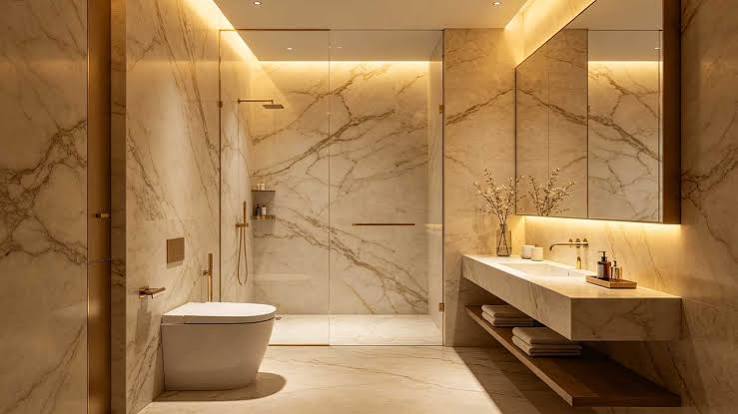

Choosing the best bathroom wall materials is an important part of planning a bathroom renovation. Bathroom walls have to cope with moisture, condensation, splashes and regular cleaning, particularly around showers and baths. The right material should protect the underlying wall while also creating a finish that suits the room.
Popular choices include ceramic tiles, porcelain tiles, natural stone, waterproof wall panels, acrylic sheets and specially formulated bathroom paint. Each has different advantages in terms of appearance, durability, maintenance, installation and cost.
There is no single material that works perfectly for every bathroom. The best choice depends on where the material will be installed, how much water the walls receive, your budget and the overall style you want to achieve.
What should you look for in a bathroom wall material?
Bathroom walls are exposed to considerably more moisture than walls in most other rooms.
However, being water-resistant and being completely waterproof are not always the same thing. The performance of a wall depends on the material, the installation system, joints, seals and the condition of the surface behind it.
When comparing materials, consider:
- Resistance to moisture
- Suitability for wet areas
- Ease of cleaning
- Resistance to mould and staining
- Durability
- Installation requirements
- Maintenance
- Appearance
- Repairability
- Total installed cost
It is also important to consider ventilation. Even a well-finished bathroom can experience condensation if moisture is not properly controlled.
Best bathroom wall materials compared
Different materials suit different situations. The following table provides a general comparison.
| Material | Moisture resistance | Maintenance | Appearance | General cost level |
|---|---|---|---|---|
| Ceramic tiles | Very good | Low | Wide range | Low to medium |
| Porcelain tiles | Excellent | Low | Wide range | Medium |
| Natural stone | Varies | Medium to high | Premium | High |
| Waterproof wall panels | Very good | Very low | Wide range | Medium |
| Acrylic panels | Very good | Very low | Modern | Low to medium |
| Bathroom paint | Moderate | Low | Very flexible | Low |
| Glass panels | Excellent | Low | Modern | Medium to high |
| Microcement | Very good when properly installed | Medium | Contemporary | Medium to high |
The cost categories are general. Actual prices can vary by location, product quality, labour rates, wall condition, room size and installation complexity.
Ceramic wall tiles
Ceramic tiles remain one of the most common choices for bathroom walls.
They are available in almost countless colours, patterns, shapes and finishes. This makes them suitable for traditional, modern and minimalist bathrooms.
Ceramic tiles can be relatively affordable, particularly compared with some natural stone products.
They are also easy to clean when correctly installed and maintained.
One advantage of wall tiles is that you can use them selectively. For example, you could tile the shower area and use moisture-resistant paint on the remaining walls.
The main drawback is the grout. Grout lines can become stained over time and may require cleaning and maintenance.
Porcelain wall tiles
Porcelain tiles are another strong option for bathroom walls.
They are dense, hard-wearing and highly resistant to moisture. They are available in designs that imitate marble, stone, concrete and even timber.
Porcelain can be particularly attractive if you want a high-end appearance without using natural stone.
Large-format porcelain tiles can also reduce the number of visible grout lines, creating a cleaner appearance.
However, larger and heavier tiles can require more careful handling and installation. Wall preparation is important because the surface needs to be sufficiently sound and suitable for the chosen tile.
Natural stone
Natural stone can create a distinctive and luxurious bathroom.
Common choices include:
- Marble
- Slate
- Travertine
- Limestone
- Granite
Each stone has different characteristics. Some are more porous than others and may need sealing to help protect the surface.
Natural stone can also require more maintenance than ceramic or porcelain.
Cleaning products need to be suitable for the particular stone, and the surface may need periodic attention to maintain its appearance.
The material and installation can also be more expensive.
For homeowners who like the appearance of stone but want simpler maintenance, porcelain tiles with stone-effect finishes can provide an alternative.
Waterproof bathroom wall panels
Bathroom wall panels are becoming increasingly popular as an alternative to traditional tiling.
They are available in many colours, patterns and textures. Some imitate marble, stone, timber or other decorative surfaces.
One major advantage is the reduced number of joints compared with conventional tiled walls.
Fewer joints can make the surface easier to clean and can reduce the amount of grout that needs regular attention.
Wall panels can also be quicker to install in some situations, although the exact installation process depends on the product and condition of the existing wall.
They can be particularly useful for shower areas and bathroom renovations where homeowners want a relatively low-maintenance finish.
Acrylic bathroom panels
Acrylic panels offer another practical wall-covering option.
They are lightweight compared with some tiled or stone systems and are available in a range of colours and finishes.
Acrylic can create a smooth appearance with relatively few joints.
It is often easier to clean than a heavily textured wall finish because there are fewer areas where dirt can collect.
However, acrylic can be more vulnerable to scratching or damage than some harder materials. The particular product and installation system should therefore be considered before making a decision.
Bathroom paint
Paint can be an economical way to finish bathroom walls that are not directly exposed to large amounts of water.
Specialist bathroom paints are designed for environments where humidity and condensation are common. They can also make it relatively easy to change the colour of the room later.
Paint is particularly useful on walls away from the bath or shower.
It is generally not a substitute for a properly designed waterproof wall system in areas that receive regular direct water exposure.
A common approach is to combine materials: use tiles or panels in wet areas and suitable bathroom paint elsewhere.
This can provide a balanced appearance while keeping the overall project cost under control.
Glass bathroom wall panels
Glass can create a bright, contemporary appearance.
It is often used behind showers, baths or basins and can be particularly effective in modern bathrooms.
Glass surfaces are relatively easy to wipe clean and do not have conventional grout lines.
They can also reflect light, which may help a smaller bathroom feel brighter.
However, glass requires careful measurement and installation. Special cutting may be required around fittings, sockets or other features.
Costs can also be higher than basic ceramic tiles, particularly when custom-sized panels are required.
Microcement
Microcement can provide a smooth, modern finish with a minimal number of visible joints.
It can be used to create a continuous appearance across walls and, depending on the system, other bathroom surfaces.
Its performance depends heavily on the preparation, application and protective finish.
It is therefore important to use a suitable system and experienced installer, particularly in areas exposed to regular water.
Microcement can work well in contemporary bathrooms where a simple, seamless-looking appearance is desired.
Which wall material is best around a shower?
The shower area is one of the most demanding parts of a bathroom.
Walls around a shower receive direct water exposure, so the complete installation needs to be designed to deal with moisture.
Porcelain or ceramic tiles, suitable waterproof wall panels, glass and properly installed specialist wall systems can all be appropriate options depending on the circumstances.
Do not judge suitability solely by the surface material. The substrate, waterproofing system, joints, corners and penetrations around fittings all matter.
If you are installing a new shower in a major renovation, waterproofing should be considered before the decorative finish is chosen.
Waterproofing behind bathroom walls
A decorative surface does not necessarily provide the entire waterproofing system.
In wet areas, water can potentially reach behind tiles or panels through joints, corners, penetrations and damaged seals.
The appropriate waterproofing method depends on the construction of the wall and the type of wet area.
For example, a shower installation may require a suitable tanking or waterproofing system behind the finished surface.
This is particularly important in areas where water reaches the wall regularly.
If waterproofing is necessary, it should be planned before the final wall covering is installed rather than treated as a last-minute addition.
Choosing materials for a small bathroom
The wall finish can have a noticeable effect on how a small bathroom looks.
Light-coloured tiles and smooth wall panels can help reflect available light and create a cleaner visual appearance.
Large-format tiles can also reduce the number of grout lines, although the size of the tiles should be appropriate for the shape of the room.
Mirrors can further increase the sense of space, especially when positioned to reflect light.
However, there is no need to cover every wall with the same material. A feature wall, tiled shower area and painted remaining walls can create visual interest without making the room feel overly busy.
Choosing bathroom wall materials for a family bathroom
Family bathrooms often experience heavy daily use.
Durability and easy maintenance may therefore be more important than choosing a delicate decorative finish.
Porcelain, ceramic, quality wall panels and suitable bathroom paint can all play a role.
Consider how easy the material is to clean and whether marks will be visible.
A highly textured surface may look attractive but could require more effort to clean than a smooth finish.
For busy households, practical maintenance should be considered alongside appearance.
Matching wall materials with bathroom flooring
Wall and floor materials do not need to be identical.
In fact, combining different textures can create a more interesting bathroom.
For example, a bathroom could use:
- Stone-effect porcelain flooring with plain wall tiles
- Large marble-effect wall panels with a darker floor
- Simple white ceramic tiles with patterned flooring
- Neutral wall paint with a tiled shower enclosure
- Timber-effect porcelain flooring with light-coloured wall panels
When combining finishes, consider colour, texture and scale.
Using too many competing patterns can make a small bathroom look crowded.
Bathroom wall material costs
The cost of covering bathroom walls depends on the size of the room and the material selected.
The total project cost may include:
- Wall covering materials
- Adhesive or fixing systems
- Grout
- Waterproofing
- Wall preparation
- Removal of existing tiles
- Labour
- Cutting
- Sealants
- Trims and finishing pieces
- Disposal of waste
A large bathroom naturally requires more material than a small one, but labour and preparation costs do not always increase at exactly the same rate.
Local labour prices can also differ considerably.
When comparing quotations, check whether preparation, waterproofing, removal and finishing work are included.
How to save money on bathroom wall finishes
You do not need to cover every wall with the most expensive material.
One effective approach is to use premium finishes selectively.
For example, expensive patterned tiles could be used around the basin or shower while more affordable tiles cover larger areas.
Another option is to combine tiles with suitable bathroom paint.
Other ways to control costs include:
- Compare several tile and panel suppliers
- Choose standard tile sizes
- Avoid unnecessary wall alterations
- Keep the existing layout where practical
- Use feature materials on limited areas
- Repair suitable existing surfaces instead of replacing them
- Get detailed installation quotations
- Plan the design before ordering materials
Avoid choosing a material solely because it is cheap. A product that requires frequent repairs or is unsuitable for the environment may cost more over time.
Preparing walls before installation
The condition of the existing walls can significantly affect the renovation.
Before installing new materials, check for:
- Damp
- Loose plaster
- Cracks
- Uneven surfaces
- Water damage
- Mould
- Loose existing tiles
- Damaged plasterboard
These problems should be addressed before the new finish is installed.
Covering a damaged wall with a new decorative surface may hide the problem temporarily without fixing its underlying cause.
Good preparation also helps tiles and panels sit correctly and can improve the final appearance.
Ventilation and moisture control
Bathroom wall materials perform better when moisture is properly managed.
An effective extractor fan can help remove humid air, while opening windows where appropriate can also improve ventilation.
After showers and baths, allowing moisture to escape can reduce condensation on walls and ceilings.
Persistent condensation can contribute to mould and deterioration of finishes.
If your bathroom regularly feels damp, investigate ventilation before spending money on a new decorative wall covering.
Common bathroom wall mistakes
A beautiful bathroom can still develop problems if the wall system is poorly planned.
Common mistakes include:
- Choosing a material that is unsuitable for direct water exposure
- Ignoring waterproofing
- Installing tiles over an unstable surface
- Using unsuitable paint in wet areas
- Failing to seal joints properly
- Choosing difficult-to-maintain finishes
- Ignoring ventilation
- Buying materials before measuring accurately
- Focusing only on material price
- Making changes after installation has already started
Good planning reduces the chance of expensive corrections later.
How to choose the right bathroom wall material
Start by identifying which areas receive the most water.
The shower enclosure and area immediately around a bath generally require more careful moisture protection than a wall that is rarely splashed.
Next, consider your preferred appearance and maintenance requirements.
Then compare:
- Moisture resistance
- Waterproofing requirements
- Durability
- Cleaning
- Installation
- Appearance
- Repairability
- Total installed cost
For many homeowners, ceramic or porcelain tiles provide a good balance of durability, appearance and choice. Wall panels can be attractive when low maintenance and fewer joints are priorities, while bathroom paint can be useful in lower-splash areas.
Frequently asked questions
What are the best bathroom wall materials?
Ceramic tiles, porcelain tiles and suitable waterproof wall panels are among the most practical choices. The right option depends on where the material will be installed, how much water it receives, your budget and the appearance you want.
Are bathroom wall panels better than tiles?
Wall panels can be easier to clean because they generally have fewer joints and can provide a continuous appearance. Tiles offer a much wider variety of designs and can be easier to replace in small sections. Neither is automatically better for every bathroom.
Can I use normal paint on bathroom walls?
Standard interior paint may not be suitable for areas exposed to frequent moisture. Specialist bathroom paint is generally a better choice for walls that experience humidity and condensation, while direct wet areas may require a more water-resistant wall system.
What is best for shower walls?
Suitable ceramic or porcelain tiles, waterproof wall panels, glass and other properly installed wet-area systems can work well. The complete installation, including the substrate, waterproofing and joints, is important.
Do bathroom walls need waterproofing?
Some bathroom areas, particularly those exposed to regular direct water, may require a suitable waterproofing system. The exact requirements depend on the construction and design of the bathroom.
Are natural stone bathroom walls difficult to maintain?
They can require more maintenance than ceramic, porcelain or many wall panels. Some natural stones are porous and may require sealing and suitable cleaning products. Check the requirements of the specific stone before choosing it.
Conclusion
The best bathroom wall materials should provide a suitable balance of moisture resistance, durability, appearance, maintenance and cost.
Ceramic and porcelain tiles remain versatile choices, while waterproof panels can offer a low-maintenance alternative with fewer joints. Bathroom paint can work well in lower-splash areas, while natural stone, glass and microcement can create distinctive finishes when properly installed.
Before choosing a material, think about how much water each wall receives and what is behind the existing surface. Waterproofing, preparation and ventilation can be just as important as the decorative finish itself.
Finally, compare the complete installed cost rather than looking only at the price of the material. A well-planned wall system should suit the room, fit your budget and provide a practical finish that remains easy to maintain over time.