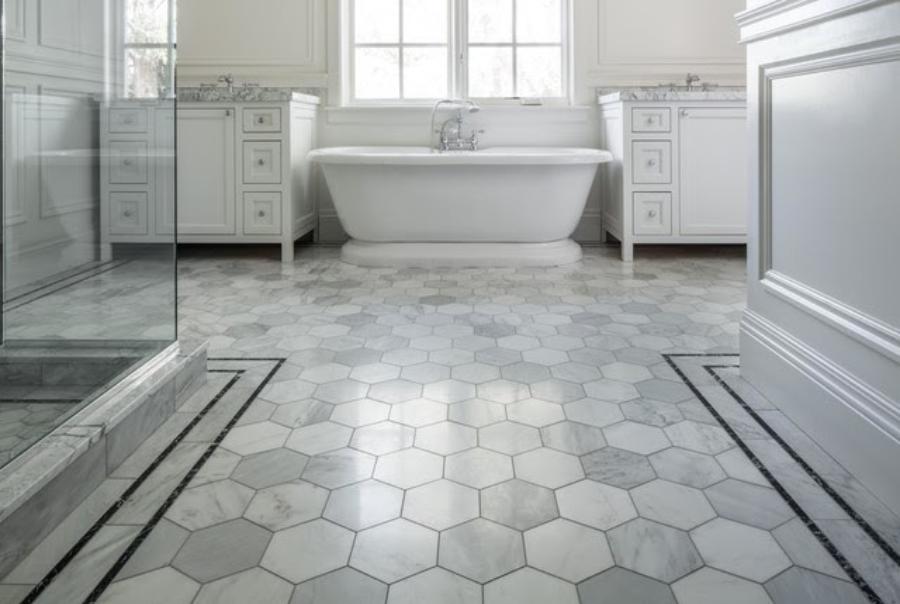

Choosing the best flooring for bathrooms involves more than picking a colour or pattern that looks attractive. Bathroom flooring needs to cope with water, humidity, regular cleaning and everyday foot traffic while remaining comfortable and safe to use.
The right flooring should also suit the size and style of the room, your budget and the condition of the existing floor. Some materials are highly resistant to moisture but can be expensive to install, while others offer a lower-cost alternative with easier maintenance.
There is no single flooring material that is perfect for every bathroom. The best choice depends on how the room is used and what qualities matter most to you.
What makes a good bathroom floor?
Bathrooms have different flooring requirements from bedrooms and living rooms. Water can reach the floor around baths, showers, basins and toilets, while condensation can create a humid environment.
A suitable bathroom floor should ideally be:
- Resistant to moisture
- Easy to clean
- Durable enough for everyday use
- Suitable for the room's ventilation and humidity
- Comfortable to walk on
- Appropriate for the property's structure
- Easy to maintain
- Suitable for the available budget
Slip resistance is also important. A floor that becomes very slippery when wet can be unsuitable for a bathroom, particularly in homes used by children, older people or anyone with mobility difficulties.
The surface, installation method and maintenance requirements should therefore be considered alongside appearance.
Best flooring for bathrooms: top options compared
Several flooring materials can work well in bathrooms, but they have different advantages and disadvantages.
| Flooring type | Water resistance | Maintenance | Durability | General cost level |
|---|---|---|---|---|
| Porcelain tile | Excellent | Low | Excellent | Medium to high |
| Ceramic tile | Very good | Low | Very good | Low to medium |
| Luxury vinyl tile | Very good | Low | Good to very good | Low to medium |
| Sheet vinyl | Very good | Very low | Good | Low |
| Natural stone | Varies | Medium to high | Very good | High |
| Waterproof laminate | Good | Low | Good | Medium |
| Concrete | Very good when properly finished | Low to medium | Excellent | Medium to high |
| Engineered wood | Moderate | Medium | Good | Medium to high |
The quality of the product and installation matters just as much as the material itself. A high-quality floor can perform poorly if it is installed on an unsuitable or uneven base.
Porcelain tiles
Porcelain is one of the most popular choices for bathroom flooring because it is hard, durable and highly resistant to water when properly installed.
It is available in a wide range of colours, textures, sizes and patterns. Some porcelain tiles are designed to resemble timber, stone or concrete, giving homeowners plenty of design flexibility.
Porcelain can be particularly useful in busy family bathrooms because it is resistant to everyday wear and relatively easy to clean.
However, porcelain tiles can feel cold underfoot. They can also be harder to cut and install than some other flooring materials, so professional installation may be worthwhile.
Large porcelain tiles can create a clean appearance with fewer grout lines, although the subfloor needs to be properly prepared.
Ceramic tiles
Ceramic tiles are another established bathroom flooring option.
They are available at a wide range of price points and can be found in numerous colours, shapes and finishes. This makes them suitable for both simple and more decorative bathroom designs.
Ceramic tiles are generally easier to cut than porcelain, which can make installation more straightforward.
However, not every ceramic tile is suitable for flooring. Check that the particular product is rated for floor use and appropriate for a bathroom environment.
The surface finish is also important. A highly polished tile may not be the best choice for areas that regularly become wet.
Luxury vinyl flooring
Luxury vinyl tile and luxury vinyl plank flooring have become popular because they can provide the appearance of wood, stone or tile without the same installation requirements as traditional tiles.
Good-quality bathroom-suitable vinyl can be comfortable underfoot and relatively easy to clean.
It can also be useful when homeowners want a warmer-feeling floor than ceramic or porcelain.
However, product specifications matter. Not every vinyl flooring product is designed for every bathroom application. Follow the manufacturer's instructions and make sure the subfloor is properly prepared.
Water can also cause problems if it gets beneath flooring through poorly sealed joints or around fixtures.
Sheet vinyl
Sheet vinyl is a practical option for homeowners looking for a relatively affordable and easy-to-maintain bathroom floor.
Because it can be installed in large continuous sections, there may be fewer seams where water can enter compared with some other flooring systems.
It is available in many patterns, including designs that imitate tiles and natural materials.
Sheet vinyl can be particularly useful for smaller bathrooms where a continuous floor surface can create a simple appearance.
However, the quality of installation is important. Cuts around toilets, baths and other fixtures need to be properly handled to reduce the risk of moisture getting underneath the flooring.
Natural stone flooring
Natural stone can give a bathroom a distinctive and premium appearance.
Common choices include:
- Slate
- Limestone
- Travertine
- Marble
- Granite
Each type has different characteristics. Some natural stones are more porous than others and may require sealing and ongoing maintenance.
Stone can also be more expensive than ceramic, porcelain or vinyl once the material, preparation and installation are considered.
If you like the appearance of natural stone but want easier maintenance, porcelain tiles designed to resemble stone can be an alternative worth considering.
Waterproof laminate flooring
Modern laminate flooring is available in products designed to resist moisture, and some can be suitable for bathroom environments when installed according to the manufacturer's requirements.
It can provide the appearance of timber or other materials while being relatively straightforward to maintain.
However, homeowners should not assume that every laminate floor is suitable for bathrooms. Traditional laminate can be vulnerable to moisture, particularly if water reaches the edges or joints.
Always check the product's intended use before installing it in a bathroom.
Engineered wood flooring
Engineered wood can provide a warm and natural appearance, but it requires more consideration in a bathroom than porcelain, ceramic or vinyl.
Bathrooms have frequent changes in humidity, which can affect wood-based flooring.
If you are considering engineered wood, choose a product specifically recommended for the intended environment and follow installation and maintenance instructions carefully.
It may be better suited to a bathroom with good ventilation and careful moisture management than a room where water frequently reaches the floor.
Concrete flooring
Concrete can create a modern, minimalist appearance and is naturally hard-wearing.
It can work particularly well in contemporary bathrooms, especially when combined with simple walls and modern sanitaryware.
However, concrete floors require appropriate preparation and finishing. Cracks, moisture movement and surface treatment need to be considered.
A properly finished concrete surface can be practical, but it is not necessarily the cheapest option once professional preparation and installation are included.
Choosing slip-resistant bathroom flooring
Safety should be one of the main considerations when choosing a bathroom floor.
Water, soap and cleaning products can make surfaces slippery. A floor that feels safe when dry may behave differently when wet.
When comparing products, look at the manufacturer's slip-resistance information rather than relying only on how the surface looks.
Textured tiles can provide additional grip, but heavily textured surfaces may be more difficult to clean.
There is often a balance between slip resistance, comfort and maintenance. Choose a product that provides an appropriate combination for the way your bathroom is used.
Choosing flooring for a small bathroom
Flooring can influence how spacious a small bathroom feels.
Large-format tiles can make a compact room appear less visually busy because there are fewer grout lines. Light colours can also help reflect available light.
However, tile size should be considered alongside the dimensions and shape of the room. Large tiles may require more cutting in a small or unusually shaped space.
Other suitable options include sheet vinyl or large-format luxury vinyl flooring, particularly when you want a continuous visual appearance.
Avoid choosing flooring solely because it makes the room look larger. Practicality and moisture resistance should remain priorities.
Choosing flooring for a family bathroom
A family bathroom often experiences more traffic and heavier daily use than a guest bathroom.
Durability and easy maintenance are therefore particularly important.
Porcelain, ceramic and quality vinyl can all be practical options. The best choice depends on the room, budget and preferences.
If young children use the bathroom, a floor that provides suitable grip when wet may be more important than selecting the most decorative material.
It can also be helpful to choose a finish that does not show every splash or mark.
Bathroom flooring and underfloor heating
If you are considering underfloor heating, choose the flooring at the beginning of the project rather than treating it as an afterthought.
Porcelain and ceramic tiles are commonly associated with underfloor heating because they conduct and retain heat effectively.
Some vinyl and other flooring products can also be compatible with underfloor heating, but the manufacturer's specifications should always be checked.
The heating system, insulation, floor construction and chosen surface all affect performance.
If underfloor heating is being added during a renovation, include its cost and installation requirements in the overall budget.
Preparing the subfloor
Even the best bathroom flooring can fail if it is installed over an unsuitable base.
The subfloor may need to be:
- Clean
- Dry
- Stable
- Level
- Free from damage
- Suitable for the chosen flooring
Uneven surfaces can cause problems with tiles, vinyl and other materials.
If an existing floor has water damage, movement or deterioration, it may need repair before new flooring is installed.
This preparation can increase the cost of the project, but ignoring problems underneath the new floor can lead to more expensive repairs later.
Waterproofing and bathroom flooring
Flooring alone does not make a bathroom completely waterproof.
Areas around showers, baths and other wet zones may require suitable waterproofing or tanking systems depending on the construction and design.
This is particularly important where water is likely to reach walls, floors or joints regularly.
The correct waterproofing approach depends on the type of installation, building construction and materials being used.
If you are carrying out a major bathroom renovation, discuss waterproofing requirements with an appropriately qualified professional before the floor and wall finishes are installed.
Bathroom flooring costs
The cost of bathroom flooring varies widely.
The material itself is only one part of the total. You may also need to pay for:
- Removing the old floor
- Subfloor preparation
- Waterproofing
- Adhesive or underlay
- Grout
- Trims
- Labour
- Cutting and fitting
- Disposal of old materials
- Moving or removing bathroom fixtures
A small bathroom does not always have a proportionally small flooring budget because preparation and labour can represent a significant share of the project.
Prices also vary according to location, material quality, labour rates, property condition and the complexity of the installation.
For this reason, compare complete installation quotations rather than comparing material prices alone.
How to save money on bathroom flooring
There are several ways to control flooring costs without choosing an unsuitable product.
First, compare different materials based on their complete installed cost.
A cheaper tile may require more preparation or specialist installation, while a slightly more expensive flooring product could be quicker to install.
You could also:
- Keep the existing floor layout
- Choose standard-sized tiles
- Use a feature tile only in selected areas
- Compare several suppliers
- Buy enough material in one order
- Avoid unnecessary changes to plumbing
- Choose a product that is easy to maintain
- Reuse suitable existing features
- Ask for detailed installation quotations
Always buy enough material to account for cutting and future repairs. The exact amount of additional material depends on the flooring type and room layout.
Common bathroom flooring mistakes
Choosing flooring based entirely on appearance is one of the most common mistakes.
Other problems include selecting a product that is not suitable for wet areas, ignoring the condition of the subfloor or failing to consider how slippery the surface becomes when wet.
Common mistakes include:
- Using ordinary laminate in a wet environment
- Choosing polished flooring without considering grip
- Ignoring manufacturer's installation instructions
- Failing to prepare an uneven subfloor
- Forgetting about door clearance
- Choosing grout that is difficult to maintain
- Buying too little material
- Focusing on material cost while ignoring installation
- Neglecting ventilation and moisture control
- Choosing a finish that is difficult to clean
Taking time to consider these details before ordering materials can prevent avoidable problems.
How to choose the right bathroom flooring
Start by considering how the bathroom is used.
A busy family bathroom may benefit from durable, low-maintenance flooring. A guest bathroom may give you more freedom to prioritise appearance.
Next, consider the condition of the existing floor and whether any repairs are required.
Then compare materials based on:
- Water resistance
- Slip resistance
- Durability
- Maintenance
- Appearance
- Installation requirements
- Comfort
- Total installed cost
This approach is more useful than choosing a flooring material simply because it is currently popular.
Frequently asked questions
What is the best flooring for bathrooms?
Porcelain and ceramic tiles are popular choices because they are durable, moisture-resistant and available in many styles. Quality vinyl flooring can also be an excellent option, particularly if comfort and easy maintenance are priorities.
Is vinyl flooring good for a bathroom?
Bathroom-suitable vinyl can be practical because it is comfortable, easy to clean and resistant to everyday moisture. However, the specific product must be suitable for bathroom use, and installation around edges and fixtures needs to be handled correctly.
Is laminate flooring suitable for bathrooms?
Some modern laminate products are designed for moisture-prone areas, but ordinary laminate may not be appropriate. Always check the manufacturer's specifications before installing laminate in a bathroom.
Are bathroom tiles slippery?
Some tiles can become slippery when wet, particularly highly polished surfaces. Look for flooring with suitable slip-resistance properties and consider how the bathroom will be used.
Is porcelain better than ceramic for bathroom floors?
Both can work well. Porcelain is generally denser and more water-resistant, while ceramic can offer a wider range of affordable options. The specific product, surface finish and quality of installation are important factors.
What is the easiest bathroom flooring to maintain?
Vinyl, porcelain and ceramic are generally straightforward to clean when properly installed. The easiest option depends on the surface finish, grout requirements and how much maintenance you are prepared to do.
Conclusion
The best flooring for bathrooms needs to balance moisture resistance, safety, durability, maintenance, appearance and cost. Porcelain and ceramic tiles remain popular choices, while vinyl can provide a comfortable and practical alternative. Natural stone, concrete and other materials may also work when their specific requirements are understood.
Before making a decision, consider the condition of the subfloor, how much water reaches the floor, who uses the bathroom and how much maintenance you want to carry out.
Most importantly, do not judge a flooring material by appearance alone. A well-chosen floor should be suitable for the environment, properly installed and compatible with the rest of the bathroom.
Taking time to compare the complete cost, installation requirements and long-term practicality can help you choose a bathroom floor that looks good and continues to perform well for years.