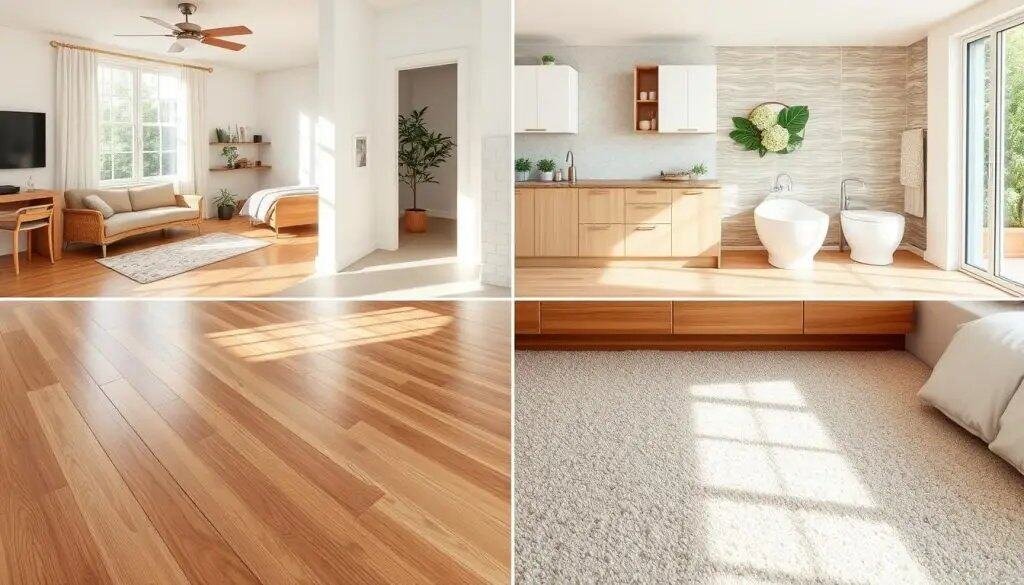

Knowing how to choose flooring for each room can make a major difference to comfort, appearance, maintenance and long-term value. Flooring is not simply a decorative decision. Each room has different levels of moisture, foot traffic, furniture, cleaning needs and practical requirements.
A carpet that feels warm and comfortable in a bedroom may not be suitable for a bathroom. Likewise, tiles that work well in a hallway may feel cold and less comfortable in a sitting room.
The best approach is to consider how each room is used before choosing a material. You should also think about your budget, the condition of the existing floor, installation requirements and how much maintenance you are prepared to do.
Start by considering how each room is used
Before comparing flooring materials, look at the purpose of the room.
Ask yourself a few simple questions:
- How much foot traffic does the room receive?
- Is the floor likely to get wet or damp?
- Will food or drinks frequently be spilled?
- Are there children or pets in the household?
- Does the room need to feel warm and comfortable?
- How easy does the floor need to be to clean?
- Will heavy furniture sit on the flooring?
- Is sound reduction important?
- Do you want the flooring to last for many years or be easy to replace?
These questions can quickly narrow down your choices.
A busy hallway needs flooring that can cope with repeated foot traffic and dirt. A bedroom may benefit more from warmth and comfort. A bathroom needs good moisture resistance, while a kitchen needs a combination of durability, easy cleaning and resistance to everyday spills.
How to choose flooring for each room
There is no single flooring material that is ideal for every room. The most suitable option depends on the conditions and purpose of the space.
The following room-by-room guide can help you make a practical choice.
Living room flooring
The living room is usually one of the most visible rooms in a home, so appearance and comfort are important.
Carpet remains a popular choice because it provides warmth, softness and sound absorption. It can be particularly comfortable in homes where people spend a lot of time sitting, relaxing or watching television.
If you prefer a hard surface, engineered wood, solid wood, laminate or luxury vinyl can work well. These options can create a clean appearance and are generally easier to sweep than carpet.
Engineered wood can provide the appearance of timber while being more dimensionally stable than some solid wood flooring. Laminate can offer a similar visual effect at a lower price, although quality varies considerably.
Luxury vinyl is another practical option. It is available in designs that resemble wood or stone and can be comfortable underfoot compared with some harder surfaces.
For a living room, consider:
- Comfort underfoot
- Appearance
- Resistance to furniture marks
- Cleaning requirements
- Noise levels
- Long-term durability
If you have young children, pets or frequent visitors, a flooring material that is easy to clean may be more practical than a delicate surface.
Bedroom flooring
Bedrooms generally have lower foot traffic than hallways and living areas, so comfort often becomes a higher priority.
Carpet is particularly suitable if you want a soft and warm surface. It can also help reduce noise, which may be useful in upstairs bedrooms.
Engineered wood, laminate, luxury vinyl and cork can also work well. Area rugs can be added to hard flooring if you want additional warmth beside the bed.
When choosing bedroom flooring, consider the room's temperature, noise levels and cleaning needs.
For a child's bedroom, durability and easy cleaning may be more important than choosing the softest possible material. A hard floor with a suitable rug can provide a practical compromise.
Kitchen flooring
Kitchen flooring needs to cope with spills, food, frequent cleaning and regular foot traffic.
Porcelain and ceramic tiles are durable options and can provide a wide range of colours and patterns. Porcelain is particularly useful where a hard-wearing and moisture-resistant surface is required.
Luxury vinyl is another popular choice because it is relatively comfortable underfoot, easy to clean and available in many designs.
Sheet vinyl can also be useful when keeping costs under control is important. Its limited number of joints can make cleaning straightforward.
Laminate and engineered wood may also be used in kitchens, but moisture management is important. Spills should not be left standing, and the manufacturer's installation and care instructions should be followed.
When choosing kitchen flooring, look beyond appearance. Consider whether the surface is comfortable for standing, how easily it can be cleaned and how it will cope with dropped objects, spills and heavy appliances.
Bathroom flooring
Bathrooms have one of the most demanding flooring environments because water and humidity are regular concerns.
Porcelain and ceramic tiles are common choices because they are hard-wearing and suitable for wet areas when correctly installed.
Luxury vinyl and sheet vinyl can also be practical options. Their resistance to everyday moisture makes them useful in many bathrooms, provided the product and installation are suitable for the space.
Natural stone can create a high-end appearance but normally requires more care and can cost more to purchase and install.
Slip resistance should also be considered. A very smooth surface may become slippery when wet, so check the manufacturer's specifications before buying.
Proper installation matters just as much as the flooring material. A suitable waterproofing system, correctly prepared subfloor and properly sealed joints can help protect the floor and the structure underneath.
Hallway and entrance flooring
Hallways experience some of the highest foot traffic in a home. They also receive dirt and moisture brought in from outside.
Durability should therefore be one of your main priorities.
Porcelain or ceramic tiles can work well in entrances where a hard, easy-to-clean surface is desirable. Luxury vinyl is another practical option because it can handle everyday use while providing a softer feel than traditional tile.
Laminate can also be suitable in some hallways, although you should consider moisture around external doors.
Carpet can make a hallway feel warm and comfortable, but it may require more cleaning, particularly near entrances.
If you have an entrance directly from outdoors, consider using a good-quality doormat and entrance area to reduce the amount of dirt and moisture reaching the main flooring.
Dining room flooring
Dining rooms need flooring that looks attractive but can also cope with dropped food and drink spills.
Hard flooring such as engineered wood, laminate, luxury vinyl, porcelain or ceramic tile can be practical because it is generally straightforward to clean.
Carpet can work in a dining room, but stains may be more difficult to remove after spills.
If you choose timber flooring, consider placing suitable protective pads beneath dining chairs and tables. This can reduce scratching and marks caused by furniture movement.
A dining room is also a good place to consider how the flooring connects visually with nearby rooms, particularly in open-plan homes.
Home office flooring
A home office needs to balance comfort, appearance and practicality.
Carpet can reduce noise and create a comfortable environment, especially if you spend several hours working at a desk.
Hard flooring can make an office feel brighter and easier to clean. Engineered wood, laminate and luxury vinyl are all possible choices.
If you use an office chair with wheels, check whether the flooring is suitable for regular chair movement. A suitable floor protector can help reduce wear and scratching.
Also consider acoustics. A hard floor may reflect more sound than carpet, which can be noticeable during video calls.
Utility room flooring
Utility rooms can experience moisture, dirt and heavy use, particularly around washing machines, sinks and cleaning equipment.
Vinyl and tile are often practical options because they are relatively easy to clean.
Luxury vinyl can provide a balance between comfort and durability. Porcelain tiles can offer excellent resistance to everyday wear, although the installation may be more involved.
Before choosing a material, check the condition of the subfloor and consider the possibility of leaks from appliances.
A flooring material that is easy to wipe clean can be especially useful in this room.
Stairs and landing flooring
Stairs require a little more consideration than ordinary floors because safety, noise and durability all matter.
Carpet is widely used on stairs because it can provide grip and reduce noise. It can also make stairs feel warmer and more comfortable.
Hard flooring can be used in some stair designs, but the installation needs to be appropriate for the structure and safe to walk on.
If replacing stair flooring, consider the condition of the existing steps, the suitability of the chosen material and the installation method before making a decision.
Landings can use the same flooring as nearby bedrooms or a contrasting material, depending on the style of the home.
Open-plan rooms
Open-plan kitchens, dining areas and living rooms can make flooring selection more complicated.
Using the same flooring throughout the connected area can create a continuous appearance and make the space feel more cohesive.
Luxury vinyl, engineered wood, laminate and some tile products can work well across larger open-plan areas, depending on the conditions.
However, the kitchen section may have different practical requirements from the living area. In some homes, using one suitable material throughout is simpler. In others, different flooring can help visually separate the zones.
Think about transitions carefully before installation.
Compare common flooring materials
| Flooring type | Best suited to | Main advantages | Things to consider |
|---|---|---|---|
| Carpet | Bedrooms, living rooms, stairs | Warm, soft and quieter | Can stain and needs regular cleaning |
| Solid wood | Living rooms, dining rooms, bedrooms | Natural appearance and long lifespan | Can be affected by moisture |
| Engineered wood | Living rooms, bedrooms, dining areas | Attractive and relatively stable | Can cost more than laminate |
| Laminate | Living rooms, bedrooms, hallways | Durable and available in many designs | Moisture resistance varies |
| Luxury vinyl | Kitchens, bathrooms, hallways, living areas | Easy to clean and comfortable | Product quality varies |
| Ceramic tile | Kitchens, bathrooms, hallways | Durable and easy to clean | Hard and potentially cold |
| Porcelain tile | Kitchens, bathrooms, hallways | Dense, hard-wearing and moisture resistant | Installation can be costly |
| Natural stone | Kitchens, hallways, bathrooms | Distinctive natural appearance | Often needs more maintenance |
| Cork | Bedrooms, offices, living areas | Comfortable and relatively warm | Can require careful maintenance |
Think about moisture before choosing flooring
Moisture is one of the most important factors when choosing flooring.
Bathrooms, utility rooms and some kitchens need materials that can cope with water and humidity. However, simply choosing a product described as water-resistant does not mean the entire floor installation is waterproof.
The subfloor, joints, edges, adhesives and installation method can all affect performance.
For areas exposed to regular moisture, follow the manufacturer's instructions carefully and make sure the installation is appropriate for the room.
Consider comfort and temperature
Some flooring materials feel warmer than others.
Carpet is generally soft and warm underfoot, making it popular in bedrooms and living rooms.
Wood and laminate can also feel comfortable, particularly when used with suitable underlay where appropriate.
Tile can feel cooler, although it can work particularly well with underfloor heating if the specific product and installation system are compatible.
If your home tends to feel cold, think about both the flooring material and what is underneath it. Underlay and insulation can affect comfort considerably.
Think about maintenance
A floor that looks excellent when newly installed may not be the best choice if its maintenance requirements do not suit your lifestyle.
Before buying, check:
- How the floor should be cleaned
- Whether specialist cleaning products are required
- How easily stains can be removed
- Whether the surface needs sealing
- How it reacts to moisture
- Whether individual boards or tiles can be replaced
- Whether the manufacturer has specific care requirements
A busy household may benefit from flooring that can be cleaned quickly rather than a material that requires frequent specialist care.
Consider pets and children
Homes with children or pets often need flooring that can cope with spills, scratches and heavy everyday use.
Luxury vinyl, quality laminate, tile and some engineered wood products can be practical choices, depending on the room.
Carpet can provide comfort and warmth but may require more frequent cleaning in busy households.
If scratches are a concern, ask flooring suppliers about the wear characteristics of the specific product rather than relying only on the general material name.
Do not ignore the subfloor
The condition of the subfloor can affect both the appearance and lifespan of new flooring.
An uneven, damp or damaged subfloor may need attention before the new material is installed.
Depending on the situation, preparation could involve:
- Cleaning the existing surface
- Levelling uneven areas
- Repairing damaged sections
- Removing old adhesive
- Addressing moisture problems
- Installing suitable underlay
- Checking the floor for movement
These additional works can increase the overall project cost, so they should be considered when planning the budget.
Think about flooring costs
Flooring costs vary considerably depending on the material, quality, room size and installation requirements.
The final price may include more than the flooring itself. You may also need to budget for underlay, adhesives, trims, delivery, removal of existing flooring, subfloor preparation, waste and labour.
Costs can vary by location, materials, labour rates, property size and project requirements, so online price examples should be treated as general guidance rather than a guaranteed quotation.
It is sensible to obtain several detailed quotations where installation is required.
How to save money without choosing the cheapest floor
Choosing the cheapest material is not always the best way to reduce the overall cost.
Instead, consider where your money matters most.
You could spend more on a durable floor in a busy hallway while choosing a more affordable material for a lower-traffic room.
Other ways to control costs include:
- Comparing several flooring suppliers
- Measuring rooms accurately
- Asking about installation costs before buying
- Keeping the existing layout
- Choosing standard sizes where practical
- Reusing suitable trims where possible
- Comparing material and labour costs separately
- Avoiding unnecessary changes to the subfloor
- Buying enough material while allowing for appropriate wastage
Do not reduce costs by ignoring necessary subfloor repairs or unsuitable installation requirements.
A practical room-by-room example
Imagine a three-bedroom house with a busy entrance, an open-plan kitchen and living area, two bedrooms and a bathroom.
A practical approach might be:
- Entrance and hallway: durable luxury vinyl or porcelain tile
- Kitchen: luxury vinyl or porcelain tile
- Living area: engineered wood, laminate, luxury vinyl or carpet
- Bedrooms: carpet, engineered wood or laminate
- Bathroom: porcelain tile, ceramic tile or suitable vinyl
- Stairs: carpet for warmth and noise reduction
This is only an example. The best combination will depend on the household, existing floor, budget and design preferences.
Common mistakes to avoid
One of the biggest mistakes is choosing flooring based entirely on appearance.
A beautiful material may not be practical for a wet room or a heavily used hallway.
Other common mistakes include:
- Ignoring moisture levels
- Forgetting about subfloor preparation
- Choosing the wrong level of durability
- Underestimating installation costs
- Failing to order enough material
- Choosing a difficult-to-maintain surface for a busy household
- Ignoring transitions between rooms
- Selecting flooring without checking manufacturer requirements
- Buying based only on a small sample
- Forgetting how the flooring will look under the room's actual lighting
It is also worth viewing larger samples where possible. A small sample may not accurately show how a colour or pattern will look across an entire room.
Frequently asked questions
What is the best flooring for the whole house?
There is no single best option for every home. Luxury vinyl, engineered wood, laminate and tile can work across several areas, but rooms with different moisture and comfort requirements may need different materials.
Should flooring be the same throughout the house?
It does not have to be. Using the same flooring across connected rooms can create a consistent appearance, while different materials can provide practical benefits in bathrooms, bedrooms and other spaces.
What flooring is easiest to maintain?
Many types of luxury vinyl, vinyl, laminate and tile are relatively easy to clean. Maintenance still depends on the specific product, installation and manufacturer's care instructions.
Is carpet better for bedrooms?
Carpet can be an excellent choice for bedrooms because it is warm, soft and helps reduce noise. However, hard flooring with an area rug can also work well if easier cleaning is a priority.
What flooring is best for a bathroom?
Porcelain and ceramic tiles are common choices, while suitable vinyl products can also be practical. The flooring must be appropriate for wet conditions and installed correctly, including suitable waterproofing where required.
How much should I budget for new flooring?
There is no universal price because costs depend on room size, material, labour, location, subfloor condition and project requirements. Obtain detailed quotations that include installation and additional preparation rather than comparing material prices alone.
Conclusion
Learning how to choose flooring for each room is mainly about matching the material to the way the space is used.
Bedrooms often benefit from warmth and comfort, kitchens need easy cleaning and durability, bathrooms require careful moisture management, while hallways need to withstand frequent traffic.
Start by considering practical requirements, then compare appearance, maintenance, installation and cost. Do not forget the condition of the subfloor and the additional materials and labour that may be required.
The best flooring choice is not necessarily the most expensive or fashionable option. It is the one that fits the room, your household, your budget and the level of maintenance you are prepared to provide.