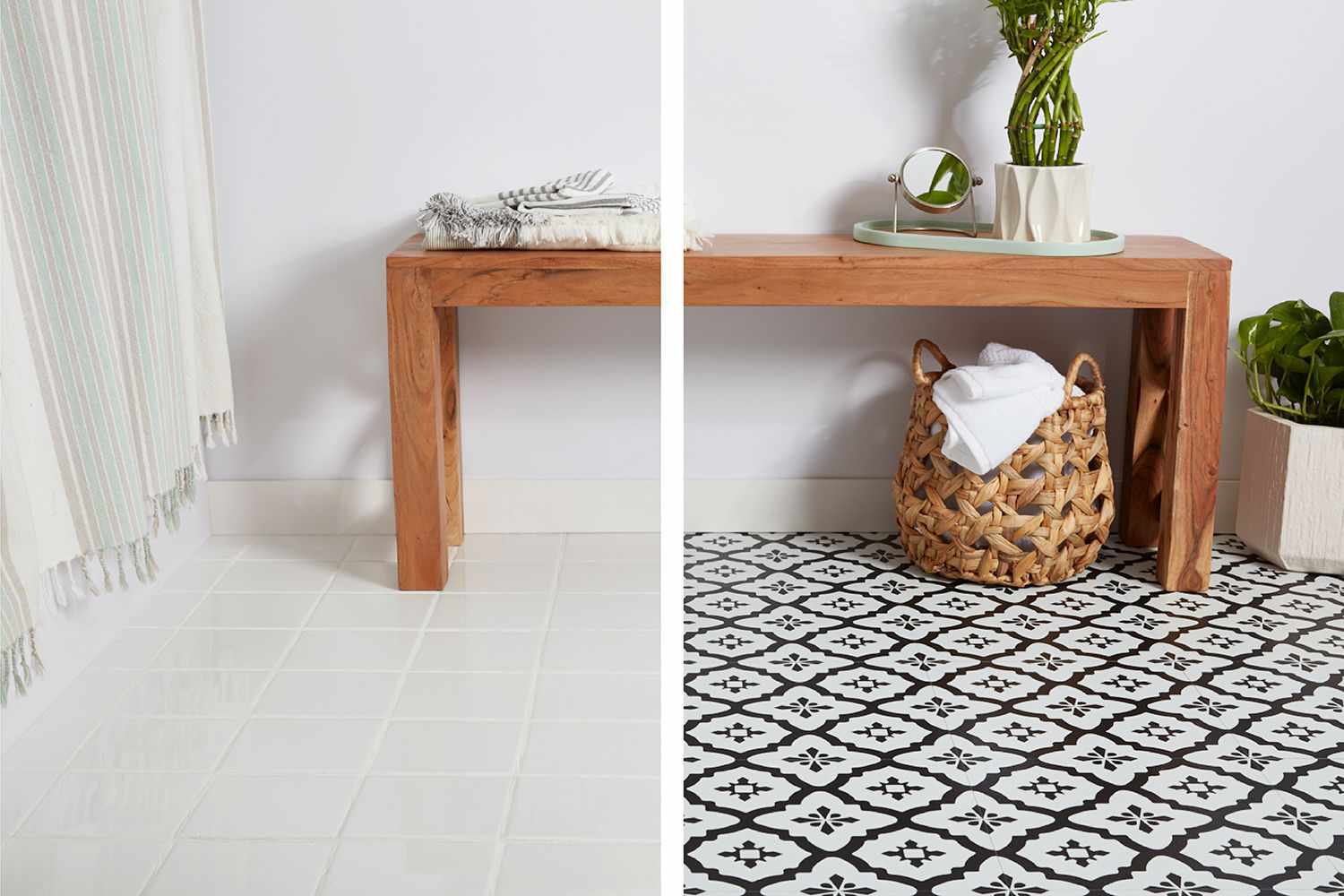

Choosing between tile and vinyl flooring can be difficult because both can provide practical, attractive surfaces for modern homes. When comparing tile vs vinyl flooring, homeowners need to consider moisture resistance, durability, maintenance, comfort, appearance, installation and total cost.
Tiles are available in materials such as porcelain and ceramic, with countless colours, sizes and patterns. Vinyl flooring comes in sheets, tiles and planks and can reproduce the appearance of timber, stone and other materials.
Both can work well in kitchens, bathrooms, hallways and other busy areas, but they have different characteristics. Understanding these differences can help you select a floor that suits the room and your household.
What is tile flooring?
Tile flooring is made from materials such as ceramic, porcelain or natural stone.
Ceramic and porcelain tiles are manufactured from clay-based materials and then fired at high temperatures. Porcelain is generally denser than standard ceramic tile, although the exact characteristics depend on the product.
Natural stone flooring includes materials such as slate, limestone, travertine and other stone varieties.
Tiles are available in different sizes, shapes, textures and finishes. This makes them suitable for everything from simple neutral floors to highly decorative designs.
They are particularly common in bathrooms and kitchens because many suitable tile products are resistant to moisture and relatively easy to clean.
What is vinyl flooring?
Vinyl is a synthetic flooring material manufactured in several layers.
It is available as sheet flooring, vinyl tiles and luxury vinyl planks or tiles. Modern products can reproduce the appearance of timber, stone, ceramic and other surfaces.
Vinyl is generally softer underfoot than tile and can be more forgiving when objects are dropped.
The exact characteristics depend on the product. Some vinyl flooring is designed for areas with regular water exposure, while other products are intended for dry rooms.
Always check the manufacturer's specifications before choosing a particular vinyl product for a bathroom, kitchen or other moisture-prone area.
Tile vs vinyl flooring: key differences
The main differences can be summarised as follows:
| Feature | Tile flooring | Vinyl flooring |
|---|---|---|
| Material | Ceramic, porcelain or natural stone | Synthetic material |
| Moisture resistance | Generally strong with suitable products and installation | Generally strong with suitable products |
| Comfort | Hard underfoot | Softer and warmer underfoot |
| Durability | Often very high | Varies by product |
| Cleaning | Generally easy | Generally easy |
| Design choices | Very extensive | Very extensive |
| Installation | Often more labour-intensive | Can be quicker depending on product |
| Repairs | Individual tiles can often be replaced | Individual planks or tiles may sometimes be replaced |
| Sound | Harder and can be louder | Generally softer and quieter |
| Subfloor preparation | Important | Important |
| Underfloor heating | Often well suited | Product-dependent |
| Cost | Varies considerably | Varies considerably |
Neither material is automatically the right choice for every room.
Moisture resistance
Moisture is one of the biggest reasons homeowners consider both options.
Porcelain and suitable ceramic tiles can work very well in bathrooms and kitchens. However, the tile itself is only part of the system. Grout, joints, substrate preparation and waterproofing also matter.
Vinyl can also perform well in moisture-prone areas, particularly when the product is specifically designed for such conditions.
Sheet vinyl can have fewer joints than plank or tile systems, which can be useful in certain applications.
However, neither flooring material should be used as a substitute for proper waterproofing where waterproofing is required.
Durability and everyday use
Tiles can provide a hard-wearing surface capable of handling substantial foot traffic when the correct product is selected and installed properly.
Porcelain is particularly popular in areas where durability is important.
However, tiles can crack if subjected to significant impact or if the substrate moves or has not been properly prepared.
Vinyl can also be durable, but performance varies significantly between products.
When buying vinyl, check the wear layer and the manufacturer's suitability recommendations for the intended level of traffic.
A busy hallway may require a different specification from a bedroom.
Comfort underfoot
Comfort is one area where vinyl often has an advantage.
Its softer surface can feel more comfortable when standing for long periods, making it appealing in kitchens.
Tile is harder and can feel cold, particularly during colder months. However, this can also be an advantage in warm climates because the surface can feel pleasantly cool.
Underfloor heating can make tiled floors more comfortable in colder conditions.
The choice therefore depends partly on climate, room use and personal preference.
Cleaning and maintenance
Both options can be relatively easy to clean.
Tiles can generally be swept or vacuumed and then cleaned using appropriate products. However, grout lines may require more attention, particularly in areas that experience moisture and dirt.
Vinyl typically has a relatively smooth surface that can be cleaned with routine sweeping, vacuuming and suitable damp cleaning.
The manufacturer's instructions should always be followed.
Avoid using harsh cleaning products unless they are specifically recommended for the flooring.
Tile flooring for bathrooms
Tiles are a common bathroom choice because suitable ceramic and porcelain products can handle regular moisture.
They also offer a wide variety of design options.
However, bathroom tile selection should not focus only on colour. Consider slip resistance, surface texture, tile size and maintenance.
Large-format tiles can create fewer grout lines, while smaller tiles may provide more flexibility around complex shapes and drainage.
The underlying waterproofing and installation are just as important as the tile itself.
Vinyl flooring for bathrooms
Suitable vinyl can also be a practical bathroom flooring option.
It can provide a softer feel than tile and may be easier to stand on for long periods.
Some vinyl products are specifically designed for wet or moisture-prone environments.
However, installation is important. Poorly sealed joints, unsuitable products or problems with the subfloor can cause issues.
Check that the specific flooring is approved for bathroom use and follow the manufacturer's installation requirements.
Which is better for kitchens?
Both tile and vinyl can work well in kitchens.
Tiles offer a hard surface that can handle regular cleaning and everyday kitchen activity. Porcelain can be particularly useful where durability is important.
Vinyl offers a softer surface and can be more comfortable around worktops where people spend long periods standing.
Think about what is likely to happen in the room.
If heavy objects are regularly dropped, a hard tile may withstand everyday wear well, but a significant impact can potentially crack a tile. Vinyl may resist some impacts better but can be marked by sharp objects or heavy furniture.
Which is better for hallways?
Hallways experience frequent foot traffic and often receive dirt from outside.
Tile can be a strong option when durability and easy cleaning are priorities.
Vinyl can also work well, particularly when comfort and quieter movement are important.
Entrance mats can help reduce the amount of grit and moisture brought onto either type of floor.
The right choice depends on the product's traffic rating and the particular conditions of the hallway.
Design and appearance
Tiles provide enormous design flexibility.
They can imitate natural stone, timber and concrete or provide completely decorative patterns.
Different laying patterns can also change the appearance of a room. Straight layouts, staggered arrangements and other patterns can create different visual effects.
Vinyl has also developed considerably. Luxury vinyl planks can reproduce timber grain, while vinyl tiles can imitate stone and ceramic.
If you want a specific appearance, compare actual samples rather than relying only on online images.
Lighting can make flooring colours appear different from how they look on a screen.
Installation differences
Tile installation is generally more involved than installing some vinyl flooring systems.
Tiles require a suitable adhesive, accurate positioning, cutting and grouting. The subfloor must also be sufficiently stable and prepared.
Vinyl can be installed in several ways. Some products use click-fit systems, while others are glued or installed as sheets.
This does not mean every vinyl floor is easy to install. Sheet vinyl, for example, can require careful measuring and fitting.
The condition of the existing floor can have a major effect on installation time for both materials.
Subfloor preparation
Neither tile nor vinyl should be installed over an unsuitable surface.
An uneven subfloor can cause problems with the finished floor and may become visible through certain types of vinyl.
Tiles are particularly dependent on a stable substrate because movement underneath can contribute to cracking or loose tiles.
Before installation, check for:
- Uneven areas
- Moisture
- Cracks
- Loose sections
- Contamination
- Previous flooring adhesive
- Structural movement
Correcting these problems before installation can help avoid expensive repairs later.
Repairing damaged flooring
Tiles have an advantage when individual replacement is possible.
If one tile becomes cracked and matching replacements are available, it may be possible to remove the damaged tile and install another without replacing the entire floor.
However, replacement can be difficult if the original tile has been discontinued.
Vinyl planks and tiles can also sometimes be replaced individually, depending on the product and installation method.
Sheet vinyl is different because damage may require a more involved repair.
Keeping spare flooring after installation can therefore be useful.
Sound and noise
Tile is a hard surface and can reflect sound around a room.
Footsteps, dropped objects and furniture movement may be more noticeable.
Vinyl tends to provide a softer and quieter feel underfoot.
This can be useful in bedrooms, children's rooms or homes where reducing everyday noise is important.
Underlay and the subfloor construction can also affect the sound produced by some vinyl systems.
Pets and children
Families with children or pets may have different flooring priorities.
Vinyl can be attractive because it is generally easy to clean and softer underfoot.
Tile can also be practical for spills and muddy footprints, but the hard surface may be less forgiving when children fall or objects are dropped.
Pets can also scratch certain flooring surfaces, so check the specific product's resistance characteristics rather than relying only on the general material type.
A good entrance mat can help protect either flooring option from dirt and grit.
Underfloor heating
Tiles and stone are commonly associated with underfloor heating because they can transfer heat effectively.
Some vinyl flooring products are also compatible with underfloor heating.
However, vinyl can have maximum temperature limitations, so it is important to check the manufacturer's requirements.
Before installation, confirm compatibility between:
- The heating system
- Flooring material
- Adhesive
- Underlay
- Installation method
The wrong combination can damage the flooring or affect its performance.
Comparing flooring costs
There is no universal cost for either tile or vinyl flooring.
Prices depend on the material, product quality, room size, labour rates, location and project requirements.
Tile installation can involve additional costs for adhesive, grout, preparation, cutting and labour.
Vinyl installation costs vary depending on whether you choose sheet, tile, plank, click-fit or adhesive-fixed flooring.
You may also need to pay for:
- Removal of old flooring
- Subfloor preparation
- Levelling
- Underlay
- Trims
- Adhesive
- Waste disposal
- Delivery
A small room may have a relatively low material requirement but still have a significant installation cost because of preparation and labour.
For this reason, compare complete quotations rather than simply looking at the price per square metre.
How to save money on flooring
You do not necessarily need the most expensive material to create a good floor.
Start by choosing a product appropriate for the room. Paying extra for features you do not need can unnecessarily increase the budget.
Accurate measurements can also reduce waste.
If the existing subfloor is sound, keeping preparation work to a minimum can help control costs. However, preparation should not be skipped when it is necessary for a successful installation.
You can also compare several products with similar specifications rather than focusing on one brand.
Choosing between tile and vinyl for an open-plan home
Open-plan spaces require additional thought because several functional areas may share one floor.
For example, a kitchen and living area may be connected.
Using one flooring material throughout can create visual continuity. Suitable vinyl can make this relatively straightforward.
Alternatively, tile can provide a durable surface across the whole space.
Another approach is to use different flooring materials to visually separate the kitchen and living area.
The transition needs to be planned carefully so that the change looks deliberate rather than accidental.
Environmental considerations
Tile and vinyl have different material compositions and manufacturing processes.
Ceramic and porcelain tiles are made from mineral-based materials, while vinyl is a synthetic material.
Environmental considerations can include manufacturing, transport, product lifespan, maintenance and disposal.
There is no simple rule that one flooring type is always the more environmentally suitable option.
Choosing a durable product that is appropriate for the room and maintaining it properly can help reduce the need for premature replacement.
Common mistakes to avoid
Several flooring mistakes can be prevented through careful planning.
Avoid:
- Choosing solely based on appearance
- Ignoring the condition of the subfloor
- Using unsuitable flooring in wet areas
- Forgetting about slip resistance
- Buying the wrong tile for floor use
- Assuming every vinyl product is waterproof
- Ignoring installation requirements
- Forgetting grout and adhesive costs
- Failing to allow for material wastage
- Choosing flooring without considering maintenance
- Forgetting door clearances
- Not checking underfloor heating compatibility
A few extra checks before buying can prevent unnecessary expense later.
Example: choosing flooring for a family kitchen
Imagine a busy family kitchen where children frequently eat, cooking happens every day and spills are common.
The homeowners are deciding between large porcelain tiles and luxury vinyl planks.
The tiles could provide a hard, durable surface and work well with underfloor heating. However, they would create a harder feel underfoot and could be more involved to install.
The vinyl could provide a softer surface, easier standing comfort and a timber-style appearance. A suitable product could also provide strong resistance to everyday spills.
The decision would depend on the family's priorities, the specific products available and the condition of the existing floor.
Frequently asked questions
Is tile better than vinyl flooring?
Neither is automatically better. Tile can provide a very durable, hard surface and works well with many bathroom and kitchen applications. Vinyl can offer greater underfoot comfort and practical moisture resistance, depending on the product.
Which is cheaper, tile or vinyl?
Either option can vary considerably in price. Vinyl may offer lower-cost installation in some situations, but premium vinyl can be expensive. Tile costs depend heavily on the material, preparation and labour. Location, property size and project requirements also affect the total cost.
Is vinyl flooring suitable for bathrooms?
Some vinyl products are specifically designed for bathrooms and other moisture-prone areas. Check the manufacturer's specifications and ensure the installation is appropriate for the room.
Does tile last longer than vinyl?
Tiles can provide a very long service life when correctly selected and installed, but vinyl can also be durable. Actual performance depends on product quality, traffic, installation, maintenance and room conditions.
Is vinyl more comfortable than tile?
Vinyl is generally softer and warmer underfoot than tile. This can make it more comfortable in rooms such as kitchens where people stand for long periods.
Which is easier to clean?
Both can be relatively easy to maintain. Vinyl generally has a smooth surface that is straightforward to clean, while tile may require additional attention to grout lines. The specific product and manufacturer's cleaning instructions should always be considered.
Conclusion
The choice between tile vs vinyl flooring depends on the room, household needs and the characteristics you value most.
Tile can provide a hard, durable surface with extensive design possibilities. Porcelain and suitable ceramic tiles are particularly useful in kitchens, bathrooms, hallways and other areas where moisture resistance and easy cleaning are important.
Vinyl can offer a softer and warmer surface, with many products providing good resistance to everyday spills. Modern designs can also reproduce the appearance of timber, stone and tile.
Before choosing, consider moisture, traffic, comfort, maintenance, installation and subfloor condition. Compare complete project costs rather than only material prices, as expenses vary according to location, materials, labour, property size and project requirements.
With careful planning and the right product for each room, both tile and vinyl can provide practical and attractive flooring for a home.