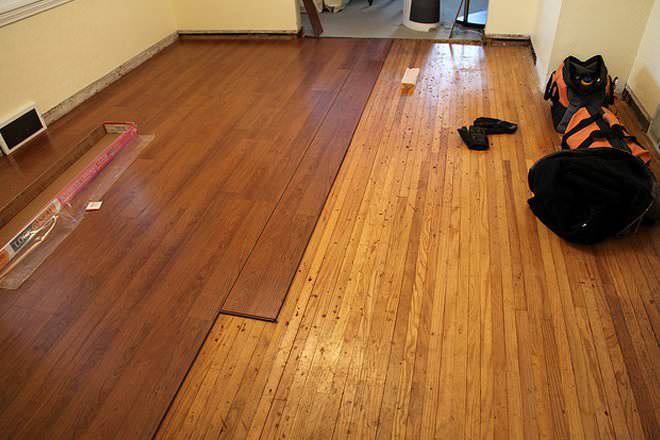

Choosing between hardwood and laminate flooring can be difficult because both can create an attractive, traditional floor while offering different practical benefits. When comparing hardwood vs laminate flooring, homeowners need to consider appearance, durability, maintenance, moisture, installation, comfort and long-term cost.
Hardwood is made from natural timber, giving each floor its own grain, colour variations and character. Laminate is a manufactured flooring product designed to reproduce the appearance of materials such as wood while offering a different construction and maintenance profile.
Neither option is automatically right for every home. The better choice depends on the room, household, budget and expectations for the floor.
What is hardwood flooring?
Hardwood flooring is made from natural timber. Common varieties include oak, maple, walnut, ash and other wood species.
The boards can have different widths, finishes, colours and surface treatments. Because natural timber varies from board to board, hardwood flooring often has a distinctive appearance that cannot be perfectly replicated by manufactured products.
One of its major advantages is that suitable hardwood floors can potentially be sanded and refinished when the surface becomes worn.
However, natural timber is affected by moisture and changes in temperature. It therefore requires suitable installation, care and environmental conditions.
Hardwood is generally better suited to dry areas such as:
- Living rooms
- Dining rooms
- Bedrooms
- Hallways
- Home offices
Bathrooms and other areas exposed to frequent moisture require much more careful consideration.
What is laminate flooring?
Laminate flooring is a manufactured product made from several layers.
A typical laminate board contains a structural core, a decorative layer that creates the appearance of timber or another material, and a protective surface layer.
Modern laminate can look remarkably similar to natural wood. It is available in many colours, plank widths, textures and patterns.
It is commonly used in bedrooms, living rooms, hallways, dining rooms and home offices.
Some products have improved moisture resistance, but laminate should not automatically be considered waterproof. Always check the manufacturer's specifications before installing it in an area where water exposure is expected.
Hardwood vs laminate flooring: key differences
The main differences become clearer when the two materials are compared across several practical areas.
| Feature | Hardwood flooring | Laminate flooring |
|---|---|---|
| Material | Natural timber | Manufactured multi-layer product |
| Appearance | Genuine wood grain and variation | Wood-effect decorative surface |
| Refinishing | Suitable floors can often be sanded and refinished | Generally cannot be sanded like hardwood |
| Moisture resistance | Sensitive to moisture | Varies by product |
| Maintenance | Requires appropriate care | Generally straightforward |
| Comfort | Natural and warm feel | Firm, with comfort depending on underlay |
| Installation | Can require specialist installation | Many products use click systems |
| Repair | Individual boards can sometimes be repaired or replaced | Individual boards may sometimes be replaced |
| Initial cost | Often higher | Often more affordable |
| Long-term value | Can provide long service with proper care | Depends on product quality and use |
| Design | Natural variations | Wide range of consistent designs |
The most important difference is that hardwood is genuine timber, while laminate is designed to reproduce its appearance.
Appearance and natural character
Hardwood has a natural appearance that changes from board to board.
Grain patterns, knots, colour differences and small variations can give the floor character. As timber ages, its appearance can also change depending on the species, finish and exposure to light.
Laminate provides a more controlled appearance. Manufacturers can reproduce wood patterns consistently across many boards, although higher-quality products often use varied patterns to avoid an overly repetitive appearance.
If natural variation is important to you, hardwood may have an advantage. If you want a consistent colour and design, laminate can offer more predictability.
Durability and everyday wear
Both flooring types can cope with everyday use, but they respond differently to damage.
Hardwood can be scratched or dented, particularly in busy areas or where furniture is moved frequently. However, suitable hardwood floors can often be sanded and refinished, depending on their thickness and construction.
Laminate has a protective top layer that can provide good resistance to everyday surface wear. However, once a laminate board has suffered significant surface damage, it generally cannot be refinished in the same way as natural timber.
This makes maintenance and repair an important part of the comparison.
Refinishing hardwood flooring
One of hardwood's major advantages is the possibility of refinishing.
Over time, the surface may become scratched, dull or worn. A suitable hardwood floor can sometimes be sanded to remove the damaged surface and then given a new finish.
The number of times this can be done depends on the thickness and construction of the floor.
Refinishing can change the colour or appearance of the floor without replacing the entire surface.
However, sanding creates dust and disruption, and professional refinishing adds to the cost of maintaining the floor.
Can laminate be refinished?
Laminate does not generally have a solid timber surface that can be sanded and refinished.
If the decorative layer becomes badly damaged, the affected board may need to be replaced.
This is why keeping spare boards after installation can be useful. A matching replacement may become harder to find later if the product is discontinued.
The ability to replace individual boards depends on the installation system and the location of the damaged section.
Maintenance requirements
Hardwood requires appropriate care to protect the timber and its finish.
Regular sweeping or vacuuming can remove dirt and grit that might scratch the surface. Spills should be dealt with promptly, particularly because excessive moisture can affect natural wood.
The exact maintenance routine depends on the wood species and finish.
Laminate is generally straightforward to maintain. Regular sweeping or vacuuming followed by suitable cleaning can help keep the surface in good condition.
However, excessive water should be avoided unless the specific product is designed to tolerate it.
Always follow the manufacturer's recommendations for cleaning and maintenance.
Moisture and humidity
Moisture is an important consideration when comparing hardwood and laminate.
Natural wood can expand and contract as humidity changes. Excess moisture can contribute to swelling, movement or other problems.
Laminate can also be affected by water, particularly where moisture reaches the core through damaged surfaces or joints.
Neither material should be selected without considering the room's moisture conditions.
For bathrooms, utility areas or other spaces with regular water exposure, flooring specifically designed for those conditions may be more appropriate.
Which is better for kitchens?
Kitchens can be challenging because floors may be exposed to food, spills, water and frequent foot traffic.
Hardwood can be used in some kitchens when properly selected, installed and maintained, but moisture needs to be managed carefully.
Some laminate products are designed with improved moisture resistance and may also work in kitchens, depending on the manufacturer's specifications.
If spills are common, prompt cleaning is important whichever material you choose.
The best option depends on the particular product and how the kitchen is used.
Which is better for bedrooms?
Bedrooms are generally more suitable for both hardwood and laminate because they are usually dry areas.
Hardwood can provide a natural appearance and long-term appeal. Laminate can offer a wide selection of wood-effect designs and may have a lower initial material cost.
The decision may therefore come down to appearance, budget, maintenance and whether you want the option of refinishing the floor later.
Which is better for living rooms?
Both options can work well in living rooms.
Hardwood can create a traditional or high-quality appearance, while laminate can provide a similar visual effect at a different price point.
Consider the amount of traffic and how the room is used.
A busy family living room may benefit from a flooring product that is easy to maintain and appropriate for heavy use. A formal sitting room may place more emphasis on natural appearance.
Comfort underfoot
Hardwood has a natural feel that many homeowners appreciate.
Laminate can feel slightly different because of its manufactured construction. However, the use of suitable underlay can influence comfort, sound and the overall feel of a floating laminate floor.
Room temperature also matters. Both types of hard flooring can feel cooler than carpet, particularly in colder weather.
If underfloor heating is planned, check the flooring manufacturer's requirements before purchasing.
Noise and sound
Hard surfaces can produce more sound than carpet, particularly in rooms where shoes or furniture are regularly moved.
Laminate installed as a floating floor can sometimes produce a noticeable sound underfoot if the subfloor and underlay are not appropriate.
Hardwood can also transmit sound depending on its construction and installation method.
If noise is a concern, investigate suitable underlay, acoustic solutions and installation methods before choosing the floor.
This is particularly important in flats and multi-storey homes.
Installation differences
Installation requirements vary considerably.
Hardwood can be nailed, glued or installed using other methods depending on the product and subfloor.
Laminate is commonly installed as a floating floor using a click-lock system. This can make installation relatively straightforward when the subfloor is level and properly prepared.
However, "easy to install" does not mean preparation can be ignored.
Both flooring types need a suitable base. An uneven or damp subfloor can cause problems after installation.
Subfloor preparation
The subfloor is one of the most important parts of a flooring project.
Before installing either hardwood or laminate, check for:
- Uneven areas
- Dampness
- Cracks or damage
- Loose sections
- Contamination or debris
- Moisture issues
Depending on the existing surface, preparation may involve levelling, repairs, cleaning or moisture control.
The condition of the subfloor can have a significant effect on the total installation cost.
Repairing damaged flooring
Hardwood and laminate can both be repaired in certain circumstances.
Minor marks on hardwood may sometimes be addressed through suitable cleaning, maintenance or refinishing. More serious damage may require individual board replacement.
Laminate repairs are generally more focused on replacing damaged boards rather than restoring the surface.
For both materials, prevention is useful. Felt pads under furniture, careful movement of heavy objects and prompt cleaning of spills can reduce avoidable damage.
Homes with children and pets
Children and pets can increase the amount of wear placed on a floor.
Pets may scratch surfaces with their claws, while children can cause spills and marks through everyday activity.
Laminate may be attractive to households looking for a practical hard surface that is straightforward to clean.
Hardwood can also work well, particularly when the homeowner accepts that natural timber may develop marks and character over time.
If hardwood is chosen, consider the finish and the amount of traffic the room receives.
Sustainability and material considerations
Hardwood is a natural material, but responsible sourcing is an important consideration. Look for information about the timber's source and relevant environmental certifications where these are important to you.
Laminate uses manufactured materials and may contain wood-based components, resins and other materials. The environmental impact can vary depending on manufacturing, transportation, product lifespan and disposal.
It is difficult to judge a floor's environmental performance from material type alone.
Durability also matters. A floor that remains useful for many years may avoid the need for frequent replacement.
Cost comparison
The price of flooring can vary substantially, so there is no single cost for hardwood or laminate.
Hardwood often has a higher initial material and installation cost, particularly when premium timber and professional installation are involved.
Laminate generally has a wider range of price points and can offer lower-cost options.
However, the total project cost can include much more than the flooring itself.
Consider:
- Material
- Labour
- Subfloor preparation
- Underlay
- Adhesives or fixings
- Trims and thresholds
- Removal of existing flooring
- Waste disposal
- Delivery
- Repairs
Prices vary according to location, materials, labour rates, property size and project requirements.
A detailed quotation is more useful than comparing material prices alone.
Long-term value
Hardwood can potentially provide a long service life when properly installed and maintained. The ability to refinish suitable floors can also extend their useful life.
Laminate generally has a different replacement cycle because the surface cannot usually be sanded and restored like solid timber.
However, long-term value depends on more than lifespan.
Installation quality, maintenance, household use, repairability and the original purchase price all matter.
A more expensive floor is not automatically the better financial choice for every homeowner.
When laminate may be the practical choice
Laminate may be worth considering when you want:
- A wood-effect appearance
- A wide range of designs
- Straightforward maintenance
- A common floating installation system
- A range of price points
- Flooring for dry rooms
It can be particularly useful for bedrooms, living rooms, dining areas and hallways.
When hardwood may be the better fit
Hardwood may be worth considering if you value:
- Genuine natural timber
- Unique grain patterns
- The ability to refinish suitable floors
- A traditional appearance
- Long-term use with appropriate maintenance
It can work particularly well in living rooms, dining rooms, bedrooms and hallways where moisture is controlled.
Common mistakes to avoid
Choosing flooring without considering how the room is used can lead to problems.
Common mistakes include:
- Buying based only on appearance
- Ignoring the subfloor condition
- Failing to measure accurately
- Underestimating installation costs
- Using unsuitable flooring in moisture-prone rooms
- Forgetting underlay or preparation materials
- Moving heavy furniture without protection
- Using excessive water when cleaning
- Failing to check manufacturer instructions
- Not keeping spare laminate boards
- Assuming every hardwood floor can be refinished
A little planning before purchase can prevent many avoidable problems.
Example: choosing flooring for a family home
Consider a three-bedroom home with a hallway, living room, dining area and kitchen.
The owners want a timber appearance throughout the main living spaces but have a limited renovation budget.
They could choose laminate for the hallway, living room and dining area, selecting a design that complements the rest of the property.
Alternatively, they could invest in hardwood for the main living areas and use another suitable flooring material in the kitchen.
If they expect to remain in the property for many years and value natural timber, the additional upfront investment in hardwood might fit their priorities. If initial cost and simple replacement are more important, laminate could be more suitable.
Frequently asked questions
Is hardwood better than laminate flooring?
Neither material is automatically better. Hardwood offers genuine timber, natural variation and the possibility of refinishing suitable floors. Laminate can provide a wood-effect appearance with a wide range of designs and often a different initial cost.
Which lasts longer, hardwood or laminate?
Suitable hardwood flooring can have a very long service life when properly installed and maintained, particularly where it can be refinished. Laminate can also provide many years of service, but its lifespan depends on product quality, traffic, installation and maintenance.
Is laminate flooring cheaper than hardwood?
Laminate often has more affordable options, but prices vary widely. Hardwood costs can also vary significantly depending on timber species, board construction, finish and installation. Location, labour and project requirements affect the overall price.
Can hardwood flooring be used in a kitchen?
Some hardwood floors can be used in kitchens when properly selected, installed and maintained. However, moisture needs to be controlled, and spills should be cleaned promptly. Areas with frequent water exposure may require a different flooring material.
Can laminate flooring be refinished?
Laminate generally cannot be sanded and refinished like hardwood. If a board becomes badly damaged, replacement may be necessary depending on the product and installation system.
Which is easier to maintain?
Laminate can be relatively straightforward to maintain because its protective surface is designed for everyday use. Hardwood also has manageable maintenance requirements, but natural timber may require more care and occasional refinishing depending on the finish and level of wear.
Conclusion
The choice between hardwood vs laminate flooring depends on what matters most to you.
Hardwood provides genuine natural timber, distinctive grain and the possibility of refinishing suitable floors. It can be an appealing long-term choice for homeowners who value natural materials and are prepared to maintain them properly.
Laminate offers a wide variety of wood-effect designs and can provide a practical flooring solution for many dry areas of the home. It may also offer a different balance between appearance, installation and initial cost.
Before making a decision, consider the room, moisture levels, expected traffic, maintenance, installation requirements and condition of the subfloor. Compare the complete project cost rather than looking only at the price of the flooring.
Whether you choose natural hardwood or laminate, careful preparation and proper installation are essential. The right flooring is ultimately the one that fits the room, your household needs and your budget while remaining practical for everyday life.