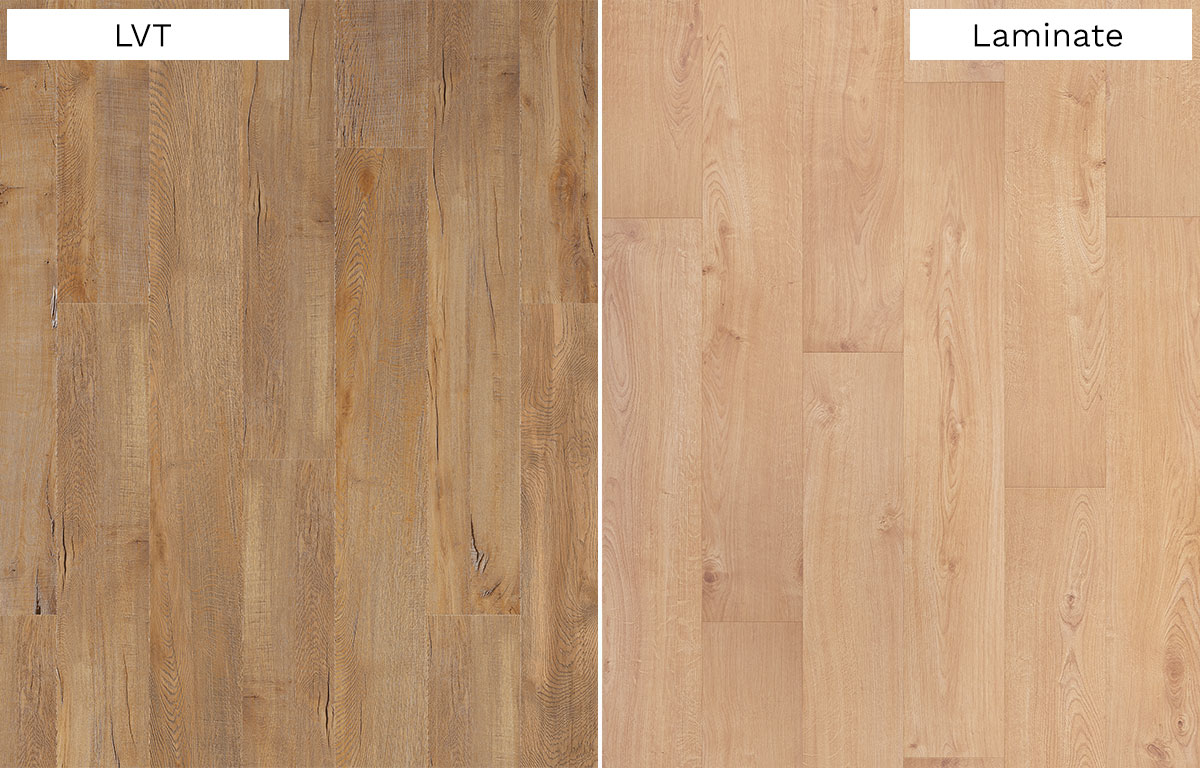

Choosing between vinyl and laminate flooring can be difficult because both options can provide the appearance of wood or other materials without the cost or maintenance associated with some traditional flooring. When comparing vinyl vs laminate flooring, it is important to look beyond appearance and consider moisture resistance, durability, comfort, installation, cleaning and overall cost.
Both materials are available in different styles and quality levels. They can work well in many parts of a home, but they are not identical. Their construction gives them different strengths and limitations.
Understanding these differences can help you select flooring that suits the room, your household and your budget.
What is vinyl flooring?
Vinyl flooring is a synthetic flooring material made from layers that are designed to create a durable, practical surface.
Modern vinyl flooring is available in several forms, including sheets, tiles and planks. Luxury vinyl plank and luxury vinyl tile products are particularly popular because they can reproduce the appearance of timber, stone and other materials.
Vinyl flooring can have several layers, including a protective wear layer, decorative design layer and backing. The exact construction varies between products.
One of its major advantages is that suitable vinyl products can provide strong resistance to moisture. This makes some types suitable for kitchens, utility rooms and bathrooms when correctly installed.
However, not every vinyl product has the same properties. Always check the manufacturer's specifications before installing it in an area that experiences regular water exposure.
What is laminate flooring?
Laminate flooring is a multi-layer flooring product that commonly uses a wood-based core with a decorative layer and protective surface.
It is often designed to resemble natural timber, although laminate can also reproduce stone, tile and other patterns.
Modern laminate is available in a wide range of colours, plank sizes and surface textures.
It is commonly used in bedrooms, living rooms, dining areas, hallways and home offices.
Some laminate products have improved resistance to moisture, but traditional laminate should not automatically be treated as waterproof. Product specifications and installation instructions should always be checked before using it in kitchens or other areas where spills are common.
Vinyl vs laminate flooring: key differences
The most useful way to compare the two is to look at their practical characteristics.
| Feature | Vinyl flooring | Laminate flooring |
|---|---|---|
| Moisture resistance | Generally strong, depending on product | Varies; many products are less suitable for prolonged moisture |
| Appearance | Can imitate wood, stone and tile | Particularly good at imitating timber and other hard surfaces |
| Comfort | Often softer and warmer underfoot | Generally firmer underfoot |
| Cleaning | Usually straightforward | Usually straightforward with suitable cleaning methods |
| Water-prone rooms | Suitable products can work well | Product-dependent and often more limited |
| Scratch resistance | Depends on wear layer and quality | Depends on surface construction and quality |
| Installation | Can be floating, glued or other methods | Commonly floating click-fit systems |
| Repair | Individual planks or tiles may be replaceable | Individual boards may sometimes be replaced |
| Underfloor heating | Product-dependent | Product-dependent |
| Maintenance | Generally low | Generally low |
| Subfloor preparation | Important | Important |
| Cost | Varies widely | Varies widely |
Neither material is automatically better for every situation.
Moisture resistance
Moisture is one of the biggest differences to consider when comparing flooring.
Vinyl is naturally resistant to water because of its synthetic construction. However, the performance of the complete floor also depends on seams, edges, joints, subfloor preparation and installation.
Some vinyl products are specifically designed for bathrooms and other wet areas.
Laminate has traditionally been more vulnerable to moisture because many products contain a wood-based core. Water entering joints or remaining on the surface for extended periods can cause damage.
However, newer laminate products can have improved moisture resistance. The important point is that "water-resistant" and "waterproof" are not necessarily the same thing.
If flooring will be exposed to frequent splashes, check the exact product specification rather than relying on a general description of laminate.
Durability and everyday wear
Both vinyl and laminate can be durable, but their performance depends heavily on product quality and the conditions in which they are used.
A busy hallway may experience more wear than a spare bedroom. A family kitchen may also need flooring that can cope with dropped objects, spills and frequent cleaning.
For vinyl, check the thickness and specification of the wear layer. A stronger wear layer can provide greater protection against everyday surface wear.
For laminate, pay attention to the product's intended traffic level and surface construction.
Furniture can also affect both materials. Heavy items should be moved carefully, and suitable protective pads can help reduce scratching or marking.
Which feels better underfoot?
Vinyl is generally softer and more forgiving underfoot than laminate.
This can make it comfortable in areas where people spend a lot of time standing, such as kitchens.
Laminate usually has a firmer feel. Some homeowners prefer this because it can feel more like a traditional hard floor.
Underlay can also affect the comfort and sound of laminate flooring.
The choice is largely personal, but room temperature and the type of subfloor can influence how each flooring material feels.
Appearance and design choices
Both materials have improved significantly in appearance.
Vinyl can imitate:
- Oak
- Walnut
- Slate
- Marble
- Stone
- Ceramic tile
- Concrete
Laminate is particularly well known for timber-look designs, with different colours, plank widths and surface textures available.
If you want a natural timber appearance, either can provide convincing options, but the quality of the individual product matters more than the material name alone.
Look at samples in natural and artificial light before choosing. A floor can appear very different under showroom lighting.
Cleaning and maintenance
Both flooring types can be relatively easy to maintain.
Regular sweeping or vacuuming helps remove dirt that could otherwise scratch or wear the surface.
Spills should be dealt with according to the manufacturer's cleaning recommendations.
Vinyl generally handles routine damp cleaning well, provided the product and installation method allow it.
Laminate usually requires more care with moisture. Excess water should not be left standing on the floor, and cleaning methods should follow the manufacturer's instructions.
Avoid assuming that more water means better cleaning.
Vinyl for kitchens and bathrooms
Suitable vinyl flooring can be a practical choice for kitchens and some bathrooms.
Its moisture-resistant characteristics make it useful where spills and splashes are part of everyday life.
Sheet vinyl can also reduce the number of joints across a floor, depending on the room and installation.
Luxury vinyl planks and tiles provide more flexibility in design and can be easier to replace in sections if the product allows individual pieces to be removed.
However, bathrooms still require proper waterproofing and installation. Vinyl flooring alone does not solve underlying problems with leaks, drainage or moisture entering the structure.
Laminate for living rooms and bedrooms
Laminate can be particularly useful in dry rooms.
Its timber-style appearance can suit living rooms, dining areas, bedrooms and home offices.
Because many laminate systems use click-fit boards, installation can be relatively straightforward when the subfloor is suitable.
It can also provide a consistent look across several connected rooms.
However, transitions between rooms need to be planned carefully, particularly where different flooring materials meet.
Installation considerations
Installation requirements vary between products.
Laminate is commonly installed as a floating floor, meaning the boards are connected to each other rather than permanently fixed to the subfloor.
Vinyl can be installed in several ways, including click-fit planks, adhesive-fixed products and sheet systems.
The subfloor is important for both.
Uneven surfaces can affect the finished appearance and performance. Some flooring systems require levelling or other preparation before installation.
Do not assume that removing the old floor is the only preparation required.
Which is easier to install?
Laminate is often considered relatively straightforward for experienced DIY installers because of its click-lock construction.
Some luxury vinyl products also use click systems and can be installed in a similar way.
Other vinyl products require adhesive or specialist installation, particularly sheet vinyl.
The easiest installation therefore depends on the particular product rather than whether the material is vinyl or laminate.
If the subfloor needs extensive preparation, professional installation may be worthwhile even when the flooring itself appears simple to install.
Repairing damaged flooring
Accidents can happen with any flooring.
Vinyl planks and tiles can sometimes be replaced individually if the installation system and product design allow it.
Laminate boards can also sometimes be replaced, although the process may be more complicated depending on where the damaged board is located.
For example, replacing a board in the middle of a floating floor may require surrounding boards to be removed first.
Keeping spare material after installation can be useful. The exact product may become difficult to find later, especially if a particular colour or design is discontinued.
Vinyl vs laminate flooring for families
Families often need flooring that is easy to clean and able to cope with everyday activity.
Vinyl can be useful where spills and moisture are common. Its softer surface can also feel comfortable in busy rooms.
Laminate can work well in bedrooms, living rooms and other dry areas where its appearance and firm surface are attractive.
The best choice depends on where the flooring will be installed and the specific demands of the household.
For a family with young children, for example, easy cleaning may be particularly important. For another household, appearance and cost may have greater priority.
Flooring for homes with pets
Pets can introduce additional considerations.
Dogs and cats may bring dirt indoors, spill water or scratch flooring with their claws.
Neither vinyl nor laminate is completely immune to damage. Instead, look for products with appropriate wear and scratch resistance.
Vinyl can be convenient where occasional spills are likely. Laminate can also perform well in dry areas if a suitable product is selected and spills are cleaned promptly.
Place mats near entrances to reduce the amount of dirt and grit brought onto the floor.
Noise and sound
Flooring can influence how sound travels through a room.
Laminate can sometimes produce a harder or more hollow sound when installed without suitable preparation or underlay.
Vinyl can feel quieter and softer underfoot, although the exact result depends on the product and subfloor.
In flats or homes where sound transmission is a concern, check whether additional acoustic underlay or another flooring system is appropriate.
The structure of the building also plays a major role in how much sound travels between rooms or floors.
Underfloor heating
Both vinyl and laminate can potentially be compatible with underfloor heating, but this is product-specific.
Before installation, check:
- Maximum permitted floor temperature
- Manufacturer approval
- Suitable underlay
- Installation method
- Heating system requirements
- Warranty conditions
Never assume that every vinyl or laminate product can be installed over underfloor heating.
Subfloor preparation
A good subfloor is essential.
If the surface underneath is uneven, damp or damaged, the new floor may not perform properly.
Preparation may involve:
- Cleaning
- Repairing cracks or damage
- Levelling
- Removing unsuitable material
- Checking moisture
- Installing an appropriate underlay
The amount of preparation required can significantly affect the total project cost.
Comparing the costs
There is no single price for vinyl or laminate flooring.
Costs can vary according to:
- Product quality
- Flooring area
- Location
- Labour rates
- Subfloor condition
- Installation method
- Underlay
- Trims and thresholds
- Waste
- Removal of existing flooring
- Project requirements
A basic laminate may have a different material cost from a premium luxury vinyl product, while a high-quality laminate may cost more than an entry-level vinyl.
For this reason, compare the complete installed cost rather than simply looking at the price per square metre.
How to choose between vinyl and laminate
A simple decision process can help.
Choose suitable vinyl when:
- Moisture resistance is a priority
- The room experiences frequent spills
- You want a softer surface
- Easy cleaning is important
- You want wood, stone or tile-look designs
Consider laminate when:
- The room is generally dry
- You prefer a firmer floor
- Timber-style designs are important
- You want a common click-fit flooring system
- You are looking for a range of wood-effect finishes
These are general guidelines rather than strict rules. Individual products can have very different specifications.
Common mistakes when choosing flooring
One of the biggest mistakes is comparing materials without comparing individual products.
Not all vinyl is the same, and not all laminate performs in the same way.
Other mistakes include:
- Ignoring the room's moisture levels
- Buying without checking measurements
- Failing to inspect the subfloor
- Choosing based only on appearance
- Assuming all vinyl is waterproof
- Assuming all laminate is unsuitable for kitchens
- Forgetting underlay and installation costs
- Ignoring door clearances
- Not checking underfloor heating compatibility
- Failing to buy enough material
- Discarding leftover flooring
Always read the manufacturer's specifications before purchasing.
Example: choosing flooring for different rooms
Imagine a three-bedroom house with a busy kitchen, a large living room, two bedrooms and a hallway.
The homeowner could choose a suitable water-resistant vinyl product for the kitchen because of frequent spills.
For the living room and hallway, they might prefer laminate because they want a timber appearance and a firm surface.
Bedrooms could use either laminate or vinyl depending on the desired comfort, appearance and cleaning requirements.
This approach demonstrates why there does not have to be one flooring material for the entire home.
Frequently asked questions
Is vinyl better than laminate flooring?
Neither is automatically better. Vinyl can have an advantage where moisture resistance and softer underfoot comfort are important, while laminate can be attractive for dry areas where a timber-style appearance and firm feel are preferred.
Which lasts longer, vinyl or laminate?
The lifespan of either material depends on product quality, installation, traffic, maintenance and the conditions in the room. A good-quality product installed correctly can perform well, while a poorly selected or installed floor may wear or fail sooner.
Is vinyl flooring waterproof?
Some vinyl products are designed to be waterproof or highly water resistant, but you should check the specific product. The flooring installation, seams, edges and subfloor also affect how well the complete system handles water.
Can laminate flooring be used in a kitchen?
Some laminate products are specifically designed with improved moisture resistance and may be suitable for kitchens. However, requirements vary between products, so check the manufacturer's instructions and clean spills promptly.
Which is easier to clean, vinyl or laminate?
Both can be relatively easy to maintain. Vinyl generally offers greater tolerance for damp cleaning, while laminate requires more care with excess water. Always follow the manufacturer's cleaning instructions.
Is vinyl cheaper than laminate?
Either material can be cheaper depending on the product. Basic vinyl and laminate may have relatively affordable options, while premium luxury vinyl and high-quality laminate can cost considerably more. Installation and preparation costs also affect the final price.
Conclusion
The choice between vinyl vs laminate flooring comes down to the requirements of the room rather than a simple question of which material is best.
Vinyl can be particularly useful where moisture resistance, easy cleaning and comfort are priorities. Laminate can provide an attractive, firm and versatile surface for many dry areas of the home.
Before buying, compare individual products, not just the material category. Check moisture resistance, wear performance, installation requirements, underfloor heating compatibility and maintenance instructions.
Also remember that the flooring itself is only part of the project. Subfloor preparation, labour, underlay, trims, waste and removal of old flooring can all affect the final cost. These expenses vary according to location, materials, labour, property size and project requirements.
With careful planning and accurate measurements, either vinyl or laminate can provide a practical and attractive flooring solution for the right part of your home.