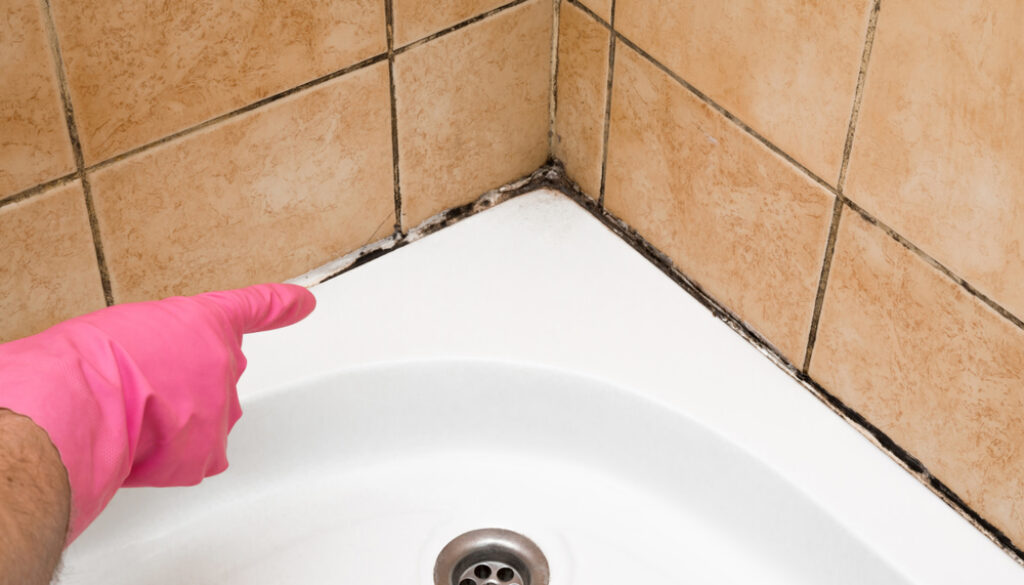

Learning how to prevent bathroom mold starts with controlling moisture. Bathrooms naturally become humid when people take showers and baths, but persistent dampness can create conditions that allow mould to grow on walls, ceilings, grout, sealant and other surfaces.
Good ventilation, regular cleaning, adequate heating and quick removal of excess water can all help. It is also important to deal with leaks, condensation and damaged surfaces before they become larger problems.
Whether you have a small bathroom with limited ventilation or a larger family bathroom used several times a day, a consistent routine can make a noticeable difference. Prevention is generally easier than repeatedly treating mould after it appears.
Why does mould grow in bathrooms?
Mould is a type of fungus that can grow where moisture and suitable surfaces are available.
Bathrooms provide several conditions that can encourage growth. Warm showers produce water vapour, while condensation can form when humid air meets cooler surfaces such as windows, tiles, ceilings and external walls.
Poor airflow can allow this moisture to remain in the room for longer.
Common areas where bathroom mould may appear include:
- Around shower corners
- Along silicone sealant
- Between tiles
- Around windows
- On ceilings
- Behind bathroom furniture
- Around baths and basins
- On damp towels
- In poorly ventilated cupboards
Mould can also be associated with plumbing leaks or water entering through damaged building materials, so not every mould problem is caused by ordinary shower condensation.
Control moisture after every shower
One of the simplest ways to prevent bathroom mold is to reduce how long surfaces remain wet.
After showering, allow the extractor fan to continue operating for the appropriate period. If the bathroom has a suitable window, opening it can provide additional airflow.
A shower screen or curtain should also be used properly to keep water within the showering area.
If walls or floors are covered with excess water, removing it with a suitable squeegee or cloth can help surfaces dry more quickly.
These small actions are particularly useful in bathrooms that do not dry quickly on their own.
Improve bathroom ventilation
Ventilation is one of the most important parts of mould prevention.
An extractor fan removes humid air and helps reduce the amount of moisture that settles on surfaces.
If your bathroom has an extractor fan, check that it is working correctly. A fan that makes unusual noises, runs weakly or fails to remove condensation may need cleaning, repair or replacement.
Keep ventilation grilles clear and make sure furniture is not blocking airflow.
If you are replacing a fan, choose one that is appropriate for the room and the existing ducting rather than simply choosing the most powerful model available.
Keep the extractor fan running after bathing
Switching off the fan immediately after a shower may leave a large amount of moisture in the room.
Allowing the ventilation system to continue working gives it more time to remove humid air.
A timer-controlled fan can make this easier because it can continue running after the light or main switch has been turned off.
Humidity-sensitive models can also respond automatically to increased moisture.
The correct operating period depends on the fan and bathroom, so follow the manufacturer's instructions where available.
Use windows effectively
A bathroom window can provide useful natural ventilation.
Opening it during or after a shower can allow humid air to escape, particularly when combined with mechanical extraction.
However, opening a window is not always practical. Weather, security, outdoor conditions and the position of the bathroom can affect whether it is suitable.
If the bathroom has no effective window, mechanical ventilation becomes particularly important.
Allow replacement air into the bathroom
An extractor fan needs air to replace the air it removes.
A bathroom that is completely sealed when the door is closed may not ventilate efficiently.
A suitable gap beneath the door or a purpose-designed ventilation grille can allow replacement air to enter.
Do not cover these airflow routes with draught excluders or other materials if they are part of the bathroom's ventilation arrangement.
The goal is controlled airflow rather than simply leaving the door wide open throughout the day.
Keep the bathroom door closed while showering
Keeping the door closed during a shower can help prevent humid air from spreading into bedrooms, hallways and other parts of the house.
The extractor can then remove moisture from the bathroom instead of allowing it to move into other rooms.
After the main moisture has been extracted, the door can be opened if this helps the bathroom dry further.
This approach is particularly useful in homes where nearby rooms are also susceptible to condensation.
Dry wet surfaces quickly
Standing water gives moisture more opportunity to remain on bathroom surfaces.
After using the bath or shower, remove excess water from glass, tiles and other surfaces where practical.
A simple shower squeegee can be useful for reducing water left on shower screens and tiled walls.
You do not need to dry every surface completely after every use. The main aim is to prevent excessive water from remaining for long periods.
Do not leave wet towels bunched together
Wet towels can retain significant amounts of moisture.
Instead of leaving them on the floor or bunched up over a small hook, spread them out so that air can circulate around them.
A heated towel rail can also help towels dry more quickly, provided it is used safely and appropriately.
If towels repeatedly remain damp for long periods, the bathroom may not be ventilating adequately.
Repair leaks promptly
Not all bathroom mould is caused by condensation.
A leaking tap, pipe, toilet connection, bath seal or shower fitting can introduce additional moisture into the room.
Even a small leak can cause persistent dampness if it continues for a long time.
Look for signs such as:
- Damp patches
- Water stains
- Soft or swollen materials
- Peeling paint
- Persistent musty smells
- Mould returning in one particular area
If mould repeatedly appears near plumbing, investigate for a possible leak rather than simply cleaning the surface.
Check shower and bath sealant
Silicone sealant around baths and showers is regularly exposed to water.
Over time, sealant can deteriorate, become discoloured or develop mould growth.
Damaged or failing sealant can also allow water to reach areas behind or beneath bathroom fixtures.
Inspect the sealant periodically.
If it has separated, cracked or deteriorated, it may need to be removed and replaced correctly. The underlying surface should be properly cleaned and dried before new sealant is applied.
If water has already entered the building materials, simply replacing the visible sealant may not solve the underlying problem.
Keep grout in good condition
Tile grout can become damp and discoloured, especially in showers.
Regular cleaning can help prevent a build-up of soap residue and dirt that makes the bathroom look neglected.
If grout is cracked, missing or badly damaged, water may reach areas behind the tiles.
Small repairs may be possible depending on the condition, but extensive deterioration should be assessed before simply applying new grout over the existing surface.
Choose suitable bathroom paint
Bathroom walls and ceilings are regularly exposed to humidity.
Using a paint designed for bathrooms or other high-moisture areas can provide a finish that is better suited to these conditions.
However, no paint can compensate for serious moisture problems.
If mould keeps returning despite repainting, investigate ventilation, leaks, condensation and the condition of the underlying surface.
Always prepare the surface properly and follow the paint manufacturer's instructions.
Keep bathroom surfaces clean
Regular cleaning can help prevent the build-up of soap residue, dirt and other material on which mould can become established.
Pay particular attention to:
- Shower corners
- Grout lines
- Silicone sealant
- Window frames
- Ceiling corners
- Areas behind furniture
- Around the bath
- Around the basin
Cleaning frequency depends on how often the bathroom is used and how quickly surfaces become dirty.
A bathroom used by several people every day may require more frequent cleaning than a rarely used guest bathroom.
Improve airflow around furniture
Large bathroom cabinets can restrict airflow, particularly when positioned tightly against walls.
Leave appropriate space around furniture where possible and avoid blocking ventilation grilles.
Pay attention to areas behind freestanding cabinets, especially against colder external walls.
If mould repeatedly appears behind furniture, the cause may involve poor airflow, condensation or a moisture problem that needs further investigation.
Avoid overcrowding the bathroom
Too many items can make it harder for air to circulate and more difficult to clean surfaces.
Large baskets, storage units, laundry piles and other objects can trap moisture.
Keep the room reasonably organised and avoid storing damp materials in enclosed spaces.
Good bathroom storage should provide convenience without creating hidden areas where moisture can remain unnoticed.
Improve insulation where condensation is a problem
Ventilation removes moisture, but condensation is also influenced by surface temperature.
Cold walls, ceilings and windows can encourage humid air to condense.
If a particular external wall repeatedly becomes wet while the rest of the bathroom remains relatively dry, the problem may involve cold surfaces or insulation rather than ventilation alone.
Improving insulation can sometimes help, but building work should be assessed properly before changes are made.
Poorly planned insulation can create other moisture-related problems.
Maintain a reasonable indoor temperature
Cold surfaces are more likely to experience condensation when they come into contact with warm, humid air.
Keeping the bathroom at a reasonably consistent temperature can therefore help reduce condensation in some properties.
This does not mean the bathroom needs to be heated excessively.
The aim is to avoid large temperature changes that leave surfaces very cold while the room suddenly becomes warm and humid during a shower.
Heating should be balanced with effective ventilation.
Avoid drying large amounts of laundry in the bathroom
Wet clothes release moisture into the surrounding air as they dry.
Drying laundry in a poorly ventilated bathroom can therefore increase humidity and make condensation more likely.
If you must dry clothes indoors, choose a well-ventilated area and ensure that moisture has a suitable route out of the property.
A bathroom should not become a permanent drying room unless it has been designed and ventilated appropriately for that purpose.
Use moisture-resistant storage
Bathroom storage should be suitable for a humid environment.
Cabinets, shelving and baskets that are not designed for moisture may deteriorate over time, particularly when positioned close to a shower or bath.
Keep storage areas reasonably organised so that damp surfaces can be inspected and cleaned.
Avoid pushing furniture tightly against walls where doing so prevents airflow.
How to prevent bathroom mold in a small bathroom
Small bathrooms can be more challenging because there is less air volume and often less space between fixtures.
However, several simple measures can help.
Use the extractor fan consistently, keep the door closed during showers and provide an appropriate route for replacement air.
Avoid filling the room with unnecessary storage and keep shower products organised.
If there is a window, use it appropriately to help remove humid air.
A small bathroom can also benefit from a humidity-sensing extractor fan if the existing system is inadequate.
Deal with condensation on windows
Condensation on the bathroom window is common, especially after a hot shower.
However, if water remains on the glass and frame for long periods, it is worth improving ventilation and drying the affected surfaces.
Wipe away excessive moisture when necessary and check that the window frame and surrounding sealant remain in good condition.
If condensation is severe throughout the room, look beyond the window itself and assess the overall ventilation system.
Do not ignore recurring mould
Cleaning visible mould can make the bathroom look better temporarily, but recurring growth suggests that the underlying conditions have not been resolved.
Ask why the same area keeps becoming affected.
Possible causes include:
- Excessive humidity
- Poor extraction
- Restricted airflow
- Plumbing leaks
- Cold surfaces
- Damaged sealant
- Water penetration
- Inadequate heating
If the problem is extensive, keeps returning or appears to be connected to a building defect, professional assessment may be appropriate.
Clean existing mould safely
If mould is already present, deal with it carefully rather than simply covering it with paint.
For small areas on suitable hard surfaces, use an appropriate mould-cleaning product according to its label instructions.
Provide good ventilation while cleaning and follow any recommended protective measures.
Do not mix different cleaning chemicals. In particular, never mix bleach-containing products with other cleaners unless the product instructions specifically allow it.
Porous or badly damaged materials may require more extensive treatment or replacement.
If the affected area is large or keeps returning, identify and address the moisture source.
Consider the cost of mould prevention
Many preventative measures cost little or nothing.
Using the extractor correctly, opening a suitable window, drying wet surfaces and keeping towels spread out can all be simple changes.
Other improvements can involve professional costs.
Possible expenses include:
- Extractor fan replacement
- Electrical work
- New ventilation ducting
- Sealant replacement
- Plumbing repairs
- Repainting
- Insulation improvements
- Damaged material replacement
Prices vary depending on location, materials, labour, property size, access and project requirements.
For example, replacing a small section of sealant is very different from repairing a hidden plumbing leak or installing a completely new ventilation system.
Obtain a clear quotation where professional work is required.
Example of a mould prevention routine
Consider a family bathroom used several times each day.
After each shower, the extractor fan is left running according to its recommended setting. The bathroom door remains closed during showering, while suitable airflow is allowed beneath the door.
The shower screen is wiped down, wet towels are spread across a rail and the window is opened when appropriate.
Once a week, the homeowner checks the silicone, grout, ceiling corners and window frame for signs of moisture or mould.
If mould begins appearing repeatedly in one corner, they investigate the cause rather than repeatedly cleaning it.
This routine combines ventilation, cleaning, moisture control and early maintenance.
Common mistakes that encourage mould
Even a well-maintained bathroom can develop problems if moisture is allowed to remain unchecked.
Common mistakes include:
- Switching the extractor off immediately
- Blocking ventilation grilles
- Leaving wet towels on the floor
- Ignoring leaks
- Painting over mould
- Leaving shower surfaces soaking wet
- Drying lots of laundry in the bathroom
- Blocking airflow behind furniture
- Ignoring damaged sealant
- Relying entirely on an open window
- Installing unsuitable storage materials
- Failing to investigate recurring condensation
Preventing these habits can be more useful than repeatedly treating mould after it appears.
Frequently asked questions
What is the best way to prevent bathroom mold?
The most effective general approach is to control moisture through good ventilation, appropriate heating, regular cleaning and prompt repairs. Keep wet surfaces and towels from remaining damp for long periods.
Why does mould keep coming back in my bathroom?
Recurring mould usually means the conditions allowing it to grow are still present. Poor ventilation, condensation, leaks, cold surfaces or damaged sealant are possible causes.
Should I leave my bathroom window open all day?
Not necessarily. Opening the window after bathing can help remove humid air, but keeping it open continuously may not be practical or appropriate. Mechanical ventilation can provide more controlled airflow.
Does an extractor fan prevent bathroom mould?
An effective extractor fan can help reduce excess humidity, but it cannot guarantee that mould will not develop. The bathroom may also have leaks, cold surfaces or other moisture sources that need attention.
How often should I clean bathroom mould?
The more important issue is why the mould is appearing. Small areas can be cleaned when necessary, but repeatedly cleaning the same area without addressing the underlying moisture problem is unlikely to provide a lasting solution.
Can bathroom paint prevent mould?
Suitable bathroom paint can help protect surfaces in humid conditions, but it cannot solve an underlying moisture problem. Persistent mould should be investigated before repainting.
Conclusion
Knowing how to prevent bathroom mold is largely about controlling moisture before it has a chance to remain on surfaces for long periods.
Use ventilation consistently, allow the bathroom to dry after showers, keep wet towels spread out and deal with leaks or damaged sealant promptly. Regular cleaning can also help keep surfaces in good condition.
If mould repeatedly returns despite good cleaning and ventilation, look for an underlying cause such as poor extraction, restricted airflow, condensation, cold surfaces or water penetration.
A dry, well-ventilated and properly maintained bathroom is easier to keep clean and can help protect walls, ceilings, grout, sealant and fixtures from avoidable moisture-related problems.