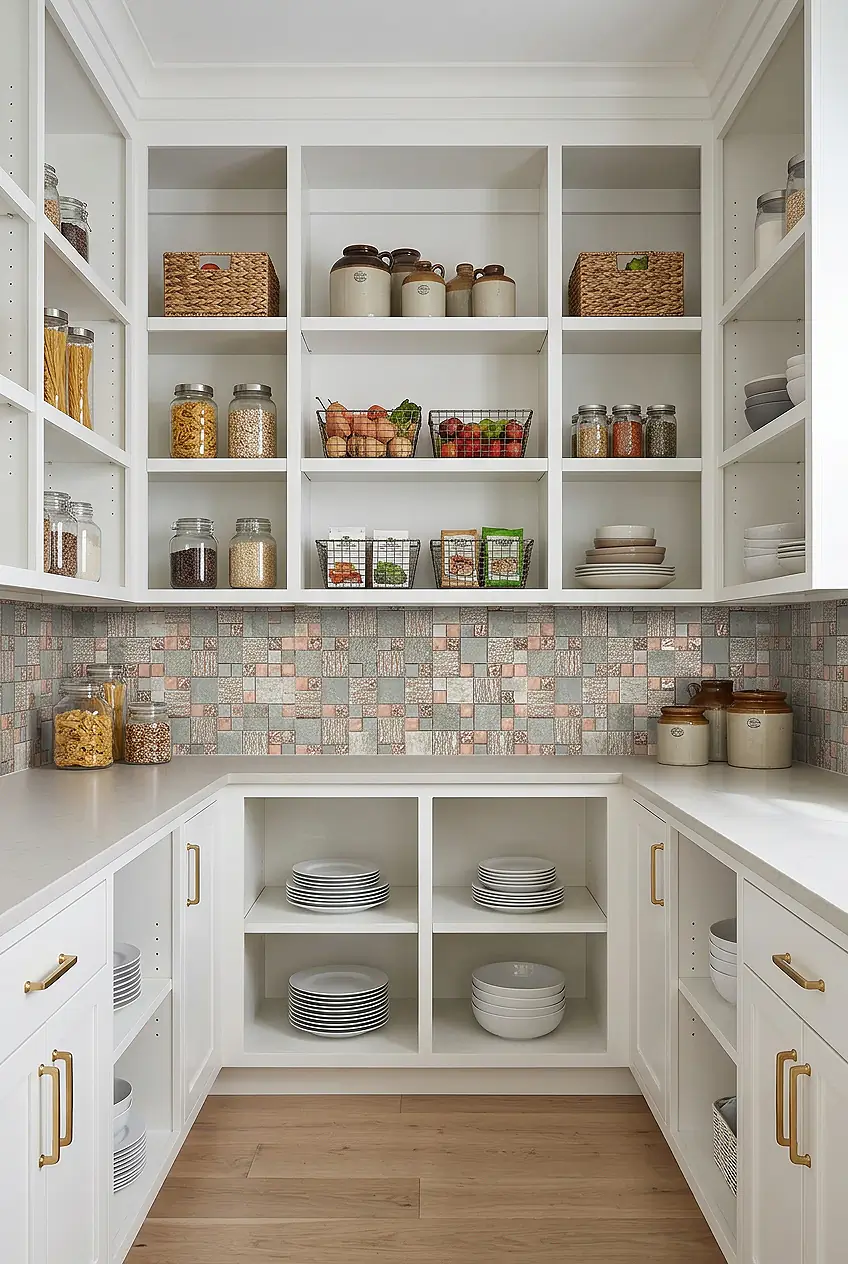

A small kitchen can quickly become difficult to use when cupboards, worktops and drawers are filled with everyday items. Fortunately, the right kitchen storage ideas for small spaces can make a compact room more organised without requiring a major renovation. The key is to make better use of areas that are often overlooked, such as cabinet doors, corners, vertical wall space and the area underneath shelves.
Good storage is not simply about adding more cupboards. It is about making the items you use most often easy to find while keeping worktops clear and the kitchen comfortable to move around.
Start by assessing what you already have
Before buying storage products or installing new cabinets, take everything out of your existing cupboards and drawers.
Group similar items together and look at how much you actually use.
You may discover that some cupboards are occupied by appliances, cookware or food that is rarely used. Removing unnecessary items can create more useful space without spending any money.
Consider separating belongings into three groups:
- Items used every day
- Items used occasionally
- Items rarely or never used
Everyday items should be stored where they are easy to reach. Less frequently used equipment can go into higher cupboards or less accessible areas.
This simple process can also show you which types of storage are genuinely missing from your kitchen.
Use vertical wall space
One of the easiest ways to increase storage in a small kitchen is to make better use of the walls.
Wall-mounted shelves can hold jars, mugs, cookbooks and other lightweight items. A rail can also provide a convenient place for utensils or kitchen accessories.
Tall wall cabinets can provide considerably more storage than short units if the ceiling height allows them.
However, avoid covering every available wall with shelves and cupboards. A small kitchen can feel crowded when there is too much visual clutter.
Use vertical storage selectively, keeping frequently used items within comfortable reach.
Install tall pantry-style cabinets
A tall pantry cabinet can provide substantial storage while using relatively little floor space.
It can be divided into sections for different types of food and equipment. Pull-out shelves can make deep areas easier to access.
A pantry cabinet can be particularly useful for:
- Tins and jars
- Cereals
- Pasta and rice
- Baking ingredients
- Snacks
- Cleaning supplies
- Small kitchen appliances
If you are designing a new kitchen, consider whether an unused section of wall could accommodate a tall unit.
For an existing kitchen, check carefully for skirting boards, sockets, pipes and doors before installing anything.
Make better use of cabinet doors
The inside of a cabinet door is often unused space.
Small racks or organisers can be attached to suitable cabinet doors to hold lightweight items such as:
- Measuring spoons
- Chopping boards
- Cleaning cloths
- Foil and food wrap
- Small packets
- Kitchen tools
The organiser must be suitable for the cabinet and the weight of the items being stored.
Also check that adding an organiser will not prevent the door from closing properly or interfere with shelves inside.
Use drawer organisers
Drawers can become messy when utensils are placed together without any organisation.
A simple divider can separate knives, forks, cooking utensils and other small equipment.
Adjustable drawer dividers are useful because they can be configured according to the contents.
Instead of filling a drawer randomly, create dedicated sections for particular items.
For example, one area could contain everyday cooking utensils, another could hold measuring equipment and another could store smaller kitchen tools.
This makes it easier to find what you need without emptying the whole drawer.
Consider deep drawers for cookware
Deep drawers can be more practical than traditional cupboards for pots, pans and larger kitchen equipment.
Instead of reaching into a dark cabinet, you can pull the drawer forward and see the contents.
If you are replacing kitchen cabinets, consider using deep drawers in the areas where cookware is stored most often.
They can be more expensive than basic cupboard units, so there is no need to use them everywhere.
A combination of cupboards and drawers can provide a balance between storage capacity and cost.
Use the space above cabinets carefully
The gap above kitchen cabinets can sometimes provide additional storage, particularly for items that are rarely used.
Suitable items might include:
- Large serving dishes
- Seasonal kitchen equipment
- Decorative items
- Extra storage containers
However, this area can collect dust and may be difficult to reach.
Do not store heavy objects where retrieving them could be unsafe. A stable step ladder should be used when necessary rather than standing on chairs or worktops.
If the gap is large and accessible, another option is to extend the cabinetry upwards during a kitchen renovation.
Install pull-out storage
Pull-out storage can make narrow spaces much more useful.
A narrow cabinet between larger units can otherwise become difficult to access. A suitable pull-out system can allow bottles, jars, spices or other slim items to be stored vertically.
Pull-out storage can also work well inside deeper cupboards.
Instead of having to reach towards the back, the storage comes towards you.
The price of these systems varies depending on the mechanism, cabinet size, materials and installation requirements. If you are working with a limited budget, prioritise pull-outs in the cupboards that are hardest to use.
Make corner cabinets more accessible
Kitchen corners can be some of the most awkward storage areas.
A standard corner cabinet may have plenty of capacity but still be difficult to access because items at the back are hard to reach.
Depending on the cabinet design, options include rotating shelves, pull-out corner systems and specially designed drawers.
These solutions can make a noticeable difference, but they may cost more than standard shelving.
Before choosing a system, check the actual dimensions of the cabinet and consider what you intend to store there.
Use magnetic storage where appropriate
Magnetic storage can be useful for certain kitchen tools.
A properly installed magnetic strip can hold suitable metal utensils or other compatible items, freeing up drawer space.
It can also keep frequently used tools visible and accessible.
However, magnetic storage is not suitable for everything. Check the strength and mounting method of the product and avoid placing heavy items where they could fall.
The position also matters. Keep stored items away from areas where they could interfere with cooking or normal movement.
Add a wall-mounted rail
A simple rail can turn unused wall space into practical storage.
Hooks can hold items such as:
- Measuring cups
- Lightweight utensils
- Oven gloves
- Kitchen towels
- Small pans
Rails can be especially useful in kitchens with limited drawer space.
They should be installed securely and positioned where they will not obstruct work areas.
Keeping only regularly used items on the rail can help maintain a tidy appearance.
Use shelf risers inside cupboards
Shelf space is not always used efficiently.
A tall cupboard containing short items may have a large amount of unused vertical space above them.
Shelf risers create another level, allowing plates, bowls, mugs or containers to be stacked more efficiently.
They are inexpensive compared with major cabinetry changes and can often be installed without tools.
Measure the cupboard before buying one and make sure there is enough clearance for the items you intend to store.
Store chopping boards vertically
Chopping boards can take up considerable space when stacked flat.
A simple vertical divider inside a cabinet can keep them upright.
This makes individual boards easier to remove and can free up horizontal shelf space.
The same principle can work for baking trays, cooling racks and other flat kitchen equipment.
Vertical storage is particularly useful because it makes better use of the height inside a cupboard.
Create a dedicated spice area
Spices are small but can create significant clutter when scattered across cupboards and worktops.
A narrow pull-out shelf, drawer organiser or wall-mounted rack can keep them together.
Arrange them according to how you use them rather than simply placing them wherever there is space.
For example, everyday cooking spices can be kept close to the main preparation area, while less frequently used ingredients can be stored elsewhere.
Avoid storing spices directly above areas exposed to excessive heat if the manufacturer recommends otherwise.
Use the area under wall cabinets
The space beneath wall cabinets can sometimes provide additional storage opportunities.
Depending on the design, you could use this area for a slim rail, hooks or a suitable under-shelf organiser.
This can be useful for lightweight objects that need to remain accessible.
However, do not allow additional storage to interfere with lighting, sockets, cooking equipment or safe food preparation.
Keep appliances off the worktop
Kitchen appliances can consume a surprising amount of valuable preparation space.
Items such as toasters, blenders, coffee machines and food processors may be used regularly but do not necessarily need to remain on the worktop all day.
Consider creating a dedicated appliance cupboard or storing less frequently used equipment elsewhere.
If you are planning new cabinets, an appliance garage or dedicated shelf can keep the worktop clearer.
Make sure there is adequate ventilation and that appliances are used according to their manufacturer's instructions.
Use the space under the sink
The cupboard underneath the sink is often awkward because of pipes, but it can still be useful.
It is suitable for items such as cleaning products, rubbish bags and cloths.
A small pull-out organiser or adjustable shelf can make the area easier to use.
Avoid overcrowding the cupboard because you need access to the plumbing for inspections and repairs.
It is also wise to check periodically for leaks or moisture.
Choose stackable containers
Uniform containers can make food storage more efficient.
Stackable containers allow you to use vertical space inside cupboards and the refrigerator.
Clear containers can also make it easier to see what you have, although they are not essential.
Choose containers in sizes that suit the cupboards rather than buying a large collection before measuring the available space.
A consistent system can also reduce the amount of packaging taking up irregular amounts of room.
Use nesting cookware
Pots, pans and bowls that can nest inside one another take up less cupboard space than items stored separately.
When buying new cookware, consider whether pieces can stack or nest together.
For existing cookware, arrange the largest items at the bottom and smaller compatible pieces inside them where appropriate.
Use caution with delicate surfaces that could be scratched by stacking.
Lids can also be organised vertically using suitable dividers rather than being placed loosely on top of cookware.
Consider a compact kitchen trolley
A narrow kitchen trolley can provide additional storage without permanent construction.
It can hold fruit, vegetables, bottles, small appliances or cooking supplies.
A trolley with wheels can be moved when necessary, which can be useful in a kitchen that serves several purposes.
However, it should not obstruct doorways, walkways or appliance access.
Measure the available space carefully before buying one.
Use a small breakfast bar for storage
A peninsula or breakfast bar can sometimes provide storage as well as seating.
The cabinet underneath can hold cookware, food or other kitchen supplies.
This can be useful where there is not enough room for a separate dining table.
However, the dimensions need to be planned carefully. There must be sufficient clearance for people to sit, move around and open nearby cabinets and appliances.
If the kitchen is extremely narrow, additional furniture may make it less practical rather than more useful.
Choose furniture with built-in storage
If your kitchen includes a dining area, furniture can provide additional storage.
A bench with storage underneath can hold less frequently used items, while a compact sideboard can provide space for crockery and serving equipment.
In an open-plan kitchen, furniture should be chosen carefully so that it does not make the cooking area feel crowded.
The best storage furniture is usually the type that performs more than one function.
Use the inside of a pantry door
If you have a pantry or tall cupboard, the inside of the door can provide useful additional space.
Slim racks can hold smaller items such as packets, jars and bottles.
However, the weight should be kept within the limits of the door and hinges.
Measure the available clearance carefully. A door-mounted rack that is too deep could prevent the door from closing properly.
Make storage part of the kitchen design
Storage should be considered before cabinets and appliances are finalised.
Think about where each category of item will live.
For example:
| Item | Useful storage location |
|---|---|
| Everyday plates | Accessible drawer or lower cabinet |
| Pans | Deep drawer |
| Spices | Narrow drawer or pull-out rack |
| Chopping boards | Vertical divider |
| Cleaning products | Under-sink cabinet |
| Dry food | Pantry cabinet |
| Small appliances | Appliance cupboard |
| Mugs | Accessible wall or base cabinet |
| Baking equipment | Deep drawer or tall cabinet |
This approach helps prevent a common problem: installing attractive cabinets but discovering later that everyday items do not fit conveniently.
Declutter before adding storage
More storage is not always the answer.
If a kitchen contains duplicate utensils, unused appliances and expired food, adding more organisers may simply hide the problem.
Go through cupboards regularly and remove items that no longer serve a purpose.
You can also consider whether certain appliances can perform multiple functions. Reducing the number of single-purpose items can free up valuable space.
A smaller collection of useful equipment is often easier to organise than a large collection of rarely used items.
Make frequently used items easy to reach
The most convenient storage should be reserved for things you use regularly.
Items used several times a day should ideally be within easy reach.
Occasionally used serving dishes or specialist equipment can be stored higher up or further away.
This creates a natural hierarchy within the kitchen and reduces unnecessary movement.
It also makes the room easier to use for different members of the household.
Consider storage during a kitchen renovation
If you are already planning a kitchen renovation, storage should be one of the main design priorities.
Instead of simply replacing old cabinets with similar units, consider what is not working with the current arrangement.
You might need:
- More drawers
- A larger pantry
- Better corner storage
- Taller cabinets
- Dedicated appliance storage
- Additional recycling space
- More accessible food storage
Costs vary depending on the kitchen size, materials, labour, cabinet style and project requirements. Custom storage solutions can also increase the price compared with standard units.
Getting detailed quotations can help you understand the additional cost of different storage features before making a final decision.
Avoid making a small kitchen feel crowded
Storage should make a kitchen easier to use, not simply fill every available space.
Too many shelves, hooks and containers can create visual clutter.
Choose a few storage solutions that solve your biggest problems.
For example, if your main issue is a lack of food storage, a pantry cabinet may be more useful than several decorative shelves.
If your problem is crowded worktops, an appliance cupboard may have a greater impact.
Focus on function first and appearance second.
Affordable kitchen storage improvements
Not every storage improvement requires a major renovation.
Lower-cost changes can include:
- Drawer dividers
- Shelf risers
- Stackable containers
- Cabinet-door organisers
- Magnetic storage
- Wall rails
- Vertical dividers
- Small baskets
- Under-shelf organisers
More substantial changes, such as new cabinets, pull-out systems or custom joinery, will generally involve higher costs.
Prices vary by location, materials, labour and the complexity of the work. For larger changes, compare quotations and check exactly what is included.
Mistakes to avoid
One common mistake is buying storage products before measuring the available space.
Another is storing heavy items on high shelves where they are difficult to retrieve safely.
It is also easy to install too many open shelves and create unnecessary visual clutter.
Avoid blocking ventilation around appliances or interfering with electrical sockets and plumbing.
Finally, do not sacrifice comfortable movement simply to add another storage unit. A kitchen needs enough clear space for people to work saf