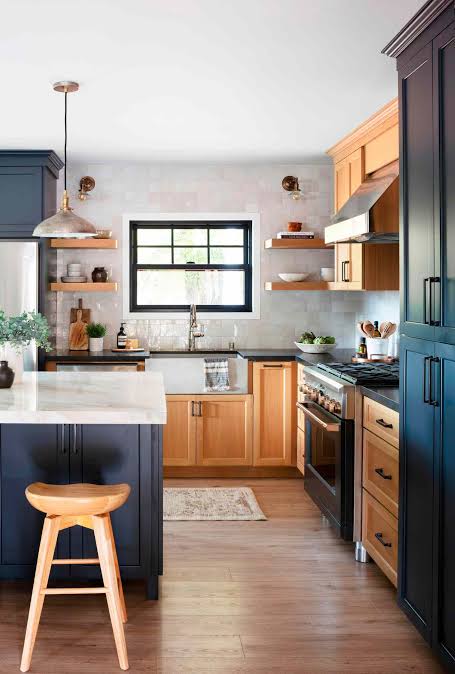

A kitchen remodel does not always require a large budget. With the right choices, affordable kitchen remodeling ideas can help improve the appearance, storage, lighting and practicality of a kitchen without replacing everything. Simple changes such as repainting cabinets, updating handles, replacing worktops or improving lighting can make a noticeable difference.
The key is to decide which parts of the kitchen need attention and which can stay. Keeping the existing layout, reusing suitable fixtures and choosing materials carefully can help control costs while still creating a kitchen that feels fresh and comfortable.
Start with a realistic kitchen budget
Before buying anything, work out how much you can comfortably spend on the project. A budget should include both the visible improvements and less obvious costs such as delivery, waste removal, preparation work and installation.
Kitchen renovation costs vary considerably depending on location, labour rates, materials, the size of the kitchen and the amount of work required. A small cosmetic update can cost much less than replacing cabinets, plumbing and electrical systems.
Divide your budget into categories such as:
- Cabinets and storage
- Worktops
- Flooring
- Lighting
- Appliances
- Sinks and taps
- Paint and decorating
- Labour and installation
- Delivery and waste disposal
- Contingency money for unexpected problems
Keeping a small reserve is particularly useful in older properties, where hidden plumbing, electrical or structural issues may be discovered once work begins.
Keep the existing kitchen layout
One of the most effective ways to reduce the cost of a kitchen remodel is to avoid moving major services unless there is a good reason to do so.
Moving a sink, cooker, dishwasher or other connected appliances can involve changes to plumbing, electrical wiring, flooring and cabinetry. These additional jobs can quickly increase the overall cost.
If the existing arrangement works reasonably well, consider improving it rather than completely changing it.
For example, a dated kitchen with cabinets along one wall may look much better after new cabinet fronts, a modern worktop, improved lighting and a fresh wall colour.
Changing the finishes while keeping the basic layout can provide a significant visual improvement without requiring extensive construction work.
Affordable kitchen remodeling ideas for cabinets
Cabinet replacement can be one of the biggest expenses in a kitchen renovation. However, replacing every cabinet is not always necessary.
If the existing units are structurally sound, consider giving them a new appearance instead.
Some options include:
- Painting suitable cabinet doors
- Replacing old handles
- Changing hinges
- Installing new doors or drawer fronts
- Adding internal storage accessories
- Replacing damaged shelves
- Using trim to improve the appearance of plain cabinets
Painting can be particularly useful when the cabinet boxes are still in good condition. Proper preparation is important because kitchen surfaces are exposed to moisture, grease and frequent handling.
Clean the surfaces thoroughly, repair damage and use an appropriate primer and paint system for the material.
If the cabinet doors are beyond repair, replacing only the doors and drawer fronts may cost less than replacing the entire kitchen, although the saving depends on the design and supplier.
Change cabinet handles and hardware
Small details can have a surprisingly strong effect on the appearance of a kitchen.
Old handles can make otherwise usable cabinets look dated. Replacing them with simple modern hardware can provide an inexpensive update.
Before purchasing new handles, measure the existing fixing holes. Choosing hardware with compatible measurements can prevent the need to drill new holes or repair old ones.
It is also worth buying a small sample before ordering a large quantity. The size, finish and shape can look different in the kitchen than they do in a photograph.
Refresh the worktops
Worktops receive heavy daily use, so replacing a worn surface can make the whole kitchen feel newer.
If the existing cabinets are sound, a new worktop may provide more visual impact than replacing the entire kitchen.
There are many materials available at different price points, including laminate, solid wood and other engineered or natural surfaces. Costs vary depending on material, thickness, size, cut-outs and installation requirements.
A practical approach is to choose a surface that suits how the kitchen is used rather than paying for features that will not provide meaningful benefits.
For example, a household that mainly wants a cleaner, more modern appearance may find a good-quality laminate worktop sufficient for its needs.
Use paint to transform the room
Painting walls is one of the simplest ways to change a kitchen without major construction.
Light and neutral colours can help a small room feel more open, while stronger colours can be used on one wall or in selected areas for contrast.
Kitchen walls may be exposed to cooking splashes and moisture, so choose a suitable washable finish where appropriate.
Do not overlook ceilings, skirting boards, doors and other surrounding surfaces. Cleaning and repainting these areas can help the whole room feel more consistent.
Improve the lighting
Good lighting can make a kitchen feel more practical and attractive.
Instead of replacing every fitting, look at where the existing lighting is weak. Additional task lighting under wall cabinets, for example, can make food preparation areas easier to use.
Possible improvements include:
- Under-cabinet lighting
- Brighter task lighting
- Replacing outdated shades
- Improving the main ceiling fitting
- Adding lighting above a dining or breakfast area
- Using separate controls for different lighting zones
Electrical work should be carried out safely and, where required, by a suitably qualified professional.
Add a simple splashback
A new splashback can become a focal point without requiring a complete kitchen renovation.
Traditional tiles are one option, but there are many alternatives, including panels and other easy-to-clean surfaces.
If the existing wall behind the cooker or sink is in good condition, you may only need to improve the most exposed area rather than covering every wall.
The best choice depends on the cooking environment, cleaning requirements, existing décor and installation costs.
Consider open shelving carefully
Open shelving can provide an inexpensive storage and display option when used in the right place.
A short run of shelves can replace a small number of wall cabinets or create space for frequently used items.
However, open shelves can also become cluttered and require regular cleaning. They work best when the items stored on them are organised and regularly used.
Instead of removing all your wall cabinets, consider adding one or two shelves as a design feature.
Upgrade the sink and tap
A tired sink or outdated tap can make a kitchen feel older than it actually is.
Replacing these items can create a noticeable improvement, particularly when combined with a new worktop.
There is a wide range of sinks and taps at different prices. Before buying, check measurements, plumbing connections and compatibility with the existing worktop and cabinet arrangement.
A simple, well-chosen tap can provide a modern appearance without requiring major changes elsewhere in the kitchen.
Keep appliances where possible
Replacing several appliances at once can consume a large part of a renovation budget.
If an appliance is working reliably and still meets your needs, consider keeping it until replacement becomes necessary.
When an appliance does need replacing, compare the purchase price with running costs, warranty terms, dimensions and installation requirements.
A cheaper appliance is not automatically the best long-term choice if it does not suit the available space or requires additional alterations.
Shop around for materials
Prices for kitchen materials can vary between suppliers, so it is worth comparing several options before making major purchases.
Look at the complete cost rather than just the advertised price. Delivery, installation, accessories and waste can affect the final amount.
For example, a cabinet or worktop that appears cheaper may require additional fittings or more expensive installation.
When comparing products, consider:
- Purchase price
- Delivery charges
- Installation costs
- Warranty
- Maintenance requirements
- Availability of replacement parts
- Material quality
- Expected lifespan
The cheapest option is not necessarily the most economical if it needs replacing much sooner.
Use standard sizes where possible
Custom-made kitchen components can be useful when a room has unusual dimensions, but standard sizes can often be more affordable.
Using standard cabinet widths, worktop dimensions and commonly available fixtures can make sourcing replacement parts easier.
This is another reason why keeping the existing layout can help reduce costs. A remodel that works around the current dimensions may require fewer bespoke components.
Reuse what you already have
Before throwing anything away, inspect what can be cleaned, repaired or reused.
Cabinet carcasses, shelves, storage containers, light fittings and some decorative elements may still be perfectly serviceable.
Even old furniture can sometimes be adapted into useful kitchen storage. For example, a suitable freestanding cabinet could provide additional storage without requiring a new fitted unit.
Reuse should still be practical and safe. Damaged, unstable or unsuitable components should not be retained simply to save money.
Take on suitable DIY work
There are some jobs that confident homeowners may be able to complete themselves, depending on their skills and circumstances.
Painting, cleaning, basic decorating and some straightforward installation tasks can potentially reduce labour costs.
However, electrical, gas, plumbing and structural work can involve significant safety and regulatory considerations. Where specialist work is required, use an appropriately qualified professional.
A sensible approach is to save money on tasks you can genuinely perform to a good standard rather than attempting complicated work simply because it appears cheaper.
Renovate the kitchen in stages
You do not necessarily have to complete every improvement at once.
A staged renovation can make it easier to manage spending.
For example, the first stage might involve painting and replacing handles. A later stage could include a new worktop, followed by improved lighting or flooring when funds allow.
This approach can also help you understand which changes actually make the biggest difference before committing to more expensive work.
However, plan the order carefully. Some work is easier to complete before others, particularly flooring, electrical alterations and cabinetry.
Avoid changing your plans halfway through
Changes made after materials have been ordered or work has started can increase costs.
For example, deciding halfway through a project to move the sink could require additional plumbing, alterations to cabinets and changes to the worktop.
Try to finalise important decisions before work begins.
Create a simple plan showing:
- Cabinet positions
- Appliance locations
- Worktop dimensions
- Lighting positions
- Socket locations
- Flooring
- Wall finishes
- Storage requirements
A clear plan can reduce mistakes and make it easier to compare quotations.
Do not cut costs on important safety work
Saving money does not mean choosing the cheapest option for every part of a renovation.
Some areas deserve particular attention because poor workmanship can create safety problems or expensive repairs later.
Do not compromise on essential electrical, gas, plumbing or structural work. Waterproofing around areas exposed to water should also be properly addressed.
It can be more economical to pay for competent work initially than to repair damage caused by poor installation.
Reduce waste during the renovation
Waste can quietly increase the cost of a project.
Measure carefully before ordering materials and avoid buying significantly more than you need unless additional material is required for installation or future repairs.
Keep packaging and receipts where appropriate, and store spare tiles, paint or other materials safely. Small quantities of matching materials can be useful for future repairs.
Planning also reduces the likelihood of ordering the wrong size and having to pay for replacements.
Make storage work harder
A kitchen can feel cramped even when it has enough physical space if storage is poorly organised.
Affordable storage improvements can include:
- Drawer organisers
- Pull-out baskets
- Shelf risers
- Wall-mounted rails
- Hooks
- Door-mounted storage
- Stackable containers
- Corner storage solutions
These improvements may be less expensive than adding entirely new cabinets.
Before buying storage accessories, measure the available space and consider what you actually need to store.
Improve the kitchen without making it look expensive
A stylish kitchen does not necessarily require expensive finishes.
Consistency is often more important than price. Choosing a limited combination of colours, finishes and materials can create a more coordinated appearance.
For example, matching cabinet handles with the tap and lighting finish can make the room feel more deliberately designed.
Similarly, keeping worktops, splashbacks and wall colours complementary can create a cleaner overall appearance.
Example of a budget-conscious kitchen update
Imagine a kitchen with solid but dated cabinets, an old worktop, poor lighting and worn wall paint.
Instead of replacing everything, a homeowner could consider:
| Improvement | Purpose |
|---|---|
| Repaint cabinet doors | Refresh the main visual feature |
| Replace handles | Modernise the cabinets |
| Install a new worktop | Improve appearance and usability |
| Add under-cabinet lighting | Improve task lighting |
| Repaint walls | Freshen the room |
| Replace worn sealant | Improve the finish around wet areas |
| Add drawer organisers | Improve storage |
The actual cost will depend on the kitchen size, materials, labour and location. However, the example demonstrates how several targeted improvements can change a room without a complete strip-out.
Affordable kitchen remodeling ideas that may not be worth the saving
Some apparent bargains can become expensive later.
Be cautious about:
- Very poor-quality materials
- Unqualified installation work
- Products that do not fit the existing kitchen
- Buying items without checking measurements
- Removing usable cabinets unnecessarily
- Choosing materials that are difficult to maintain
- Making major changes without checking requirements
- Buying appliances before confirming available space
The goal should be better value, not simply the lowest initial price.
Frequently asked questions
What is the cheapest way to remodel a kitchen?
Keeping the existing layout and reusing sound cabinets can help reduce costs. Painting cabinet doors, changing handles, improving lighting, refreshing walls and replacing selected surfaces can create noticeable improvements without a complete replacement.
How can I make an old kitchen look modern?
Start with the most visible features. Fresh cabinet finishes, modern handles, a suitable worktop, improved lighting and coordinated colours can make an older kitchen feel considerably fresher.
Is it cheaper to repaint kitchen cabinets or replace them?
If the cabinet structure is still sound, repainting or replacing only the doors can be less expensive than installing a completely new kitchen. The potential saving depends on the condition of the cabinets, the materials used and labour costs.
How much should I budget for a kitchen renovation?
There is no single figure that applies to every kitchen. Costs depend on location, kitchen size, materials, labour, appliances, the amount of structural work and the quality of finishes. Obtain several detailed quotations before setting a final budget.
Should I remodel my kitchen all at once?
Not necessarily. A staged renovation can spread spending over time. However, work should be planned in the correct order so that later improvements do not require earlier work to be removed or repeated.
Where should I spend more money in a kitchen remodel?
Prioritise areas that affect safety, durability and daily use. Good installation, suitable worktops, reliable plumbing and electrical work, and durable high-use components can be more important than expensive decorative features.
Conclusion
Affordable kitchen remodeling ideas are mainly about making careful decisions rather than trying to make every part of the kitchen as cheap as possible. Keeping a practical layout, reusing suitable cabinets, comparing materials, improving lighting and focusing on high-impact changes can help create a more attractive and functional space.
Start by identifying what genuinely needs changing and what can stay. Set a realistic budget, allow for unexpected costs and plan the work before purchasing materials.
A successful kitchen renovation does not have to involve replacing everything. With thoughtful improvements and sensible spending, even a dated kitchen can become a more comfortable, practical and appealing part of the home.