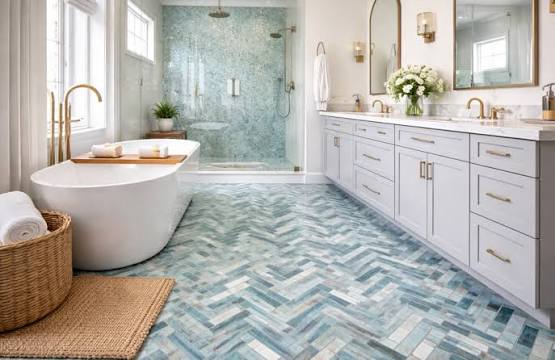

Choosing the best flooring for bathrooms requires more thought than simply picking a colour or pattern you like. Bathroom floors regularly come into contact with water, humidity, cleaning products and wet feet, so the material needs to cope with moisture while remaining practical and safe.
The right flooring should also suit the size of the room, the condition of the subfloor, your budget and the amount of maintenance you are prepared to do. Some materials are highly water-resistant, while others need careful installation and maintenance to perform well in a bathroom.
This guide looks at the main bathroom flooring options, their advantages and disadvantages, costs, maintenance requirements and the factors worth considering before you buy.
What should bathroom flooring provide?
Bathrooms create different demands compared with bedrooms and living rooms. Water can splash around the bath, shower and basin, while condensation can increase humidity throughout the room.
A suitable bathroom floor should ideally be:
- Resistant to water and everyday moisture
- Safe to walk on when wet
- Easy to clean
- Durable enough for regular foot traffic
- Suitable for the room's subfloor
- Compatible with underfloor heating if required
- Appropriate for the bathroom's size and layout
- Reasonably easy to maintain
No flooring material is completely immune to poor installation. Even a highly water-resistant product can develop problems if water gets underneath it or the subfloor has not been prepared properly.
Best flooring for bathrooms: the main options
Several flooring materials can work well in bathrooms, but their performance differs.
| Flooring type | Water resistance | Durability | Maintenance | Comfort | Typical cost level |
|---|---|---|---|---|---|
| Porcelain tile | Excellent | Excellent | Low | Hard | Medium to high |
| Ceramic tile | Very good | Very good | Low | Hard | Low to medium |
| Luxury vinyl | Very good | Very good | Low | Good | Low to medium |
| Sheet vinyl | Very good | Good | Low | Good | Low |
| Natural stone | Very good | Excellent | Medium to high | Hard | High |
| Waterproof laminate | Good to very good | Good | Low | Good | Low to medium |
| Engineered wood | Moderate | Good | Medium | Good | Medium to high |
These categories cover a wide range of products, so specifications can differ between manufacturers and individual flooring systems.
Porcelain tiles for bathroom floors
Porcelain is one of the strongest choices for a bathroom floor. It is dense, hard-wearing and available in a wide range of colours, patterns, textures and finishes.
Large porcelain tiles can create a clean, contemporary appearance, while smaller tiles can work well in traditional bathrooms or areas where more complicated floor shapes need to be covered.
Porcelain is particularly useful where water resistance and durability are priorities. It is also relatively easy to clean.
One disadvantage is that porcelain is hard underfoot. It can also feel cold without underfloor heating.
The surface finish is important as well. A highly polished tile may not be the most suitable option for a floor that frequently becomes wet. Look for a product designed for flooring and check its slip-resistance characteristics before purchasing.
Ceramic bathroom floor tiles
Ceramic tiles are another established option. They are available in many colours, sizes and patterns and can provide a practical finish at a lower material cost than some porcelain products.
Good-quality ceramic floor tiles can handle bathroom conditions effectively when correctly installed.
One important point is that not every ceramic tile is suitable for floors. Some products are intended specifically for walls, so always check the manufacturer's specifications.
Ceramic can be a good choice for homeowners who want the appearance of tiled flooring while keeping material costs under control.
Luxury vinyl flooring
Luxury vinyl flooring, often known as LVT, has become increasingly popular for bathrooms.
It can reproduce the appearance of wood, stone or ceramic tile while offering a softer and warmer feel underfoot.
Good-quality luxury vinyl is resistant to everyday moisture and is generally easy to clean. It is also available in many colours and patterns, making it suitable for both modern and traditional bathroom designs.
Another advantage is comfort. If you regularly walk barefoot in the bathroom, vinyl can feel more comfortable than ceramic or porcelain.
The installation method still matters. The floor beneath the vinyl should be suitably smooth, dry and level. Any significant imperfections can affect the finished appearance.
Sheet vinyl
Sheet vinyl is a practical option for homeowners looking for affordable bathroom flooring.
Because it can cover large areas with relatively few joints, it can help reduce the number of places where water may reach the underlying surface.
It is also easy to clean and available in designs that imitate stone, wood and tiles.
The main disadvantage is that cheaper products may not provide the same appearance or durability as higher-quality flooring.
Professional fitting can also be worthwhile, particularly around toilets, baths, showers and other complicated areas where accurate cutting and sealing are important.
Natural stone flooring
Natural stone can create a distinctive and high-quality appearance in a bathroom. Common choices include slate, limestone, marble, travertine and granite.
Each type has different characteristics. Some stones are more porous than others and may require sealing to reduce the risk of staining and moisture-related problems.
Stone can be extremely durable, but maintenance requirements should not be overlooked.
It can also be relatively expensive once the material, preparation, installation and any required sealing are included.
Natural stone is therefore best suited to homeowners who value its appearance and are comfortable with the additional maintenance that some varieties require.
Waterproof laminate flooring
Traditional laminate has not always been a natural choice for bathrooms because moisture can damage the core material.
However, some modern laminate products are specifically designed to provide improved moisture resistance.
If you are considering laminate, check the manufacturer's instructions carefully. A product being described as water-resistant does not necessarily mean it can be exposed to standing water indefinitely.
Installation around the toilet, bath, shower and basin also needs careful attention.
Waterproof or highly moisture-resistant laminate may suit someone who wants a wood-style appearance without using genuine timber, but it is important to select a product specifically suitable for bathroom conditions.
Engineered wood in bathrooms
Engineered wood can provide a warm, natural appearance, but it requires more consideration in a bathroom than tile or vinyl.
The timber surface can create an attractive connection between a bathroom and adjoining bedrooms or living areas.
However, prolonged exposure to water can cause problems. Water should not be allowed to sit on the floor, and installation must follow the manufacturer's requirements.
Engineered wood may therefore be better suited to bathrooms with good ventilation and careful maintenance than to areas where water frequently reaches the floor.
Which flooring is best for a wet bathroom?
If the bathroom experiences a lot of water, porcelain, ceramic and suitable vinyl products are generally among the practical choices.
A family bathroom with children may benefit from flooring that is easy to clean and comfortable underfoot. Luxury vinyl can be useful in this situation.
A bathroom with a walk-in shower may require particularly careful attention to waterproofing and drainage. The flooring material itself is only one part of the overall system.
For any wet area, the condition of the subfloor, waterproofing, joints and installation details matter just as much as the visible flooring.
Slip resistance matters
A bathroom floor can become slippery when wet, so safety should be considered alongside appearance.
Very smooth or highly polished surfaces may not be ideal for areas that regularly become wet.
This does not mean choosing the roughest surface available. Extremely textured flooring can make cleaning more difficult and may be uncomfortable under bare feet.
Instead, look for flooring designed for bathroom or wet-area use and check the manufacturer's information about slip resistance.
Tiles with smaller formats can also provide more grout joints, which may influence underfoot grip, although the actual performance depends on the tile and installation.
Best flooring for small bathrooms
Flooring can have a noticeable visual effect in a small bathroom.
Large-format tiles can reduce the number of visible grout lines and create a more continuous appearance. Light colours can also help reflect available light.
Luxury vinyl can provide another useful option because plank or tile designs can create visual continuity without the need for numerous grout lines.
Using the same or closely related flooring throughout connected areas can also make a small bathroom feel less visually divided.
However, the floor should still be selected based on practical requirements rather than appearance alone.
Bathroom flooring and underfloor heating
Underfloor heating can make a tiled bathroom more comfortable, particularly during colder months.
Porcelain and ceramic tiles are commonly used with underfloor heating because they transfer heat effectively.
Some vinyl, laminate and engineered wood products can also be compatible with certain heating systems, but this depends on the specific product.
If you are planning underfloor heating, check compatibility before buying the flooring. There may be limits relating to temperature, installation method or the type of underfloor heating system.
Adding heating during a complete bathroom renovation can be easier than installing it after the new floor has already been fitted.
Bathroom flooring costs
The cost of bathroom flooring depends on several factors, so there is no single price that applies to every project.
Material quality, flooring type, room size, labour rates and installation complexity can all change the final amount.
Other possible costs include:
- Removing existing flooring
- Repairing the subfloor
- Levelling uneven surfaces
- Waterproofing
- Adhesives and installation materials
- Grout and sealant
- Cutting around fixtures
- Removing and refitting toilets or other fittings
- Waste disposal
- Door trims and thresholds
A small bathroom may have a relatively low material requirement but still involve significant labour because there are many fixtures and awkward areas to cut around.
Costs can vary by location, materials, labour, property size and project requirements. For this reason, compare complete quotations rather than judging a flooring option solely by its advertised price per square metre.
How to save money on bathroom flooring
There are several ways to control costs without choosing unsuitable materials.
Keeping the existing bathroom layout can reduce plumbing and installation changes. If the subfloor is already in good condition, preparation costs may also be lower.
Other practical approaches include:
- Compare several flooring materials.
- Obtain multiple installation quotations.
- Choose standard tile sizes where suitable.
- Measure the room carefully.
- Ask whether waste and preparation are included in the quotation.
- Avoid unnecessary changes to the existing layout.
- Choose a flooring design that does not require complicated patterns.
- Buy enough material from the same batch when colour consistency matters.
Do not save money by skipping necessary waterproofing or subfloor preparation. These parts of the project can be less visible, but they are important to the long-term performance of the bathroom.
Flooring around showers and baths
Areas around showers and baths deserve particular attention.
Water can escape from shower screens, curtains and bath edges, particularly when several people use the bathroom regularly.
The floor should be installed according to the requirements of the chosen waterproofing system. Sealant around appropriate joints should also be maintained and replaced when it begins to deteriorate.
A walk-in shower can require additional planning because water may reach a larger section of the floor.
The slope towards the drain, waterproofing system and junctions between surfaces all need to work correctly.
Bathroom flooring for families
A family bathroom often needs to balance durability, safety, comfort and ease of cleaning.
Luxury vinyl can be attractive because it provides a relatively soft surface and is straightforward to maintain.
Porcelain and ceramic are useful where durability is a major concern, although they provide a harder surface.
Small-format tiles may also be useful in bathrooms with unusual shapes or drainage requirements, as they can make it easier to follow changes in floor level.
The best option will depend on how the room is used and the priorities of the household.
Bathroom flooring for a modern design
Modern bathrooms often use simple surfaces and minimal visual clutter.
Large-format porcelain tiles can create a clean appearance, while stone-effect porcelain can provide the look of natural stone with potentially simpler maintenance.
Luxury vinyl can also suit contemporary bathrooms, particularly where a timber-inspired appearance is wanted.
Neutral colours can make it easier to change wall colours, towels and accessories later without replacing the floor.
A floor does not need to be extremely patterned to make a bathroom interesting. Texture, tile size and subtle variations can create visual depth without overwhelming a small room.
Common bathroom flooring mistakes
Choosing a floor only because it looks attractive is one of the most common mistakes.
The bathroom's moisture levels, cleaning requirements and expected foot traffic should also be considered.
Other mistakes include:
- Using wall tiles on the floor
- Choosing a highly slippery surface
- Ignoring the condition of the subfloor
- Failing to plan around toilets and other fixtures
- Not checking compatibility with underfloor heating
- Using unsuitable cleaning products
- Ignoring damaged sealant
- Choosing natural stone without understanding its maintenance
- Assuming all vinyl or laminate products have the same moisture resistance
- Forgetting about door clearances after the new flooring is installed
Another problem is ordering the exact measured amount of flooring without allowing for cutting and wastage. The appropriate allowance depends on the material and installation pattern.
How to maintain a bathroom floor
Regular cleaning helps keep most bathroom floors looking their best.
Remove standing water when practical and clean spills promptly.
Use cleaning products recommended for the particular flooring. Natural stone, timber-based flooring and some specialist surfaces can be damaged by inappropriate products.
Check grout and sealant periodically. Cracked grout or deteriorated sealant can allow moisture to reach areas where it should not.
Good ventilation also helps reduce condensation and excessive humidity. An extractor fan, suitable airflow and sensible use of windows can all contribute to a healthier bathroom environment.
Example: choosing flooring for a family bathroom
Consider a medium-sized family bathroom used several times a day.
The homeowners want something durable, easy to clean and reasonably comfortable. They also want a modern appearance but do not want extensive maintenance.
They could choose porcelain for maximum hardness and a wide range of designs. Alternatively, luxury vinyl could provide a softer surface and a simpler installation.
If they choose porcelain, they might consider underfloor heating to improve comfort. If they choose vinyl, they should check that the particular product is suitable for bathroom use and ensure the subfloor is properly prepared.
Both can be sensible choices. The final decision depends on budget, installation requirements, comfort and personal preference.
How to choose the right bathroom floor
Before purchasing flooring, consider these questions:
- How much water is likely to reach the floor?
- Is the bathroom used by adults, children or both?
- How often will the floor need cleaning?
- Is the subfloor level and in good condition?
- Will underfloor heating be installed?
- How much maintenance are you willing to do?
- Does the flooring need to continue into another room?
- What is the complete installation budget?
Answering these questions can narrow the choices considerably.
A bathroom that receives little direct water may have more flooring options than a heavily used family bathroom with a walk-in shower.
FAQ about bathroom flooring
What is the best flooring for a bathroom?
Porcelain, ceramic and suitable luxury vinyl are among the most practical options. The best choice depends on moisture exposure, comfort, maintenance, appearance, budget and the condition of the subfloor.
Is vinyl flooring good for bathrooms?
Yes. Suitable luxury vinyl and sheet vinyl can work well in bathrooms because they are comfortable, easy to clean and resistant to everyday moisture. Always check that the particular product is designed for bathroom use.
Is porcelain better than ceramic for a bathroom?
Porcelain is generally denser and highly durable, while ceramic can offer a wider range of affordable options. Both can be suitable for bathroom floors when the correct floor-rated products are installed properly.
Can you use laminate flooring in a bathroom?
Some modern laminate products are designed with improved moisture resistance and may be suitable. However, you should check the manufacturer's instructions and take particular care around areas exposed to water.
What bathroom flooring is easiest to maintain?
Smooth vinyl, porcelain and ceramic are generally straightforward to maintain. Natural stone and some wood-based flooring can require more specialised care.
Should bathroom floors be light or dark?
Both can work. Light flooring can help a small bathroom feel brighter, while darker flooring can create contrast and make lighter walls and fixtures stand out. Consider natural light, room size, cleaning requirements and the rest of the bathroom design.
Conclusion
The best flooring for bathrooms should combine moisture resistance, safety, durability, comfort and practical maintenance. Porcelain and ceramic tiles are strong choices for homeowners who prioritise durability, while luxury vinyl provides a comfortable and versatile alternative.
Sheet vinyl can be useful for a straightforward budget renovation, while natural stone can create a distinctive finish for homeowners prepared to accept higher costs and maintenance. Waterproof laminate and engineered wood can also work in suitable circumstances, provided the specific product is designed for the environment and installed correctly.
Before making a final decision, look beyond the appearance and material price. Consider the subfloor, waterproofing, installation, ventilation, expected use and long-term maintenance.
A carefully selected and properly installed bathroom floor can provide a practical foundation for the entire room while complementing the design for many years.